

SASKATOON — Bruce Burnett was generally pleased with what he saw during his annual mid-July crop tour of the Canadian Prairies.
“This is a good, solid crop,” said The Western Producer’s markets desk analyst.
That is despite the significant seeding delays, crop abandonment and drowned out fields he witnessed north of the Yellowhead Highway.
Heavy rains caused some early-season carnage this year.
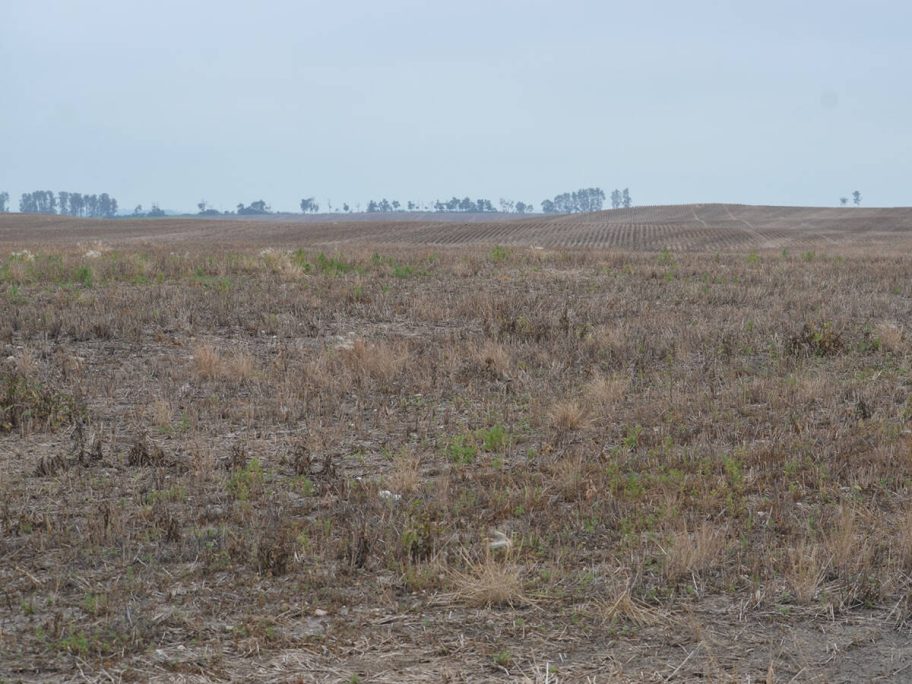
An unplanted field east of Rama, Sask. Crop wasn’t planted due to heavy rains this spring.
Photo:
Bruce Burnett
“We’re going to need some help to get all of this crop harvested in good condition, and I’m thinking especially of those late areas in the north,” said Burnett, who presented his findings at the Ag in Motion show near Langham, Sask.
Follow all our coverage of the Ag in Motion farm show here.
He estimates 10 to 15 per cent of the crops in those northern areas are delayed by two to three weeks.
“It’s going to be imperative that we have frost-free days until the middle of September in those northern growing areas,” he said.
Read Also

Burnett’s overall assessment of a “solid crop” jibes with Agriculture Canada’s yield model, which is predicting above-average yields for 11 spring-seeded crops relative to the 2021-2025 average.
When combined with Statistics Canada’s acreage forecasts, Agriculture Canada anticipates above-average national production for spring wheat, winter wheat, durum, canola, barley, corn, soybeans, flax, peas and lentils.
Below-average production is forecast for oats, canaryseed, fall rye and mustard.
It is encouraging to hear the crop is generally looking good halfway through the growing season.
Burnett’s tour took him through the Red River Valley of Manitoba in addition to the west-central and northwestern parts of that province.
He trekked through all of central Saskatchewan plus the north-central and northeastern parts of the province. He wanted to focus on the north instead of the south this year due to the excess moisture problems.
In Alberta, he concentrated his travels on the northeastern, central and southern parts of the province.
This year’s record canola area in Western Canada is quite evident, especially in the north.
“There are a lot of areas with very few fields that aren’t canola,” said Burnett.
But that will be tempered by what he believes will be the high-end of traditional abandonment for the crop in the north.
Crops in the south and central regions have far fewer unplanted and drowned out acres.
“Those crops look really, really good,” he said.
“The only concern would be some of the really late-planted crops.”
He was surprised to find very little disease in the fields he inspected despite the wet conditions, but the insect pressure was high.
Burnett is forecasting an average eestern Canadian canola yield of 39 bushels per acre, which would result in 19.1 million tonnes of production.
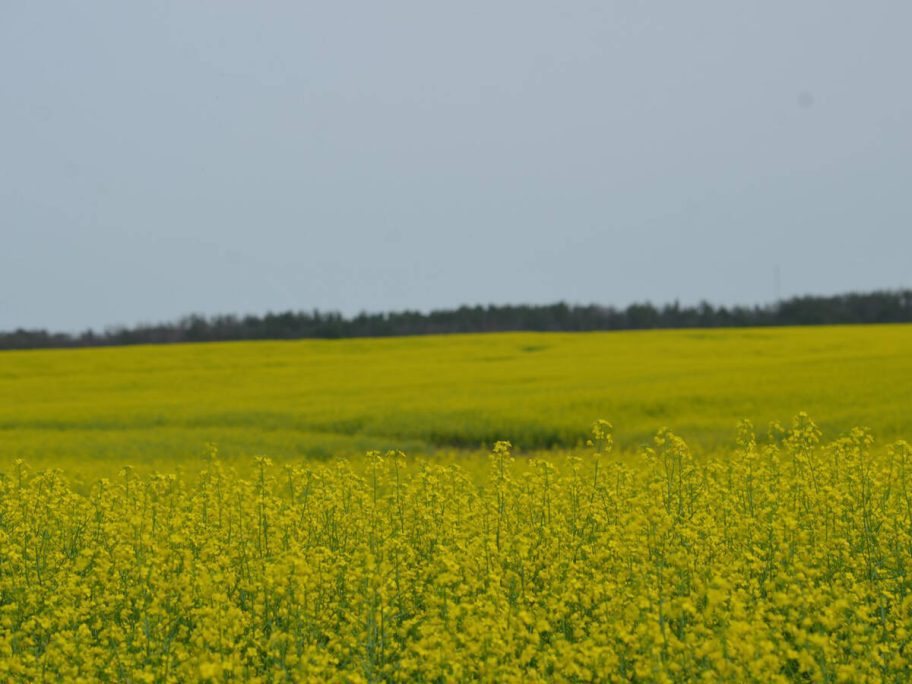
A canola field in full bloom north of Stettler, Alta. Note the drown out spots in the distance. Crop has excellent yield potential.
Photo:
Bruce Burnett
It was obvious that farmers planted less spring wheat than they have in previous years, but the wheat crops are in good shape.
He is forecasting an average spring wheat yield of 52.5 bu. per acre, which would result in 24.9 million tonnes of production, which would be on the small side compared to the past few years.
Burnett believes durum lost even more acres to spring wheat and canola than Statistics Canada is forecasting.
He is forecasting an average durum yield of 35 bu. per acre and 5.3 million tonnes of production, which is on the low side.
Barley appears to have held onto its acres fairly well and the crop looks very good. Cereal crops appear to have survived the deluge of rain better than canola.
“There’s a lot of barley crops that look very, very good despite the fact that there’s excess moisture in some of the low spots,” said Burnett.
He estimates an average yield of 68 bu. per acre and 8.35 million tonnes of production, which would be an improvement over last year.
Burnett thinks oats may have lost more acres than Statistics Canada is forecasting, and there could be higher abandonment as well.
“We’re really looking at a smallish out crop this year,” he said.
He is forecasting an average yield of 96 bu. per acre and 3.1 million tonnes of production.
The outlook for pulses is a mixed bag.
“Lentils have been affected the most by the wet conditions,” said Burnett.
That is despite the fact that they are primarily grown in southern and central Saskatchewan, where the rains were not as heavy as the north.
However, moisture levels were still above normal in those regions, which has set lentil fields back through significant drowning and disease development.
“That’s certainly going to impair production,” he said.
Burnett is estimating 1.89 million tonnes of production compared to 3.36 million tonnes last year.
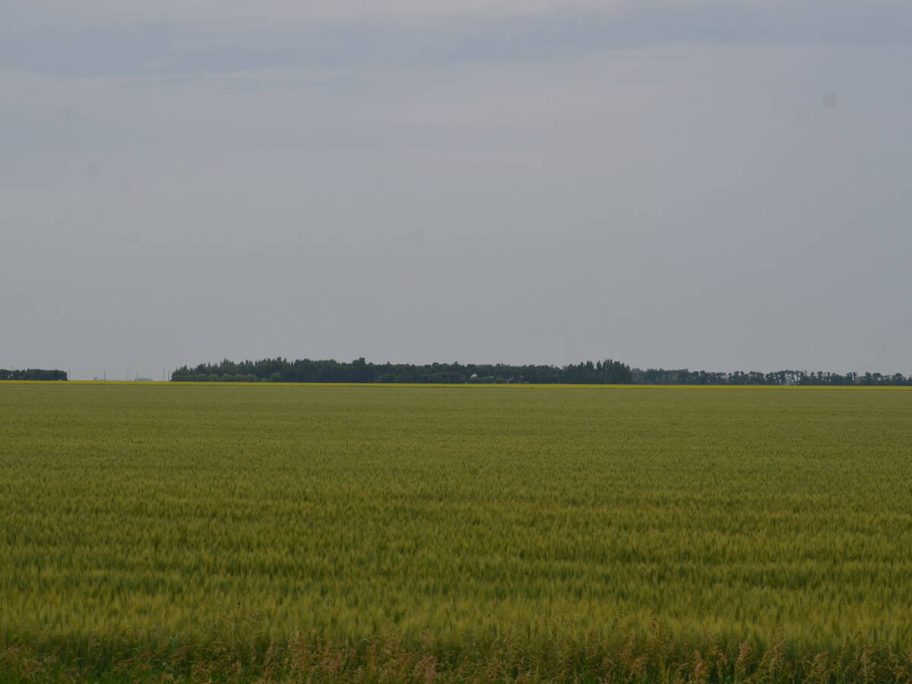
A wheat field in the filling stage near Morris Man. Wheat crop was well established before the heavy rains in June. Concerns about disease, especially fusarium head blight, but farmer has sprayed fungicide recently.
Photo:
Bruce Burnett
It’s a different story for the other main pulse crop.
“The peas in the central growing areas look wonderful, just excellent,” he said.
“Some of the best pea crops I’ve seen in the last five years.”
Peas are planted early, so there wasn’t much abandonment. However, they did suffer from drowning in the north.
Burnett expects an average yield of 37 bu. per acre and 3.3 million tonnes of production, down from last year’s 3.93 million tonnes.
Growers in Manitoba increased their soybean acres more than canola.
“That you can see in spades as you drive through the province,” said Burnett.
“There’s just more soybeans out there than there has been the last number of years.”
He believes sky-high nitrogen fertilizer costs were the main driver of that trend. Plus, canola price prospects were not as good at planting time as they are now.
He is forecasting an average Prairie soybean yield of 46 bu. per acre and 2.4 million tonnes of production for the region.
Going forward, Prairie farmers need warm conditions during the last half of the growing season, frost-free conditions until mid-September, and one other key ingredient.
“We will need to see some additional rainfall,” said Burnett.
“We just do not want huge amounts all at once.”