
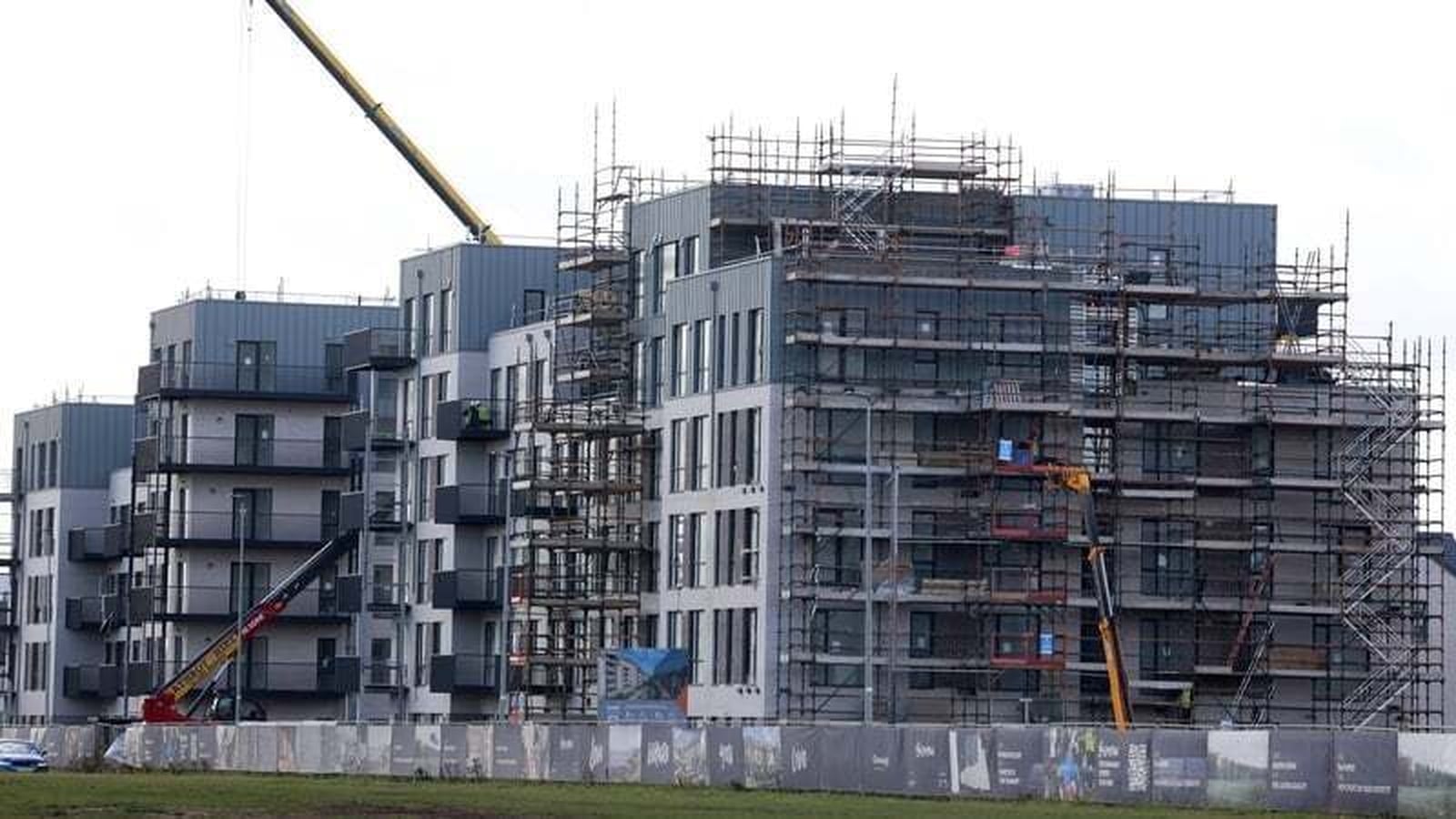
The number of residential buildings under construction topped 30,000 in June, an increase in activity of almost 28% compared to the same period last year.
The highest proportion of were located in Dublin with 6,107, followed by Cork with 3,770 and Meath with 2,192.
According to the GeoDirectory’s second quarter report 37,128 new addresses were added in the 12 months to June, representing a 12% year on year increase.
The GeoDirectory database is considered the most comprehensive address database of dwellings and produces two Residential Buildings Reports annually – one in the second quarter of the year and the other in the fourth quarter.
Speaking on RTÉ’s Morning Ireland, GeoDirectory CEO Dara Keogh said the increase in construction will result in a lot more addresses because some of the buildings will be apartment blocks with multiple individual addresses.
He also said taking in the number derelict buildings coming back on stream, the number rises to nearly 39,000.
The report showed that there were a total of 19,137 properties listed as derelict, a fall of 3.5% compared to the same period in 2025.
The national vacancy rate remained unchanged at 3.7% with 81,373 vacant units recorded nation-wide.
Vacancy rates decreased year-on-year in 15 out of 26 counties surveyed.
The highest vacancy rates were found in the west and north-west of the country, with Leitrim (11.5%), Mayo (10.3%) and Roscommon (9.9%) seeing the highest rates.
We need your consent to load this rte-player contentWe use rte-player to manage extra content that can set cookies on your device and collect data about your activity. Please review their details and accept them to load the content.Manage Preferences
At just 1.4%, Dublin was the county with the lowest residential vacancy rate, while Kildare, Waterford, Meath and Wicklow all registered rates lower than 2.5%.
Mr Keogh said the vacancy rate is a measure of the efficiency in the market.
“Vacancy on its own isn’t necessarily a bad thing, we do need a level of vacancy to ensure that there’s a flow of buildings for when they’re needed for people,” he said.
“If it becomes too tight, you’ll see a big increase in house prices, and if it’s too loose, you know, there’s a waste of resources,” he said.
He also said that vacancies are a little too tight in Dublin, Kildare and Meath and too many vacancies in places like Leitrim.
Nationally the decreases in vacancies are all on the eastern coast, he added; ” It’s an east-west divide”.
According to GeoDirectory’s latest data the average national house price increased to €437,631 in May 2026, up 4.7% on the previous year.
The highest average property prices were recorded in Dublin (€596,997), while Longford was the county with the lowest average property price (€209,146).