
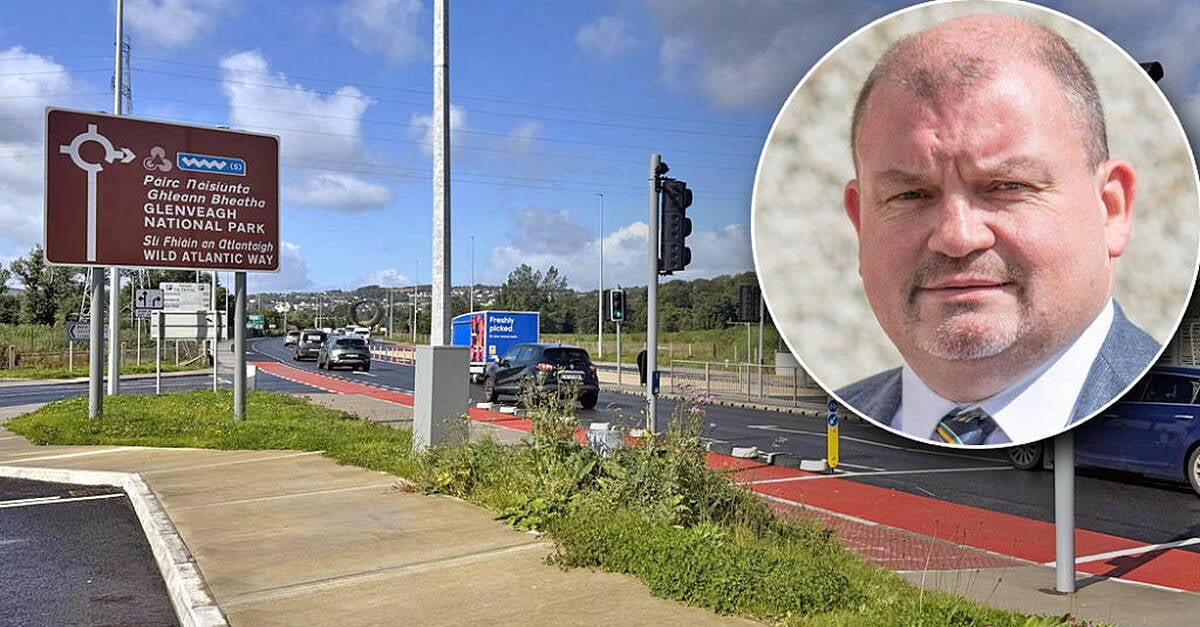
Letterkenny councillor Ciaran Brogan says questions need to be asked and answered about the final total and ongoing challenges of the Four Lane road in Letterkenny.
The final cost of the 1.4km stretch of road has reached €16 million.
That’s 47% over its original pre-construction budget of €10.9 million.
Despite that increase, a report has described the final outcome as “satisfactory”.
“It’s laughable how they can say that,” said Councillor Ciaran Brogan.
“A project like this is what damages the public’s confidence in public contracts and public money being wasted.”
According to a response from the council, the final cost of the scheme, which was entirely funded by Transport Infrastructure Ireland, increased due to several factors.
The additional costs and delays arose from issues such as difficult ground conditions and environmental issues beside the River Swilly Special Area of Conservation.
Covid-19 also affected staffing, operations and supplies, while the war in Ukraine caused further supply chain problems.
Global inflation pushed up the cost of steel, bitumen and other materials.
The first sod was turned on the N56 Four Lane Road Project in June 2021. The project was originally due to begin in Autumn 2020, but progress was brought to a halt when the pandemic hit. The road was substantially completed by 2024.
Cllr Brogan said his party, Fianna Fáil, says he had raised concerns from the beginning that the Four Lane project was “too premature” and that it would have been better to wait until after the Bonagee bridge was completed.
“At all times throughout the process, we were highlighting the challenges of the Four Lane and the challenges for the emergency services.”
He said the final figure would raise serious questions for the public.
“It started off with smaller sums and now it’s unfortunate that it ended up at €16 million.
“I am sure people throughout Letterkenny and Donegal will be asking what the €16 million was for.”
He also questioned the design of the central concrete barrier and the lack of space for emergency service vehicles, which has been raised regularly over the years.
“One has to look at the width of the concrete median barrier that was put in place. Something a lot less than that would have been very sufficient.
“Questions need to be asked and answered on that.”
A review has since been carried out into emergency access along the Four Lane during periods of heavy congestion.
While accepting that ambulances and other emergency vehicles can be delayed during severe congestion, it outlined a proposed plan for motorists in the left lane to ‘co-use existing space’ by temporarily pulling partly onto the cycle lanes when an emergency vehicle approaches.
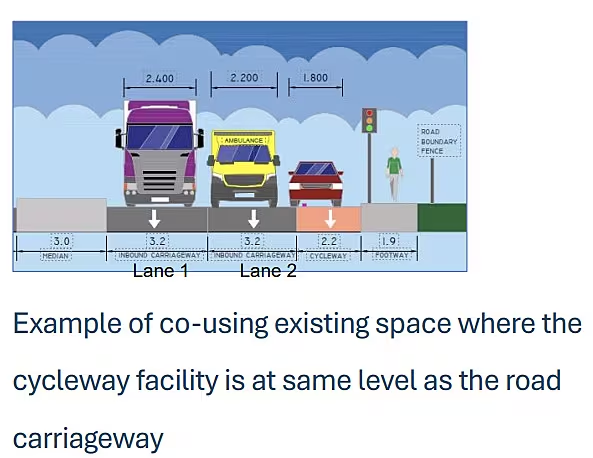
Part of the proposed emergency access arrangement
The review also considers replacing some larger lane-separation bollards with smaller ones that vehicles could cross more easily.
Sections of kerbing may also be altered, while new signs would advise motorists what to do.
Cllr Brogan said the report was the first clear acknowledgement that emergency access remained a problem.
You may also be interested in

“That vindicates our position all along,” said Cllr Brogan.
“There is an acknowledgement, clearly, that the emergency services are not being accommodated,” he said.
However, he said much more detail was needed before the public or ambulance crews could have confidence in the plan.
“It has been a huge bone of contention for the ambulance service for the last number of years,” Cllr Brogan said.
“They have a duty to try and restore some confidence, first of all with the public, but also with the ambulance service.
He also raised concerns about the ongoing Kilmacrennan Road Active Travel works, where concrete islands have been installed at the entrance to the Emergency Department at Letterkenny University Hospital.
“The ambulance personnel are up to high doh because it’s so narrow for them, they have to cut out into the road to turn into A&E,” he said.
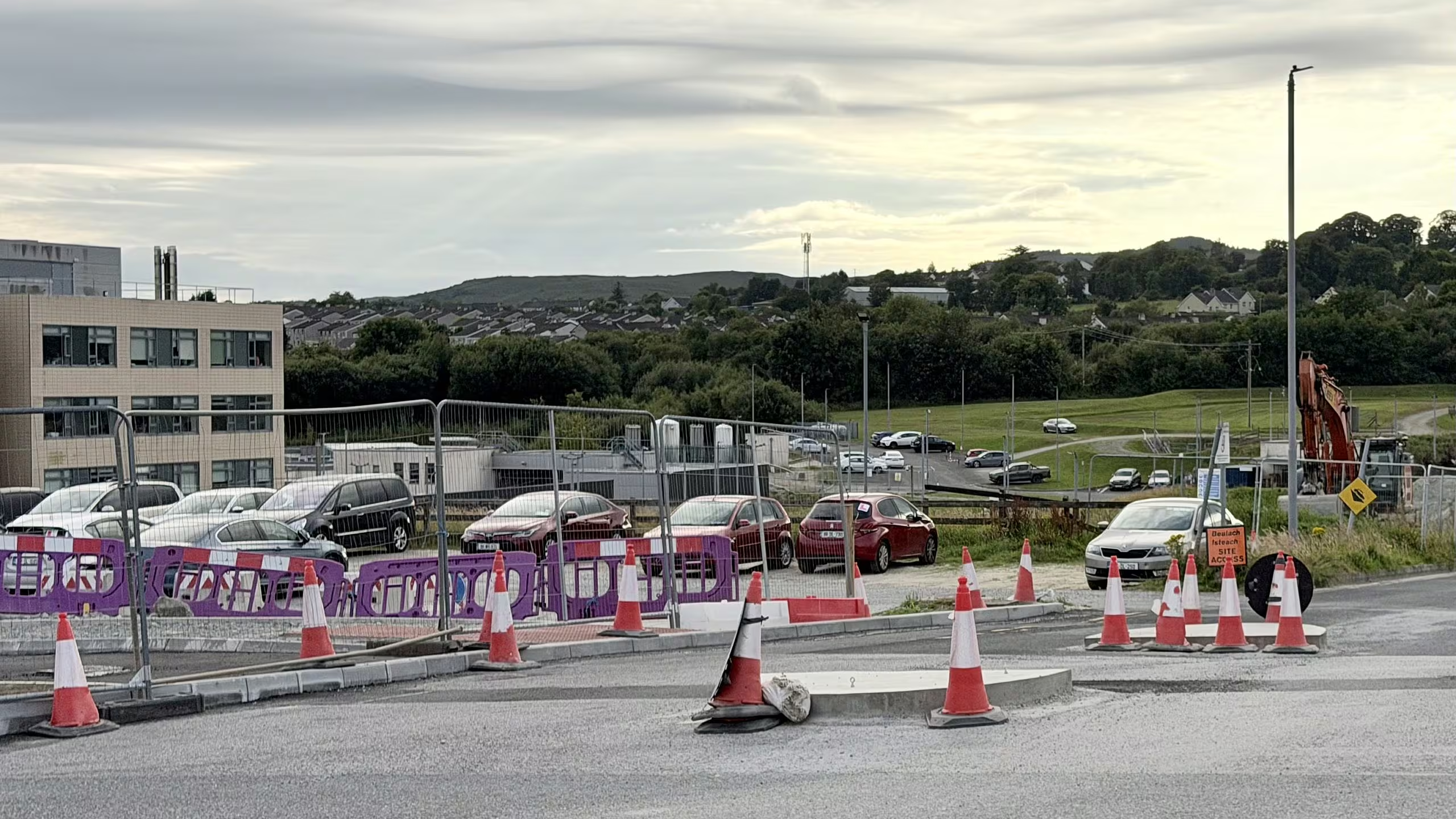
The paved island at the entrance to Letterkenny University Hospital’s Emergency Department
Cllr Brogan said the Four Lane report has strengthened his wider concerns about Active Travel projects on roads that are already under pressure.
He said the council needed to consider the impact on motorists, buses and emergency vehicles before progressing further schemes.
He also called for the next stage of the Active Travel scheme along the Circular Road to be paused.
The proposed scheme would narrow the road from Ballyraine National School towards the Tesco roundabout to create space for footpaths and cycleways.
“We owe it to the people to put that on hold and have another look,” said Cllr Brogan.
“There has to be some level of thought put into the car user, buses and all the other vehicles.
“It’s not about the blame game. People need to learn from the mistakes, and we need to take a fresh look at it all.”
His comments follow a motion he brought to Monday’s council meeting in Lifford calling for a review of the Roads and Transportation Directorate.
Cllr Brogan said a fresh look is needed on how road projects were planned and delivered and urged the local authority to reconsider its approach to the ‘elephant in the room’ that is Active Travel.
During the debate, he compared the Active Travel scheme linking Bundoran and Ballyshannon, where traffic has already been diverted by the bypass, to projects in congested areas of Letterkenny.
“I think the situation in Letterkenny doesn’t bode well for the Active Travel programme,” he told councillors.
He argued that roads already operating at full capacity should not lose space for motorists.
“When I look at the Active Travel programme… Bundoran and Ballyshannon is a top class example of good Active Travel because you have the dual carriageway and the bypass that can take the capacity.
“But where we have junctions (in Letterkenny) that are already at full capacity and can take no more, we should be looking at how we can improve things for the car user.”
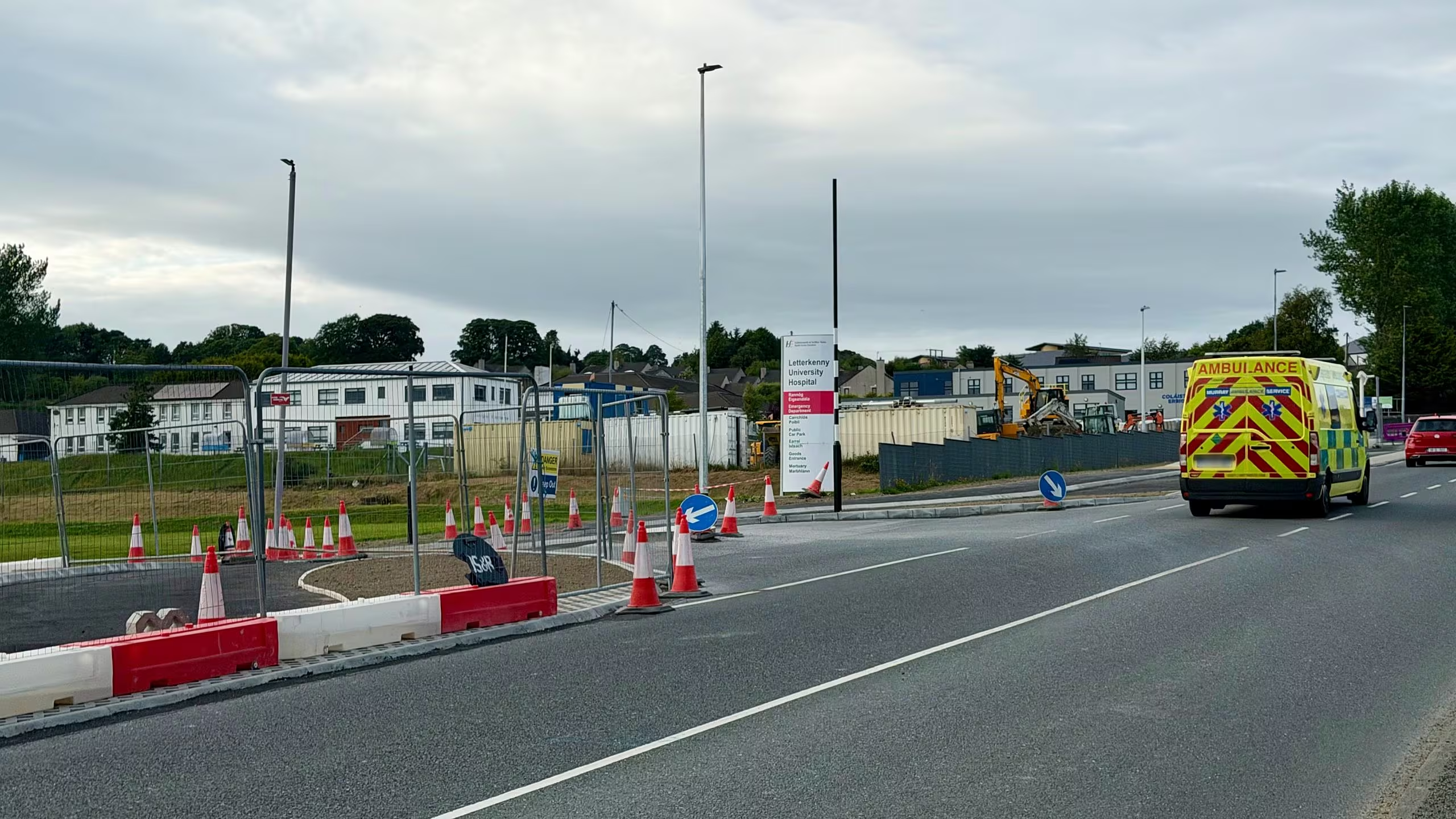
Active Travel works on the Kilmacrennan road in Letterkenny
He also said Letterkenny required short, medium and long-term traffic solutions.
The long-term solution, he said, remains the TEN-T project.
He welcomed progress on the 3.3km Northern Relief Road at Windyhall and said traffic signalisation around the town should also be improved.
“We’ve fought long and hard over the years to get funding and money into Letterkenny and Donegal,” he said.
“But it’s unfortunate when we see that money not being spent well.
“That doesn’t augur well for us when we’re going to the Department looking for more funding.
“The reality is that a lot of people have lost confidence in some of the works that have taken place over the last number of years.”