
 Can you see it? Credit: Google Maps
Joël Lapointe was planning a camping route when a strange feature on Google Maps caught his eye.
The amateur astronomer had spotted a near-perfect ring around Lake Marsal in Quebec’s Côte-Nord region. It looked too large, too clean and too odd to ignore. Scientists now say he was right: The 25-kilometer-wide structure is an impact crater formed about 390 million years ago, one of the largest such discoveries in recent years. Only about 200 meteorite craters have been identified around the world, in total.
A Strange Ring in the Forest
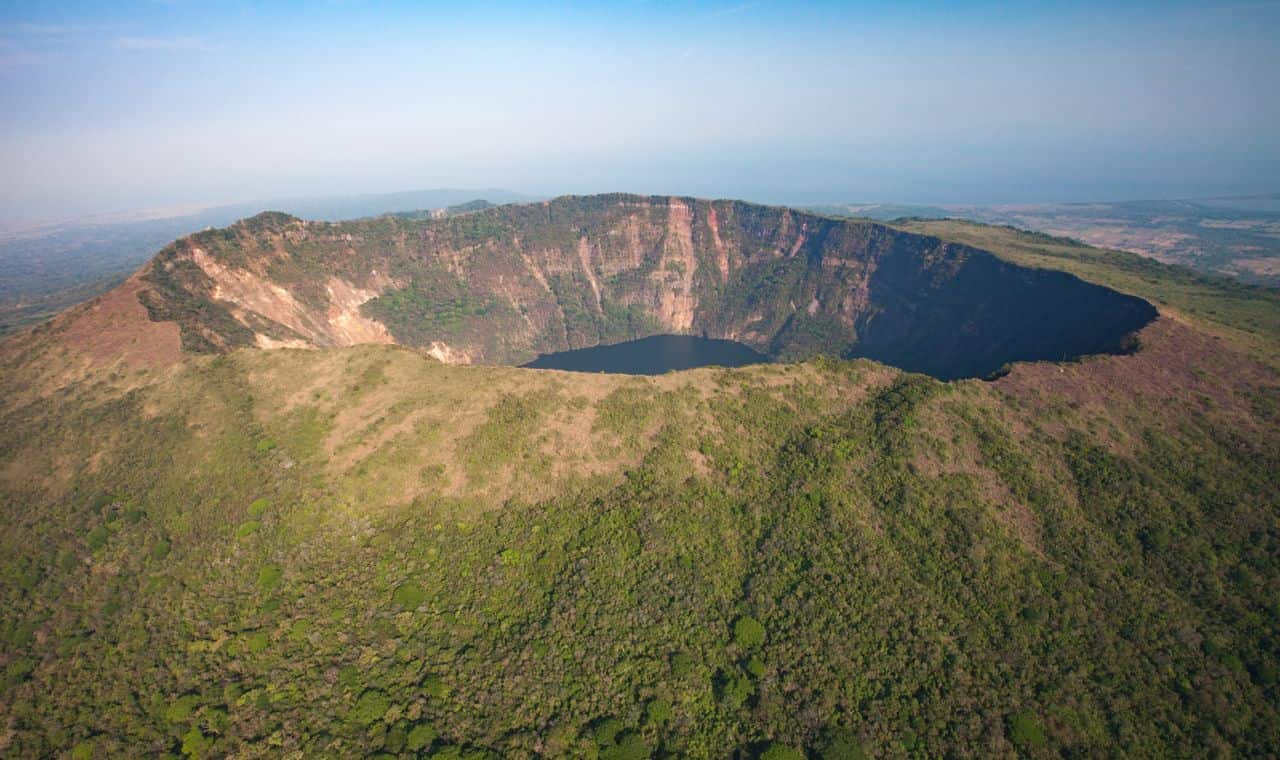
 Aerial view of Lake Marsal. Credit: Gordon Osinski
Lapointe was scrolling through satellite images in 2024 when he noticed the indentation in northeastern Canada. The feature did not appear in crater databases, so he sent his suspicion to researchers through Impact Earth, a crater-reporting project run by Western University in Ontario.
He doubted himself at first. “I told myself, ‘You haven’t discovered anything, Joël, it’s not possible, they must already know about this,’” Lapointe told the Canadian Press.
The report eventually reached Gordon Osinski, a planetary geologist at Western University who studies impact craters and trains astronauts in crater geology. Osinski hears from many people who think they have found craters from satellite images. Most leads go nowhere.
“I get lots of messages from the public thinking they have found a crater and 99/100 turn out not to be the case,” Osinski told Live Science. “This is one of those rare examples that shows this is possible.”
In October 2025, Osinski and other geologists traveled to the site. The trip was punishing.
“This was one of the most arduous expeditions I’ve ever done—and I’ve done 25 expeditions to the Arctic and 6 continents,” Osinski added. “The terrain was incredibly rough and rugged, plus [there were] lots of bugs.”
×
Thank you! One more thing…
Please check your inbox and confirm your subscription.
The Rocks Confirmed
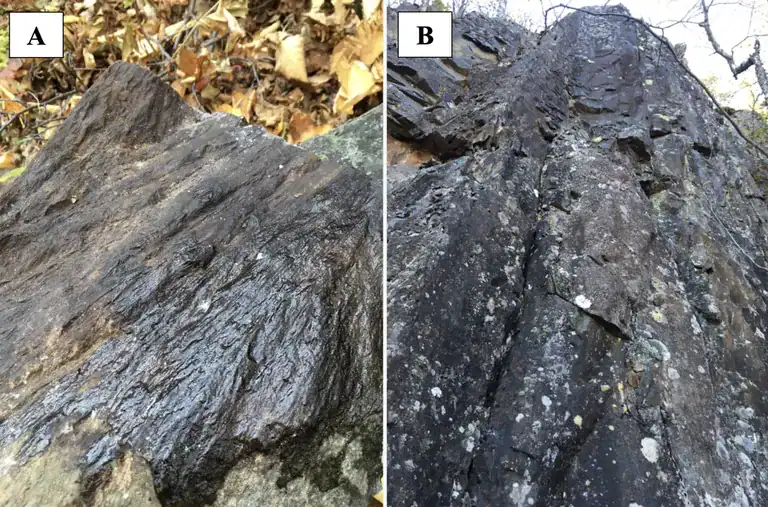 A) Shatter cone at the center of the structure. B) Melt rock 4 km (2.5 miles) west of the structure center. Credit: Gattacceca, J. et al
From above, many landscapes can look like impact craters. Volcanoes, erosion, and folded rock can fool even trained eyes. To prove a crater came from space, scientists need evidence in the rocks.
And it was there.
On the second day, researchers identified shatter cones—grooved, cone-shaped patterns that form when a shock wave blasts through bedrock. They also found cliffs of impact melt rock, stone that once liquefied under the extreme heat and pressure of a collision. A conference abstract for the 2026 Meteoritical Society meeting describes the site as preserving roughly 50 meters of impact melt rock, which is striking for a crater of this age.
“One of the key things we look for is evidence for shock metamorphism, which can only occur due to the immense pressures created by asteroid or cometary impacts — or nuclear explosions,” Osinski told Live Science.
Shock metamorphism means that the minerals inside rock have been physically changed by sudden, crushing force. Most samples require a microscope to confirm. Shatter cones are so obvious they can be seen in the field, making them especially valuable clues.
Osinski told Space.com that the melt rock came as a surprise. “Impact melt rocks are like they sound: large volumes of rock that are melted by the impact event, but then cool and crystallize to look a lot like volcanic rocks,” he said. “Finding these preserved—as they are usually some of the first parts of a crater to be eroded—was a big surprise.”
A Rare Addition to the Record
 Location of all confirmed impact craters, hypervelocity impact craters, and impact deposits on Earth (as of 2022). Credit: Impact Earth
Researchers have named the crater Uhackatik after discussions with the Innu Council of Ekuanitshit, whose traditional lands include the area. The team plans to present its findings at the 88th Annual Meeting of the Meteoritical Society in Frankfurt, Germany.
Scientists know of only about 200 confirmed impact craters on Earth. Canada has more known craters than any other country, partly because its ancient, stable bedrock has preserved scars that erosion erased elsewhere.
Even so, a crater this size is unusual. According to Osinski, scientists typically find only one or two impact craters each year, and most are far smaller than Uhackatik.
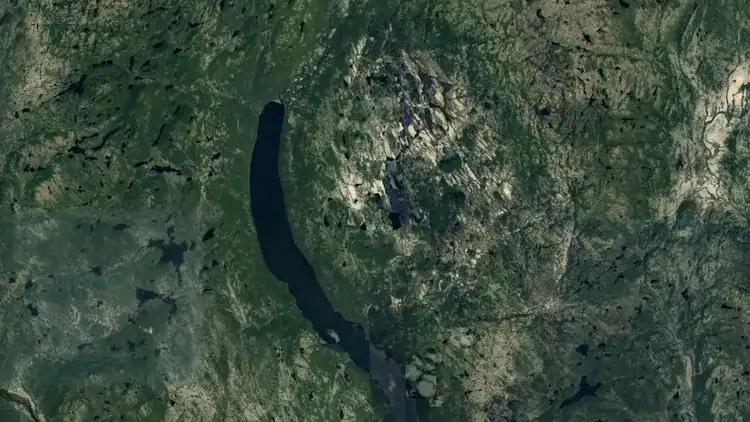 Did you catch it in the first picture? Credit: Google Maps
The site may also help researchers understand cratered worlds beyond Earth. Osinski compared Uhackatik with Kamestastin, also known as Mistastin, a crater in northern Labrador used to train Artemis astronauts because its geology resembles parts of the moon.
For Lapointe, the find shows that careful attention can still open a scientific door.
“It’s not every day that an ordinary citizen finds a 390-million-year-old crater,” he told Radio-Canada. “I encourage everyone to not ignore intuition or an observation, even if it isn’t part of your field of expertise.”