
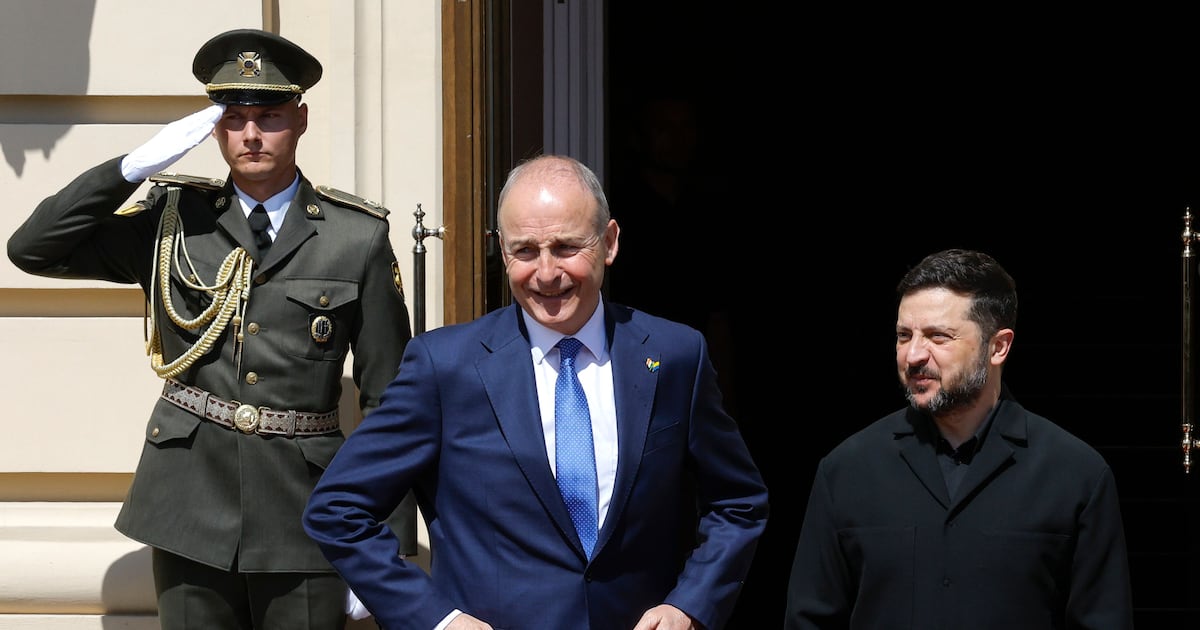
The Government will examine if there are “other approaches” that could be taken to ensure Aughinish Alumina was not supplying material to Russian arms manufacturers, other than sanctioning the plant, Taoiseach Micheál Martin said.
Speaking during a visit to Kyiv on Thursday, Martin said the investigation into the Co Limerick facility did not find “concrete or definitive” evidence it was supplying alumina to the Russian military, but equally could not rule that scenario out.
“What we have said is that the evidential threshold isn’t there to prove that it goes into weapon making, on the other hand, neither can you say definitively that it doesn’t.”
Standing beside Ukrainian president Volodymyr Zelenskiy, Martin said: “We do not want material from Aughinish going to Russia”.
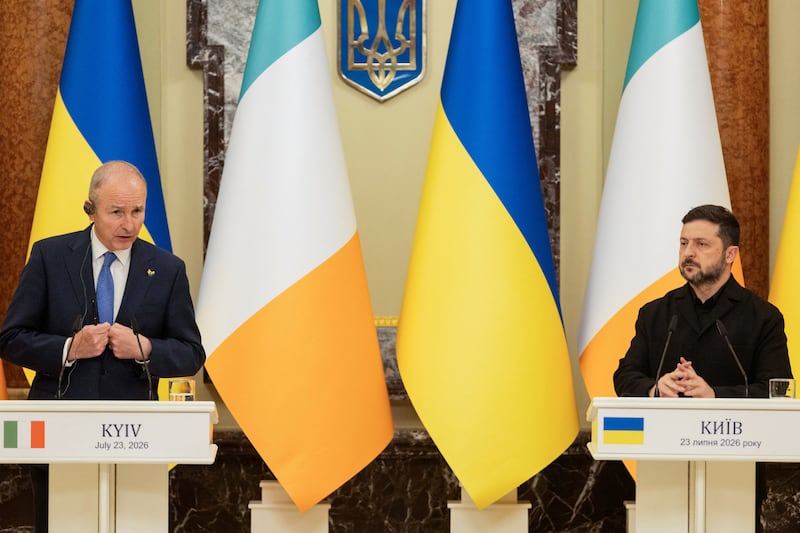 Zelenskiy and Martin at a joint press conference in Kyiv on Thursday. Photograph: Tetiana Dzhafarova/AFP via Getty Images
The Fianna Fáil leader for the first time confirmed the findings of the Department of Enterprise inquiry into Aughinish and its exports to Russia.
“The investigation has not found concrete or definitive evidence linking the alumina to a weapons manufacturer in Russia. That said, neither has it found definitive evidence that alumina may not be going to weapons manufacturers, so it’s difficult,” the Taoiseach told a joint press conference during a visit to the Ukrainian capital.
The Government will shortly share the outcome of its inquiry with the European Commission, the EU’s executive body that proposes and oversees the bloc’s regime of economic sanctions targeting Russia.
“This is both an Irish issue and a European issue,” Martin said.
The investigation was opened following reporting by The Irish Times, in co-operation with the Organised Crime and Corruption Reporting Project, that drew on leaked documents to detail how Aughinish Alumina is shipping vast amounts of alumina to smelters in Russia, where it is then sold to a company supplying aluminium to Russian arms and missile manufacturers.
The commission will begin drawing up a fresh package of sanctions targeting Moscow and its war machine in the coming weeks, which will be the 22nd round of restrictions since Russia’s February 2022 invasion of Ukraine.
Zelenskiy said he would like to see alumina listed as a sanctioned product in that round of measures tabled by Brussels officials, which – if approved by all 27 EU member states – would bar European companies exporting the material to Moscow.
From the Shannon to Siberia: How alumina from a Limerick refinery enters Russia’s weapons supply chain
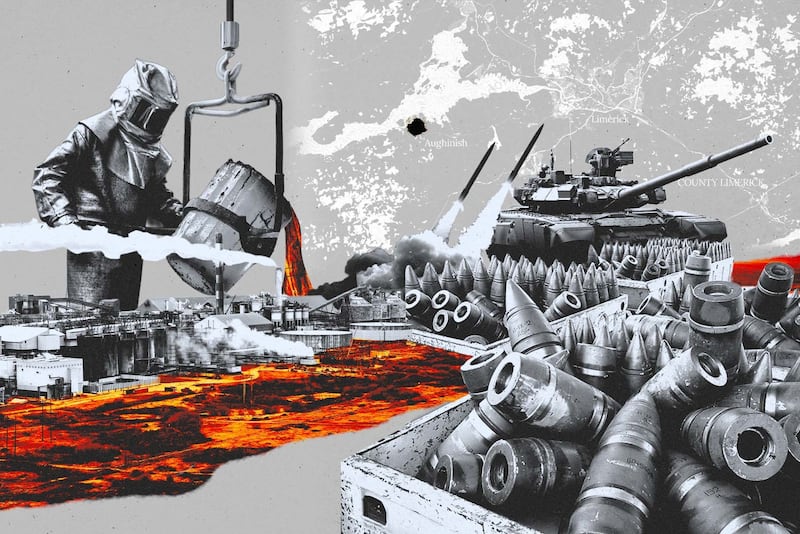 Aughinish Alumina in Co Limerick supplies vast amounts of raw materials to Russian aluminium smelters, according to an investigation by The Irish Times and the Organised Crime and Corruption Reporting Project (OCCRP).Read the full investigation here.
“We support sanctioning of the relevant production … the number one task that we have, the issue is that this does not reach Russia, that this does not help weapons production,” he said.
Martin said Ireland would work with the commission to see if there were “other approaches” that could be taken to achieve the “objective” of making sure Irish alumina exports were not feeding the Russian war machine.
Pressed on this point, the Taoiseach said he was constrained in how much detail he could give. “I mean there could be some market solutions,” he said.
The important role played by the Co Limerick refinery in the wider European supply chain had to be a factor taken into account in any future EU decision on sanctions, he added.
An aluminium smelting facility in Dunkirk, France, that supplied European industry was “heavily dependent” on the Irish plant, to the extent it received 70 per cent of its alumina from Aughinish, Martin said.
Any response would have to make sure Aughinish’s supply to European industry was not disrupted, “whilst not having material going to Russia”, he added.
The investigation by the department into Aughinish Alumina’s exports to Russia was “almost complete”, Martin said.
The plant, which is owned by Russian metals giant Rusal, had been “adamant” that raw material it produced was not going to arms manufacturers.