
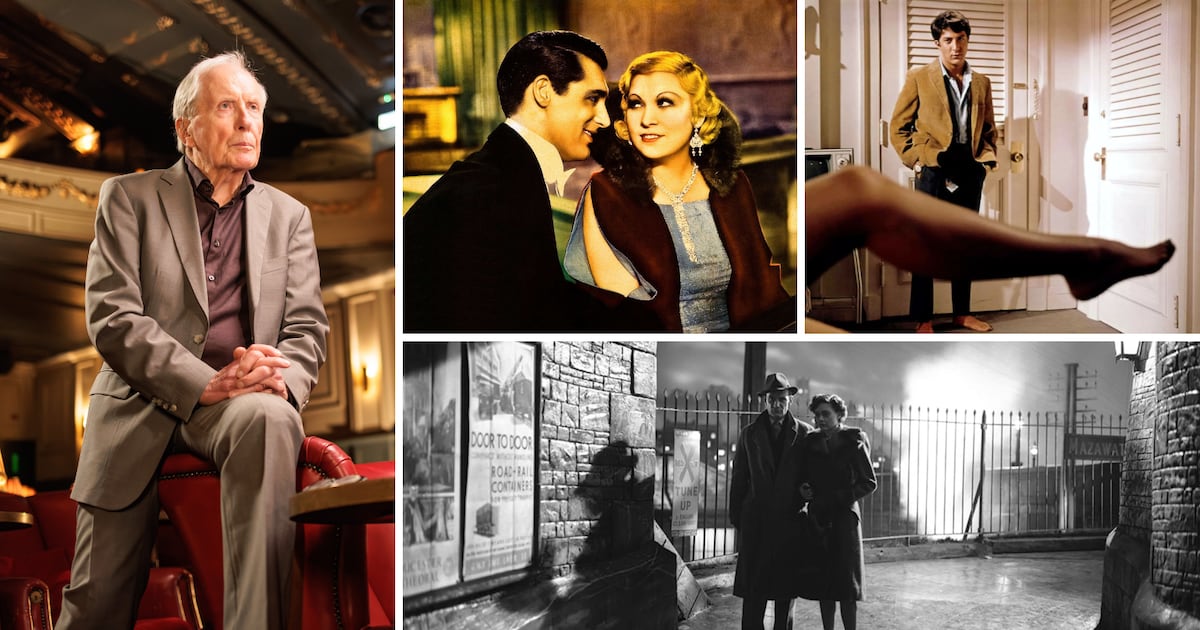
A generation of Irish cinemagoers has grown up with no memory of the bad old days when theocratic censors kept comically unthreatening material from the nation’s supposedly fragile eyes.
Films banned included such unmitigated filth as Casablanca, Brief Encounter and Mildred Pierce. When supposedly risqué films did make it through, they were often so mangled as to make little sense.
John Kelleher, who took over as censor in 2003, came into the office with weary memories of what had been kept from the keen cineaste.
“I was a young adult in the 1970s, in my 20s and early 30s,” he tells me. “That’s your prime cinemagoing age, and 200 movies were then banned in Ireland. It’s outrageous.
“Obviously, working in the business, I was pretty familiar with the background, and I was always very interested in it. That’s why I applied. I thought there was more to be done in terms of modernising the outfit.”
Keheller, a famously genial man with a distinguished CV as producer and executive, played a significant part in bringing that grim era to an end. In 2008 he changed the name of the Irish Film Censor’s Office to the Irish Film Classification Office, reflecting a change in emphasis from prohibition to clarification. By the time his tenure came to an end, in 2009, the banning of films was, essentially, a thing of the past.
After the fall of the Berlin Wall there was much foolish chatter about “the end of history”. That didn’t quite work out. But the words might reasonably, in this limited field, be applied to what Kelleher accomplished in the early years of the century.
It was a watershed, he says. “For a whole variety of reasons. Change of name. Change of a lot of things.”
Kelleher is, therefore, the ideal person to present and co-write a documentary about the often sorry history of film censorship in Ireland. In the Opinion of the Censor, co-produced by Oireachtas TV, takes us from the introduction of the Censorship of Films Act in 1923 through squabbles over Mae West’s double entendres on to Elvis’s dangerous torso and up to the last throes with a ban on Natural Born Killers in the 1990s.
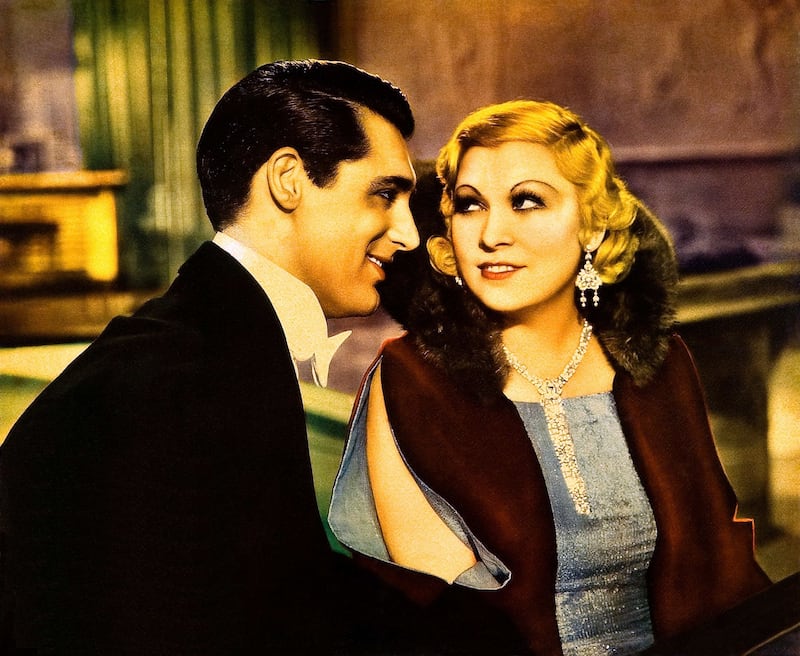 Mae West with Cary Grant in
I’m No Angel (1933). Photograph: Paramount Pictures
There is a lot in Andrew Gallimore and Lydia Monin’s film, which screens on RTÉ next week, that might surprise the casual observer. The Catholic Church is, it hardly needs to be said, a large part of the story, but it seems there was cross-faith support for the introduction of the legislation. One also gets little sense of public disquiet for the first few decades of the regime.
“When you look at the history of it, it is possible to be angry,” Kelleher say. “It’s possible to be amused. It’s possible to be astonished. All sorts of different emotions and experiences, because it was just so bizarre in some respects. And yet it reflected the times we were in.”
Kelleher points towards the title of the film. The words “in the opinion of the censor” were included in the legislation. There was a real sense that one man (it was always a man) would be the controlling force, and subsequent decisions reflected the sensibility of the office holder.
That man had a lot to ponder about sex, violence and religion. Kelleher notes that Dr Martin Brennan, who served as censor from 1954 until 1956, cut a scene from Elia Kazan’s On the Waterfront because a priest, played by Karl Malden, dared to have a drink in a pub.
A sequence from Gone With the Wind that saw Vivien Leigh daring to lower the shoulders of her dress was too much for James Montgomery, who served from the office’s creation, in 1923, until 1939.
Dr Kevin Rockett, author of the definitive doorstop Irish Film Censorship: A Cultural Journey from Silent Cinema to Internet Pornography, has argued, according to Kelleher, “that screen censorship reflects the cultural and social history of a society”.
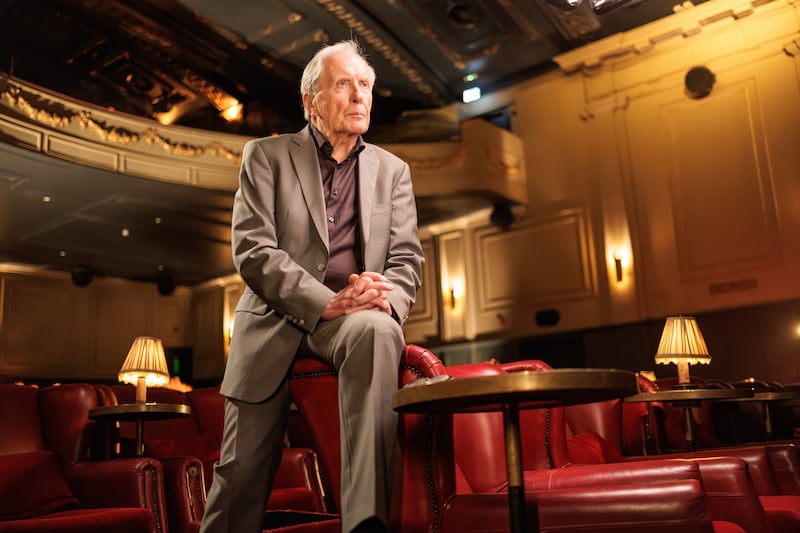 In the Opinion of the Censor: John Kelleher, Ireland’s final film censor. Photograph: Daniel Geesen/RTÉ
If this is true – and it almost certainly is – then In the Opinion of the Censor speaks to a pervading stasis in Irish society through the opening decades of independence. One also gets a sense of disrespect from authority to populace.
“There is this extraordinary idea that uneducated people couldn’t make up their own minds,” Prof Ruth Barton of Trinity College Dublin says in the film. “You’ve got to think it would have been quite different for the middle classes. They wanted to see films imported from, say, France, but particularly the really, really influential films that were being made in the then Soviet Union.”
No chance of that.
“Church and State said, ‘Uh-uh, this is Bolshevik propaganda.’”
“From the beginning, Montgomery took the view that all films need to be released with general certificates,” Rockett adds. “Therefore, the youngest child could view every film. In that way, Montgomery, in common with many of the people in government in the first decades of the Irish Free State, treated the Irish people as if they were children.”
All very depressing. But most audiences will find themselves laughing as much as sighing during the documentary. Casablanca was initially banned because it was viewed as incompatible with Ireland’s neutrality during the second World War.
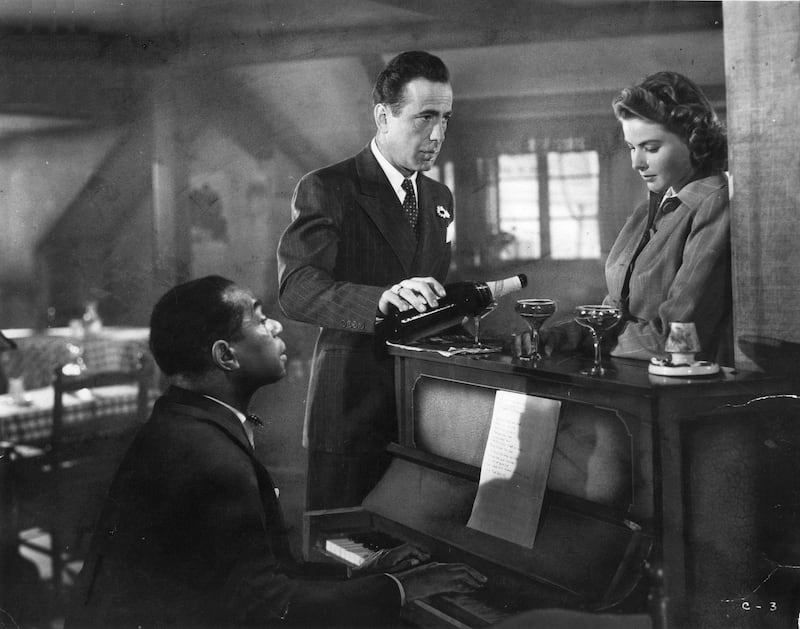 Dooley Wilson sits at the piano while Humphrey Bogart pours Ingrid Bergman a drink in a scene from the film ‘Casablanca’, 1942. (Photo by Warner Brothers/Getty Images)
When it was resubmitted, following the German surrender, Richard Hayes, the second censor, allowed it in, but cuts were imposed to conceal the nature of Rick Blaine’s (technically adulterous) affair with Ilsa Lundt in Paris two years before the main action of the film.
“We’ll always have Paris,” Humphrey Bogart, as Rick, famously consoled. “The Irish cinema audience?” Kelleher jokes in the doc. “Well, they didn’t have Paris.”
More absurd still was the banning of David Lean’s Brief Encounter, in 1945. True, the film hinges on a potential (surely unconsummated) adulterous affair, but it is famous for the restraint and civility of its suburban emotions.
“That was going back to the idea of a British thing we do not want,” Kelleher tells me. “We do not want divorce. We do not want that. Brief Encounter is about a relationship between married people. Abortion? Contraception? Those things are not for Ireland.”
Yes, at least one contributor to the documentary argues that much of the censorship stemmed from resistance to the supposedly corrupting influence of perfidious Albion.
“That was very, very strong I think,” Kelleher says. “But it was articulated very eloquently by James Montgomery. He made that remark: ‘It’s not the anglicisation of Ireland I’m so concerned about. It’s the Los Angelisation.’”
Change was a long time coming, but there were brave voices resisting the conservative status quo. In the Opinion of the Censor finds space for the veteran (we might now risk “legendary”) arts journalist Ciaran Carty.
In the 1960s, then with the Sunday Independent, he began comparing the running times of films on UK release and Irish release. What had happened to all those missing minutes? The documentary notes that the eventual author of Confessions of a Sewer Rat: A Personal History of Censorship and the Irish Cinema found himself “rummaging around in the bins to find the evidence”.
The censor at the time was, oddly, one of several medical doctors to occupy the post.
“The censor, Christopher Macken, I looked into him and I discovered that he had no experience whatsoever,” Carty says in the doc. “Except, for one week, he’d been on the set of a film that was being made here. And Susan Hayward was having some trouble with her posterior riding a horse, and he had to come and give her injections. That was his qualification.”
For all Carty’s efforts, the 1960s did not swing vigorously enough to change minds in the censor’s office. The arrival to the job of Frank Hall, best known for the satirical TV show Hall’s Pictorial Weekly, persuaded some that a sea change was afoot, but the broadcaster had other ideas.
“He was quite a good satirist,” Carty says. “But he became censor, and the satire was suddenly an evil thing, Because he certainly wasn’t reluctant to cut and ban.” It was under his regime that Monty Python’s Life of Brian was banned.
[ An awful dump: The Ireland that banned Monty Python’s Life of BrianOpens in new window ]
A true shift in thinking began with Sheamus Smith’s arrival, in 1986 (though he still banned Oliver Stone’s Natural Born Killers), and accelerated with Kelleher’s appointment, in 2003. The theocratic meddling had no place in the modern, thrusting nation.
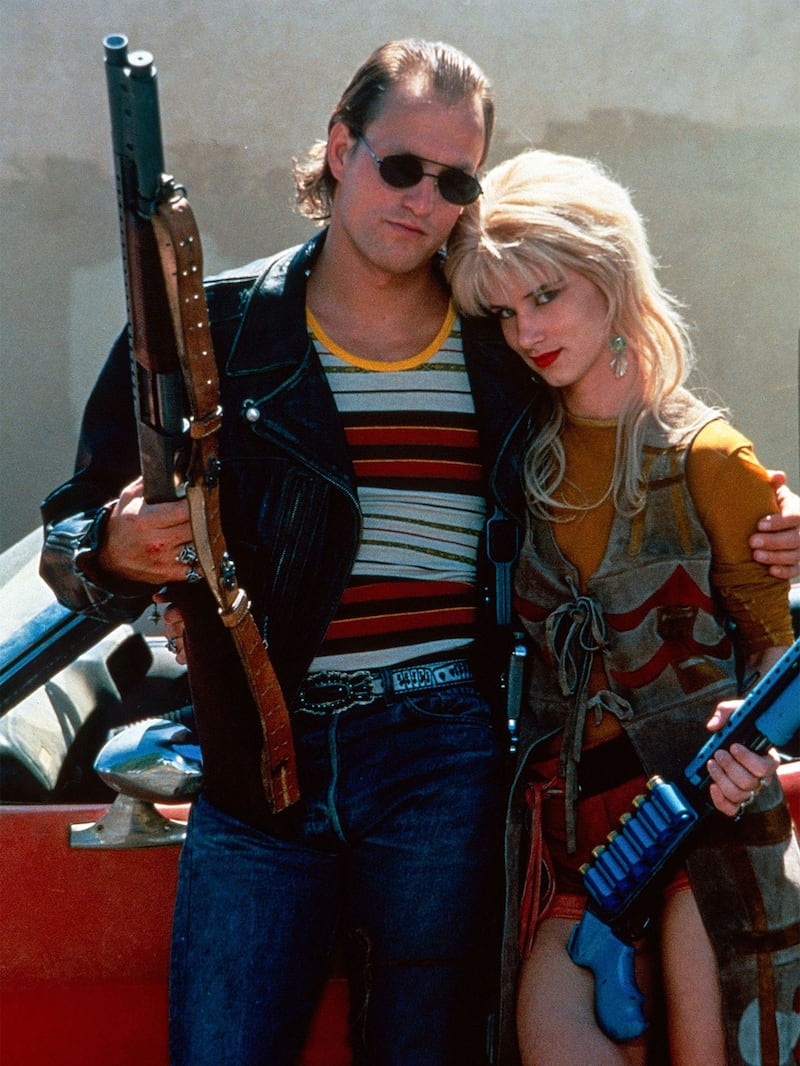 Woody Harrelson and Juliette Lewis in Natural Born Killers (1994). Photograph: Warner Bros
I put it to Kelleher that a defining moment came, in 2004, when he appeared on The Late Late Show to defend the granting of a certificate to Michael Winterbottom’s sexually explicit 9 Songs.
Such items, in the Gay Byrne years, became fraught festivals of hand-wringing. But there was little such sense on that episode. After an objector in the audience (politely, it must be said) reads out a list of sexual acts portrayed, Pat Kenny jokes: “You may be in danger of advertising this film.” The audience rocks with laughter. Few appear to be on the complainant’s side.
“You’re absolutely right,” Kelleher says. “If you look at that clip there are two girls – young women – sitting behind him or in front of him; they’re adjacent to him anyway. They’re certainly not with him. The look? It’s a mixture of incredulity and contempt and laughter and amusement.”
Kelleher, who worked on TV classics such as Strumpet City and spent time as managing director of the Sunday Tribune, is still the busiest of producers. Yet I wonder if he’ll be best remembered for the few short years he spent consigning the censor’s scythe to the rubbish bin.
“I won’t be unhappy if that’s the case, because I’m proud of the things I managed to achieve,” he says. “Not just changing the name, but changing the whole ethos of the thing.”
The end of (a little bit of) history.
Five key films banned in IrelandCasablanca (Michael Curtiz, 1942)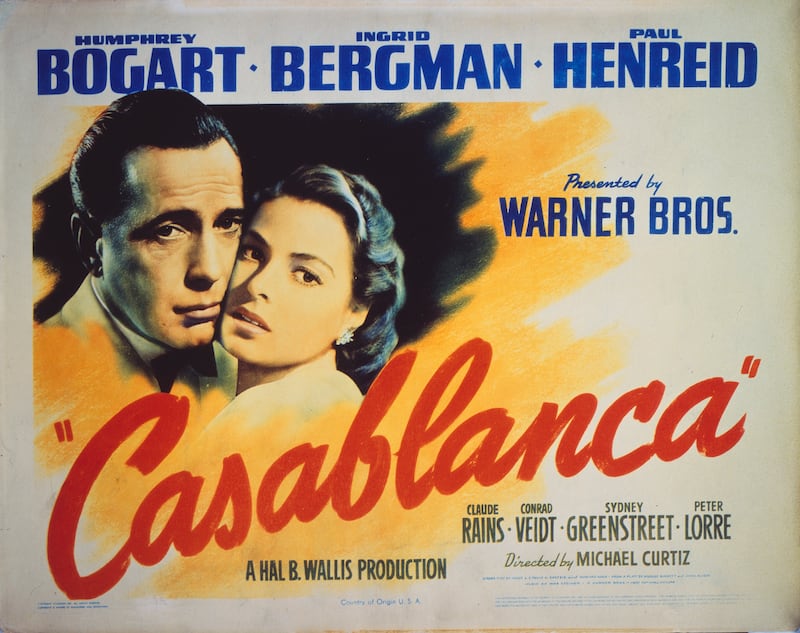 A poster for Casablanca starring Humphrey Bogart and Ingrid Bergman. Photograph: Movie Poster Image Art/Getty Images
Richard Hayes, the censor at the time, initially banned Casablanca because its apparent inclination towards the Allies infringed the Emergency Powers Order. “Picture deals with North Africa. Shows German activities in sinister light, and Vichy partisans also. Unpresentable in a neutral country,” the notes read.
The picture was later passed but only with cuts to obscure the nature of Ilsa and Rick’s adulterous affair. “You’d think that cutting some of cinema’s greatest lines would be something that Richard Hayes would regret,” John Kelleher quips during In the Opinion of the Censor. “Maybe not today. Maybe not tomorrow, but soon and for the rest of your life.”
Ulysses (Joseph Strick, 1967)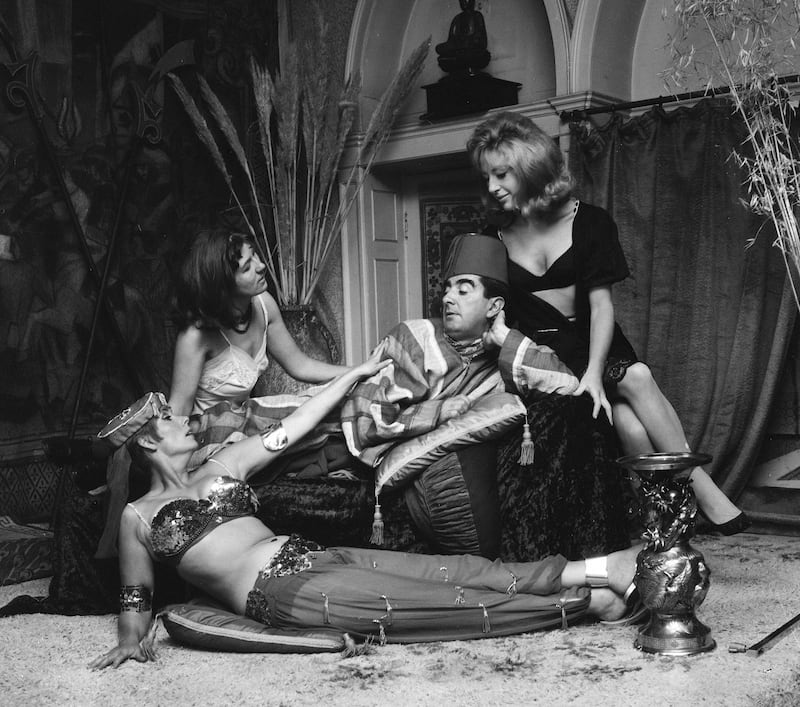 Leopold Bloom actor Milo O’Shea in dream sequence with harem girls Maureen Toal, Clare Mullen and Pamela Mant. Filming Ulysses (1967) on location in Dublin in July 1966. Photograph: Daily Mirror/Mirrorpix via Getty Images
It is perhaps grimly appropriate that the first film adaptation of James Joyce’s much-prosecuted novel was banned in his home country. The ban was upheld in 1974 and not lifted until 2000.
“There were members of my own family who didn’t care for the fact that I was an actress,” Fionnula Flanagan, who had a striking role in the film, remembers. “They said they would pray for me. Yes, you know, all prayers are well received. Thank you. Yes, I’ll take them all. They wouldn’t watch the movie. It wasn’t made available to them.”
The Graduate (Mike Nichols, 1967)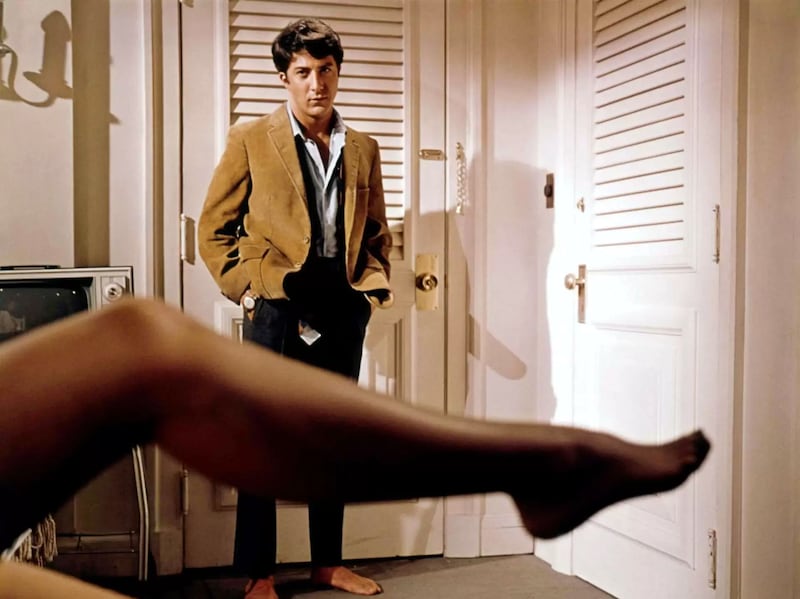 Censored: Dustin Hoffman and Anne Bancroft in The Graduate. Photograph: United Artists/Sunset Boulevard/Corbis via Getty
An interesting case. Dr Christopher Macken, the censor, initially banned this tale of shy Dustin Hoffman’s seduction by the wryly sophisticated Anne Bancroft. No surprise there in contemporaneous Ireland. But the appeals board then reversed the decision. The catch? Eleven cuts that, in a mirror of the Casablanca case, rendered the core of the story unintelligible.
“Irish audiences were blissfully unaware of what was going on between Benjamin and Mrs Robinson,” we hear during In the Opinion of the Censor. “We were as bewildered as Dustin Hoffman’s character was bewildered by what was happening,” the journalist Ciaran Carty echoes.
Monty Python’s Life of Brian (1979)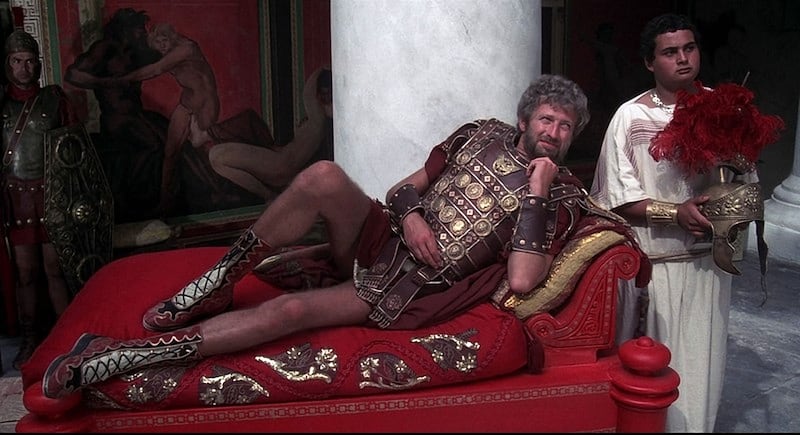 Graham Chapman as Biggus Dickus in Monty Python’s The Life of Brian (1979). HandMade Films
To be fair, the Pythons’ hilarious religious satire got in trouble almost everywhere. Eleven local councils banned it in Britain. “So funny it was banned in Norway!” the Swedish posters read.
Sheamus Smith, then working as a producer, remembers challenging Frank Hall, the contemporaneous censor, about the ban. “He was almost fuming at the mouth, and his eyes were blazing,” Smith says. “Something I’d never seen before – and he was suggesting: who the hell was I to suggest that he shouldn’t do what he had to do?”
Smith succeeded Hall and passed the film.
Natural Born Killers (1995)
Just as the Celtic Tiger was winding into action, Sheamus Smith surprised many by banning Oliver Stone’s garish, comically violent satire about contemporary media.
“I felt it was gratuitous and unnecessary, and people were suggesting I didn’t understand what that film was about,” he says. “I think I did, and I was the person in the job. I had the privilege, or the obligation or the responsibility, of doing what I thought was the right thing.”
The Irish Film Institute was, controversially, “refused permission to show the film in an advertised extended run under its club rules”.
In the Opinion of the Censor is on RTÉ One at 9.35pm on Monday, July 27th, and on RTÉ Player