

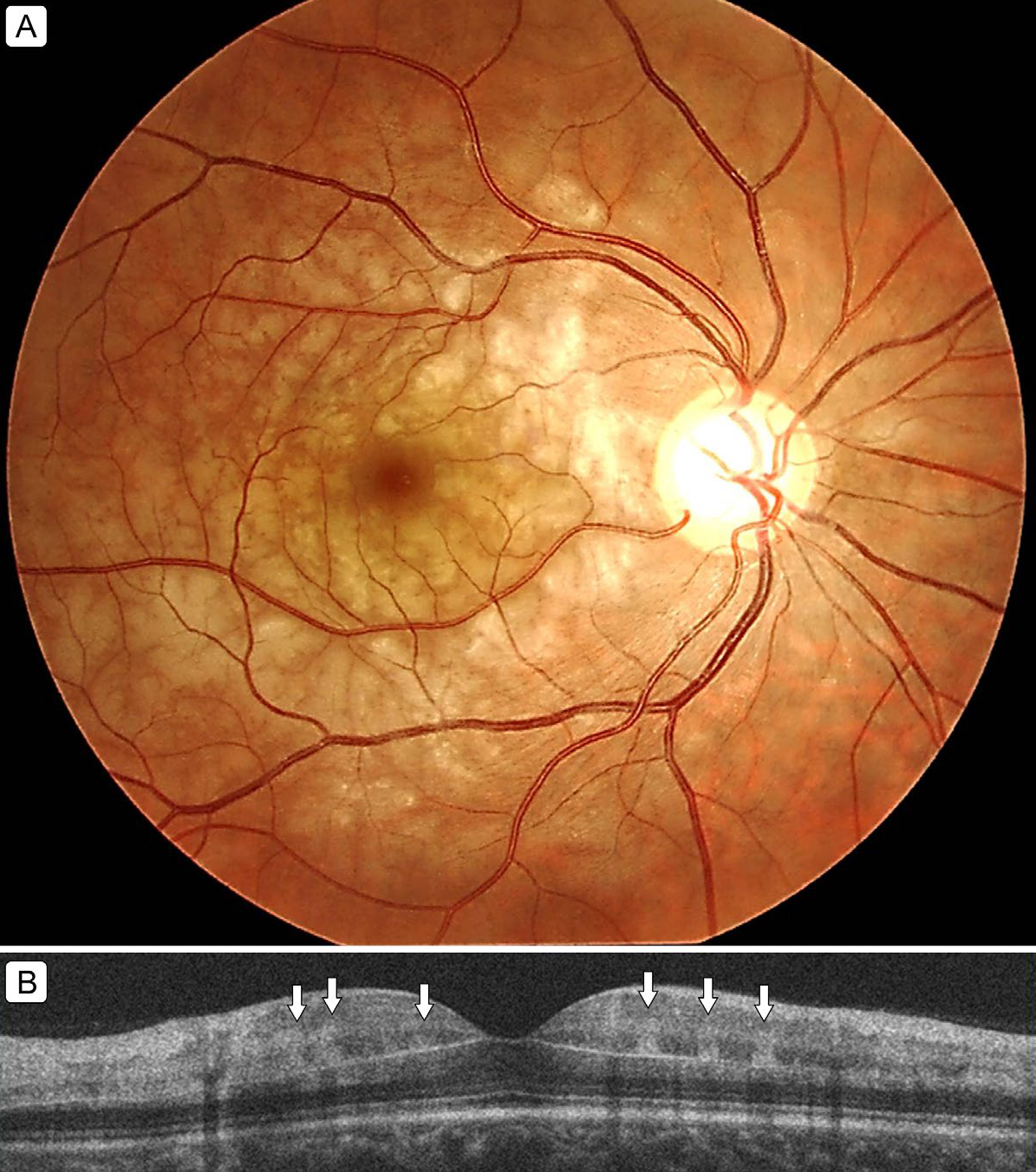
Paracentral acute middle maculopathy, or PAMM, is identified through OCT imaging. It is considered to be a marker of acute ischemia of the retina. Photo: Makino S. Digital J Ophthalm, Aug. 17, 2022. Click image to enlarge.
As people age and undergo a variety of treatments, they can experience a myriad of retinal diseases and complications. Due to the highly vascular nature of the retina, some visual symptoms may arise following cardiovascular procedures. Recently, researchers from Switzerland conducted a study to examine the OCT findings of retinal capillary ischemia in patients following cardiac surgery. The main goal of the study was to observe the frequency of paracentral acute middle maculopathy (PAMM).
“The incidence of acute PAMM in the general population has been scarcely explored,” said the researchers in their paper, published in Retina. “Furthermore, data on its occurrence in high-risk postoperative settings, such as after cardiac surgery, remain limited. Although postoperative vision loss has been widely reported in association with non-ocular surgery—most commonly due to ischemic optic neuropathies, central retinal artery occlusion or cortical blindness—retinal microvascular entities such as PAMM have not been systematically investigated in this context.”
After undergoing heart surgery, patients were imaged with OCT if they began experiencing visual symptoms. A total of 67 patients complained about these symptoms and therefore received a consultation with an eye doctor.
Upon examination, OCT confirmed the presence of PAMM in 23.9% of the study’s population. Among these patients, researchers reported that 31% of them had paracentral scotomas, 38% had floaters, 53% had photopsia and 25% had blurred vision. Additionally, 43.8% of patients presented with cotton wool spots, and 25% presented with retinal ischemic perivascular lesions.
Researchers furthered their study by observing visual acuity changes in patients with PAMM. However, only 10 individuals adhered to the follow-up schedule. These patients had their last visit between six and 12 months following the initial examination. At presentation, the mean best-corrected visual acuity (BCVA) was 20/34 Snellen. At the last follow-up appointment, patients presented with a mean BCVA of 20/20.
Due to limitations such as the absence of systematic retinal imaging and standardized perioperative monitoring, researchers suggest that future studies are needed to “better define the true incidence, underlying mechanisms and long-term visual outcomes of PAMM in this setting.”
Click here for the journal source.
This article was developed by the editorial staff in conjunction with experts in the field. In the process, AI may have been among the editorial tools used to meet the goals of human editors, who approved all content.