
Analysis: Ireland’s geographical location between New York and Liverpool means there’s a huge variety of wrecks to found in our waters
As an island nation, it’s no surprise that ships have played a major role in Ireland’s development. For most of Ireland’s history, travelling by sea was the only way to transport anything to and from the island, shaping the country we are today. Inevitably, it means there are numerous shipwrecks found off the coast. There are more than 18,000 known and potential shipwrecks off the coast of Ireland, ranging from the early 16th century to the modern day.
These ships range from galleons and large warships, such as the wreckage of the Spanish Armada from the 16th century, to merchant ships, ships from World War One, and all the way to modern vessels. Our location is a major factor in the variety of wrecks found underwater.
“Ireland’s geographical location is stuck between New York and Liverpool so things were inclined to go wrong and end up stuck here,” explains Ciarán McCarthy, barrister and lecturer at MTU and UCC. “Particularly in times before we had radar and satellite-based navigation systems.”
We need your consent to load this rte-player contentWe use rte-player to manage extra content that can set cookies on your device and collect data about your activity. Please review their details and accept them to load the content.Manage Preferences
From RTÉ Six One News, mystery over Donegal shipwreck may soon be solved
The legality of a shipwreck
When a shipwreck occurs, it falls under some legal avenues. The general laws governing shipwrecks fall under the National Monuments Acts 1930 to 2014, which protect archaeological heritage, monuments and historic sites. “This is on course to be overhauled by the Historic and Archaeological Heritage and Miscellaneous Provisions Act 2023, which is being brought in on a progressive basis,” addd McCarthy.
The 2023 Act will bring in updated protections for historic wrecks and underwater archaeological objects, which will come into effect soon. It’s when a wreck is 100 or more years old that the legislation changes. Upon reaching that point, it is then protected as underwater archaeological heritage, whether discovered or newly discovered.
We need your consent to load this rte-player contentWe use rte-player to manage extra content that can set cookies on your device and collect data about your activity. Please review their details and accept them to load the content.Manage Preferences
From RTÉ Archives, calls for the Government to close a gap in the law which allows international companies to abandon shipwrecks along the Irish coast (1988)
Diving is permitted on any wreck less than 100 years old, but McCarthy explains that this is subject to other legal designations such as ownership, property rights, and salvage rights. “If you discover a wreck, you’re obliged to report it to the authorities. The most famous wreck on the island is the Lusitania off the coast of Cork.”
The Lusitania was a British ocean liner which was sunk by a German U-boat in 1915 during World War I, and claimed the lives of over 1,000 people. Its final resting place is off the Old Head of Kinsale, but it was only in 1995 that then Minister for Arts, Culture and Gaeltacht, Michael D. Higgins, made it subject to an Underwater Heritage Order.
“This essentially introduced exclusion zones, restrictions on diving, fishing restrictions, restrictions on anchoring, and restrictions on salvage,” says McCarthy. “The Lusitania is interesting in that it had been in international waters before the change in legislation. Then she found herself within national waters, within the 12-mile limit, so she was subject to this [order].”
We need your consent to load this rte-player contentWe use rte-player to manage extra content that can set cookies on your device and collect data about your activity. Please review their details and accept them to load the content.Manage Preferences
From RTÉ News, events to mark the 100th anniversary of the Lusitania sinking
The thorny issues around shipwrecks
Shipwrecks are also a glimpse into a previous era, and examining a wreck can tell us what role ships played in that time. What goods were traded, how people lived and travelled, the technology available at the time, and information about significant historical events such as the Spanish Armada.
Yet a modern shipwreck brings different qualities, usually resulting from an industrial failure or a tragedy. Considering that ships are usually bigger and transport more cargo, not to mention more fuel, preventing environmental damage becomes the priority.
“The overwhelming aspect of salvage these days is in respect to environmental damage, because any shipwreck will cause that,” McCarthy says. “They all have reserves of oil in them, and something like a super tanker would be an international incident. The issue would be keeping the oil off environmentally sensitive areas.”
We need your consent to load this rte-player contentWe use rte-player to manage extra content that can set cookies on your device and collect data about your activity. Please review their details and accept them to load the content.Manage Preferences
From RTÉ News, the wreck of first British ship sunk in WWII, The Athenia, identified off north west coast
A salvage in domestic waters here is covered by Ireland’s legislation with some extra aspects to consider. The main one is the Lloyds Open Form, which is the standardised form contract for a proposed marine salvage operation. Within it is the SCOPIC clause, which permits salvage rewards to those who act to limit damage and avert environmental catastrophe.
Likewise, the country the ship is registered in is under international law of the sea, and still has primacy in regulating a ship. Regulations like the Nairobi International Convention on the Removal of Wrecks put strict liability on the owner of and on the flag state of the vessel to remove the wreck. Ireland has yet to sign this convention, and so it is dependent upon old legislation, specifically the Merchant Shipping Salvage and Wreck Act 1993, and the Liability of Ship Owners Act 1996.
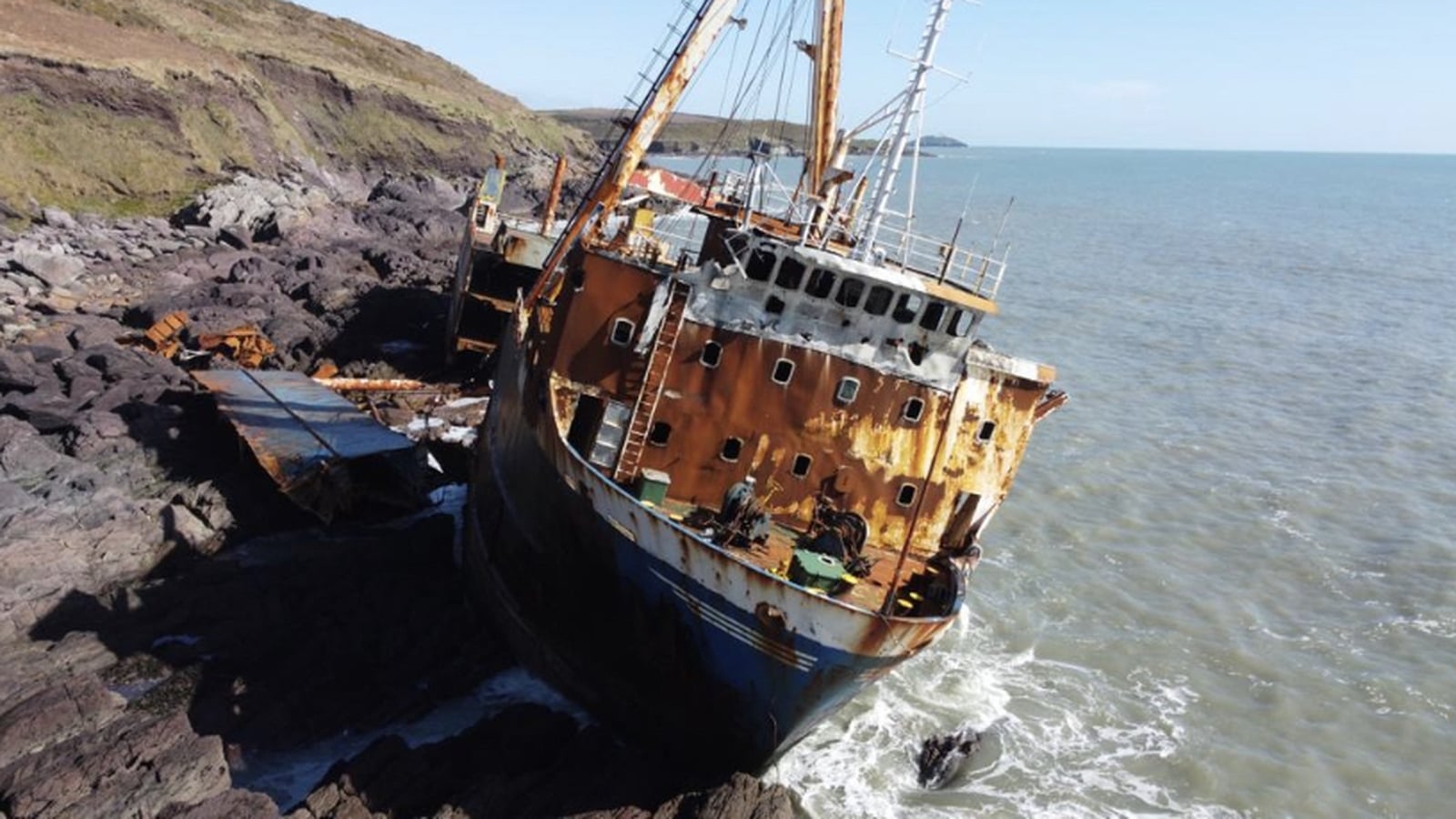
That said, sometimes wrecks fall into grey areas and are harder to decipher. McCarthy gives a recent example of the MV Alta, an abandoned ship that eventually washed up on shore at Ballycotton, in Co Cork during Storm Dennis in 2020.
From Dronehawk, MV Alta Ghost Ship – 7 year Anniversay
As there was no success in tracking down its owners, it was eventually left on the coast, as disturbing the wreck would put salvagers and the local environment at risk. Actions taken with a shipwreck will work on a case-by-case basis, but should a modern ship sink, the onus will be on mitigating as much of the environmental impact as possible.
“It’s important that these elements of our heritage are protected”, says McCarthy, as they’re “a time capsule in history and one left undisturbed can be archaeologically examined.”
Follow RTÉ Brainstorm on WhatsApp and Instagram for more stories and updates
The views expressed here are those of the author and do not represent or reflect the views of RTÉ