

Gardaí, insurance companies and the consumer watchdog have warned the public about the risks of buying car insurance through social media.
So-called ‘ghost brokers’ operate by advertising on social media apps or through word of mouth to sell people forged or fraudulent policy documents.
Some victims are unknowingly driving without insurance, meaning they could be prosecuted, fined, or have their car seized.
Amie Donaghey, a 21-year-old from Derry, has been left with a criminal conviction after being conned into thinking she had paid £700 to be covered by a legitimate insurance company.
The scam only came to light when she was stopped by the PSNI and told she was not insured.
As a mother of two, Ms Donaghey required a car for daily life but could not afford the £4,000 to £5,000 she was being quoted by traditional insurance companies.
‘I knew it was a real person, so I just believed him’
She saw someone advertising cheaper insurance on Instagram, Facebook and TikTok and contacted this ‘broker’.
Ms Donaghey said she had direct communication with this person through social media messages and on the phone.
“I knew it was a real person, so I just believed him.”
The ‘broker’ quoted her £700 and she transferred the money.
“It was dear enough for me to believe it, so I was like – this is grand, this is legit.”
Ms Donaghey was emailed documentation and believed she was insured with a legitimate insurance company based in England.
But one day she was stopped by police in Derry and told she was not insured.
She showed the police the documentation she had been emailed by what turned out to be the bogus broker.
She also contacted the legitimate company in England, who she had falsely been told she had been insured with.
They had no record of her and said they never sold policies on social media.
‘Be careful and do your research’
When she tried to contact the ‘broker’, she said he “ghosted” her.
A few months later, Ms Donaghey received a court summons.
At Derry Magistrates’ Court in May, the district judge imposed no penalty due to the circumstances in the case, but Ms Donaghey has been left with a criminal conviction for driving without insurance.

The Central Bank is the regulator for the insurance industry in Ireland and has a list of approved brokers and insurance companies on its website
She said she wants to warn others about how easy it can be to fall for such a scam.
“If it looks too good to be true, then it’s definitely too good to be true. Just be careful and do your research.”
While Amie Donaghey’s case happened in the jurisdiction of Northern Ireland, gardaí are also warning people in the Republic to be vigilant.
“Be wary of anyone selling insurance products that communicates solely via services such as WhatsApp, Telegram, TikTok, Snapchat or Instagram,” a spokesperson said.
“Be wary of anyone who requests payment for an insurance product by way of an electronic transfer to an account in their own name.”
Gardaí have warned that the activity of ‘ghost brokers’ leaves customers exposed to serious consequences.
“You may be convicted of an offence under the Road Traffic Act for driving without valid insurance. Such a conviction could make it difficult and more expensive to obtain valid insurance cover.”
The Central Bank is the regulator for the insurance industry in Ireland and has a list of approved brokers and insurance companies on its website.
Rob Smyth, the Head of Investigations and Fraud at Aviva Insurance Ireland, said ‘ghost brokers’ are an issue that is “widespread across the industry”.
“Whether it’s getting worse, it’s difficult to tell. It’s obviously a hidden business, they’re fraudsters.”
Mr Smyth said seven years ago, Aviva Insurance Ireland identified 20 ‘ghost brokers’ operating in the market and all were reported to police.
“Now, we have identified maybe about three currently operating. But it’s a hidden activity. I’m not saying there’s only three operating; we’ve only identified three at the moment. There could be lots more out there.”
Mr Smyth added the insurance industry in Ireland has taken “lots of action” to “block that off”.
However, he is calling for the establishment of a system that would allow insurance companies to share information about fraudsters with each other.
“Unfortunately, at the moment, we’re restricted from doing that under GDPR regulations.”
“What we need is that legislated for. We need a central hub where we can legitimately share information and warn other people about potential criminals that are trying to manipulate their customers.”
“In the UK, there’s a lot more co-ordination. They have an Insurance Fraud Bureau that co-ordinates a lot of information from the industry within one central hub and they work directly with the police.”
Mr Smyth said when Aviva reports a fraudster to police, they are “over-reliant on police to carry out investigations with other insurance companies”.
“Police already have enough to be doing without doing the work on behalf of the industry.”
The Competition and Consumer Protection Commission has also advised the public to be wary of buying financial products through social media ads.
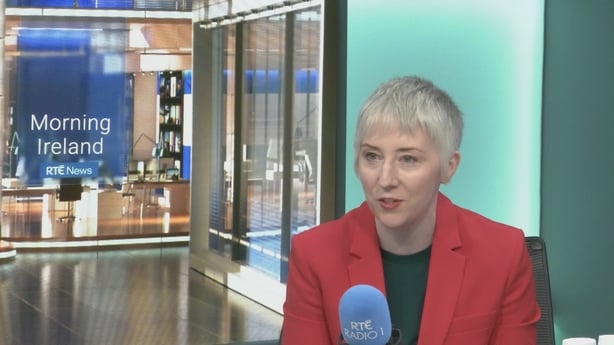
Gráinne Griffin of the CCPC said the case had ‘characteristics of a typical fraud’
Gráinne Griffin, Head of Financial Education at the CCPC, said Amie Donaghey’s story has “characteristics of a typical fraud”.
“The first is that young woman was in a really difficult position. She needed car insurance and the quotes that she was getting were very high. And fraudsters will look for people who are in constrained circumstances.”
“The second thing then is this came through social media. It was a social media ad.”
“Any transaction at all that you’re going through, after going through an ad, is automatically something that you have to be suspicious of and quite cautious of.”
“And then I suppose in terms of things like fake documents, fake websites, all of that, it is so easy now with AI for fraudsters to run out these really, really legitimate-looking sites and be able to supply all sorts of materials to back it up.”
“This wouldn’t have happened five years ago. AI just means it’s possible now to do just so much more sophisticated work as a fraudster and really be much more convincing.
“If there is a deal that is so cheap, that is so much better than what all the other companies are offering, that’s a real red flag.”
The CCPC is also advising consumers to pay with a card rather than a bank transfer or direct debit.
“That does open up more in terms of potentially getting your money back because you may be able to organise for a chargeback through your financial services provider if it turns out that you have been scammed.”