
Volkswagen Passat
Year: 2026
Fuel: Diesel
Verdict: Skip the old-school diesel and get the e-Hybrid instead, but the Passat is proof positive that estates beat SUVs every time.
It’s almost as if they did this just for us. And by us I mean whingy motoring journalists who love to carp on about the inherent inefficiencies and compromises of SUVs, and wish instead that people bought estate cars.
Well, here’s your chance to prove me right because not only has Volkswagen brought back the long-absent Passat to Irish shores, this latest generation of VW’s big saloon isn’t a saloon at all.
In fact, all across both Ireland and Europe, you can only buy this new Passat as an estate. That reflects the tastes of European consumers rather more than it does Irish car buyers, but let’s lay out the case for the defence.
Your honour, I contend that SUVs are needlessly fat, wheezy, expensive, thirsty, and never have quite as much room in them as you think they’re going to. I further put it to you that people have been essentially brainwashed into buying such vehicles by rampant marketing campaigns, and that all along they would have been far better off with an estate car. The defence, not for the first time, rests.
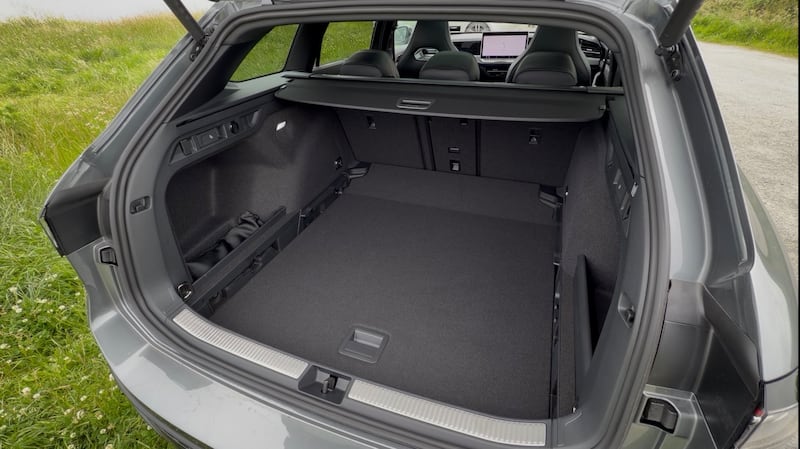
This new Passat seems, on the face of it, to turn this into an open-and-shut case. After all, it’s not hugely expensive — you can buy a plug-in hybrid version, with more than 100km of electric range, for €47,995 — yet it’s hugely roomy (space in the back seats for six-footers to lounge; 690 litres of boot space), exceptionally comfortable and truly frugal.
In fact, on one long drive, in baking hot conditions, from Dublin to Belfast, cruising at the legal limit pretty much all the way, we averaged just 4.7 litres per 100km.
Now comes the guilty confession from the dock — that was in a diesel Passat. Yup, it’s true. In 2026 here I am testing a diesel car. Well, to be fair, probably not that dirty — it does have AdBlue injection to wash away those nasty NOX emissions — but as Europe swelters under a heat dome and my dog appears to be melting into the sofa while I write these words, it does seem somewhat obtuse to be trying out a plain old diesel at this point.
Then again, that 4.7 litres per 100km fuel efficiency figure is actually better than I achieved over the same route in a smaller, lighter, hybrid-engine Honda Civic, underlining the big VW’s staggering long-range efficiency.
It settled down to a still-impressive 4.9 litres per 100km in more mixed driving. Does it rattle at low speeds and upset the neighbours? Probably. Will you care once you hop in and see the 1,000km-plus distance to empty readout on a full tank? Probably not.
 New Volkswagen Passat
  New Volkswagen Passat
  New Volkswagen Passat
True, the 150hp 2.0-litre TDI diesel engine remains too hesitant at low speeds, not helped by a sluggish seven-speed DSG automatic gearbox, but it’s an effortless cruising machine, and there’s a small feeling of teleporting back to the early 2010s in driving one of these. How nice that would be.
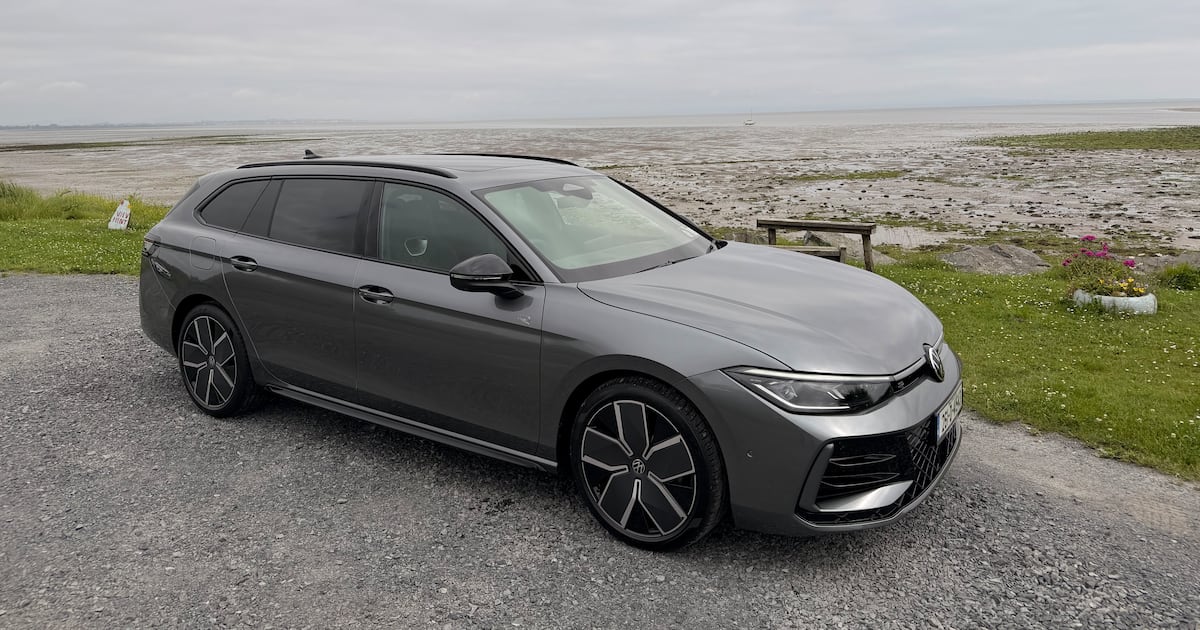
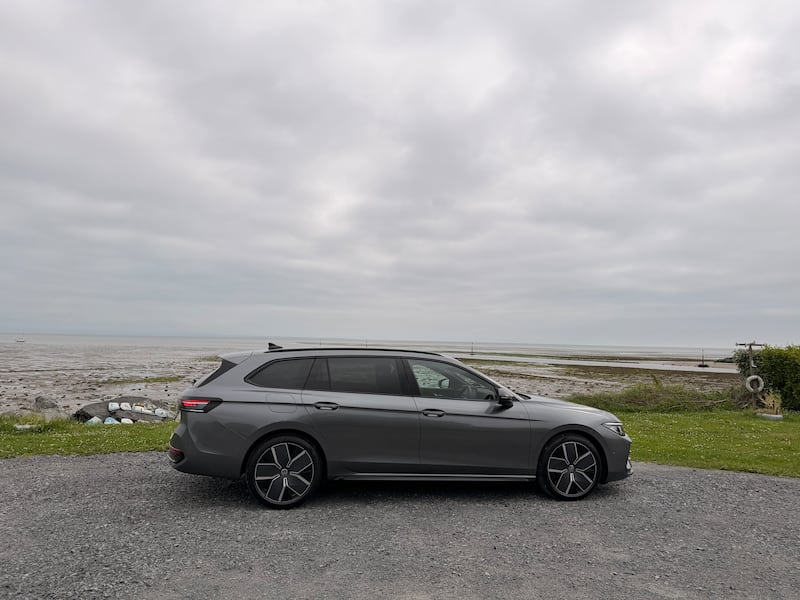
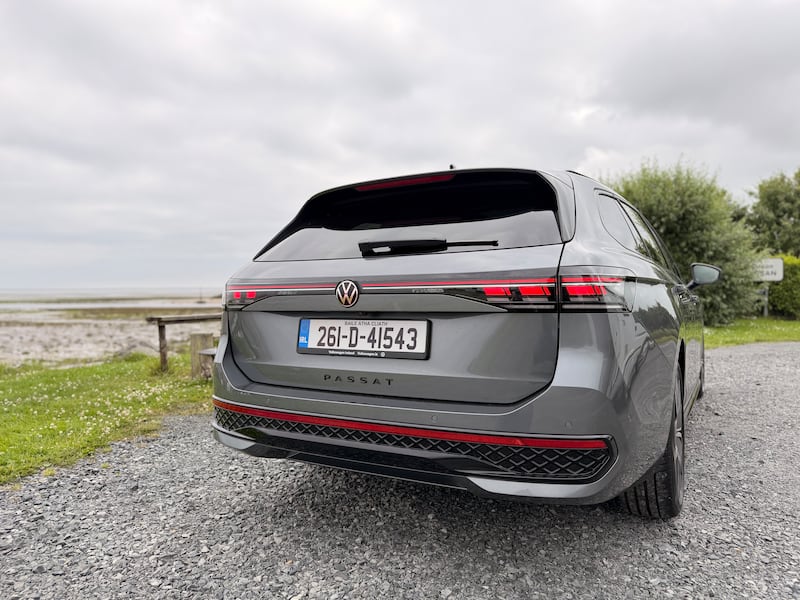
The Passat is handsome, in the current rather understated VW idiom. It gets a big chin and piercing, narrow headlights at the front, relatively sleek sides, and a chunky rear structure which contains that vast boot.
True, you lose quite a bit of capacity if you go for the better-all-round e-Hybrid PHEV model (space drops to a still-useable 510 litres) but there’s no getting away that this Passat’s sheer practicality makes a mockery of those who buy a pricier SUV thinking they’re getting a more useful family car.
Up front, the cabin has that traditional sense of VW heft, and the high-back bucket seats are exceptionally comfortable.
The big touchscreen is easier to get along with than used to be the case, but at 15 inches across it’s just too domineering, and really distracting at night. This is also one of the more recent VW’s designed and made before the company saw sense and started to put physical buttons back into its cabins. Oh, and the jazzy seat fabric in this pricey R-Line model just feels too cheap and industrial.
Honestly, though, that’s about it for criticisms.
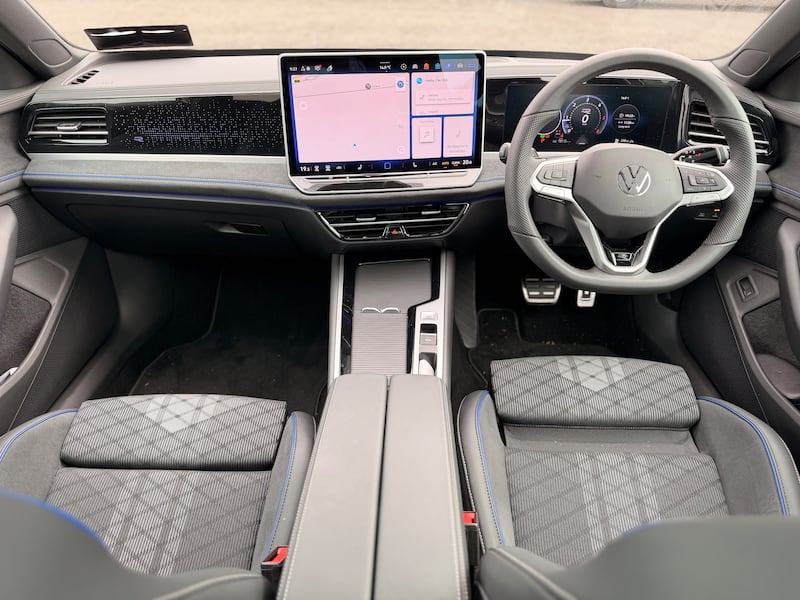 New Volkswagen Passat
 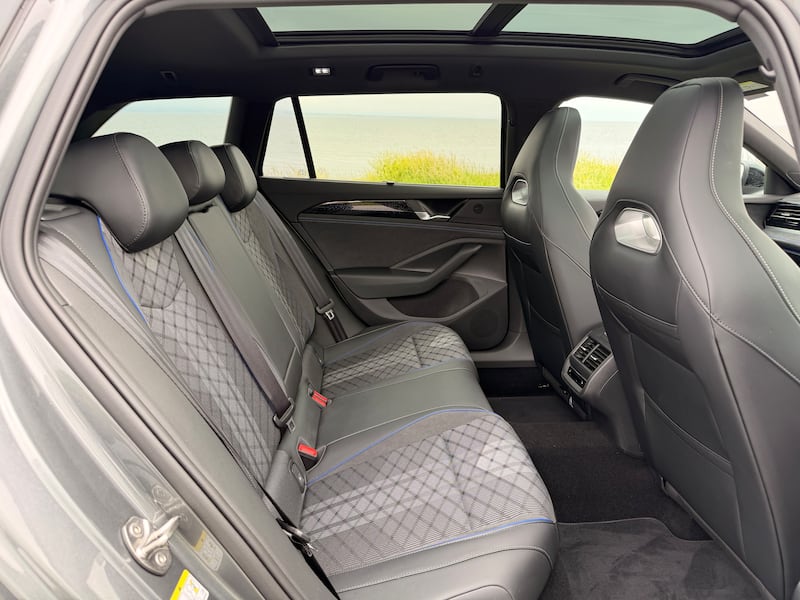 New Volkswagen Passat
The Passat corners with precision, if not any actual verve, and our R-Line test car came with adjustable electronic suspension dampers that allow you to soften them off to the point where it feels as if you’ve filled the struts with custard. And I mean that in a good way.
If you’re looking for a shock, you won’t find one. The new Passat does what pretty much every Passat in the past has done, in that it provides solidly sensible motoring for people with a practical turn of mind.
Actually, there is one small shock. This VW is cheaper, in its basic form, than the equivalent Skoda Superb Combi, and by a not-inconsiderable €4,000 or thereabouts. What? A Skoda that’s pricier than its VW cousin (and these two cars are absolutely identical under the skin)? Yes, it’s true.
Does that make this VW automatically better than the Skoda? Well, it’s the same car for less money, so yes. Then again, the Skoda is arguably better looking on the outside, has the more interesting cabin, and there’s still a faint sense of anti-establishment cool to the Skoda badge compared with the VW one. Still, €4,000 is a lot of money for a faint sense of cool.
Either way, the return of the Passat is hugely welcome. Swerve the diesel (oh, that wonderful long-range economy though) and get the PHEV, and at long last our national SUV nightmare is over. It is over, right guys? Guys?
Lowdown: Volkswagen Passat 2.0 TDI 150 R-Line
Power: 2.0-litre four-cylinder turbo diesel engine with 150hp and 360Nm of torque driving the front wheels through a seven-speed automatic gearbox
0-100km/h: 9.3 secs
Emissions (motor tax): 131g/km (€210)
Fuel consumption: 5.0l/100km (WLTP) 4.9l/100km (Observed).
Price: €55,595 as tested. Passat from €47,995