
Scientists have rebuilt part of daily life in a pre-Roman Italian community by studying chemical traces locked inside ancient bones. Their work shows what people ate, how often they moved, and how social customs shaped life about 2,700 years ago. The findings also challenge the idea that rich burials always belonged to wealthy people.
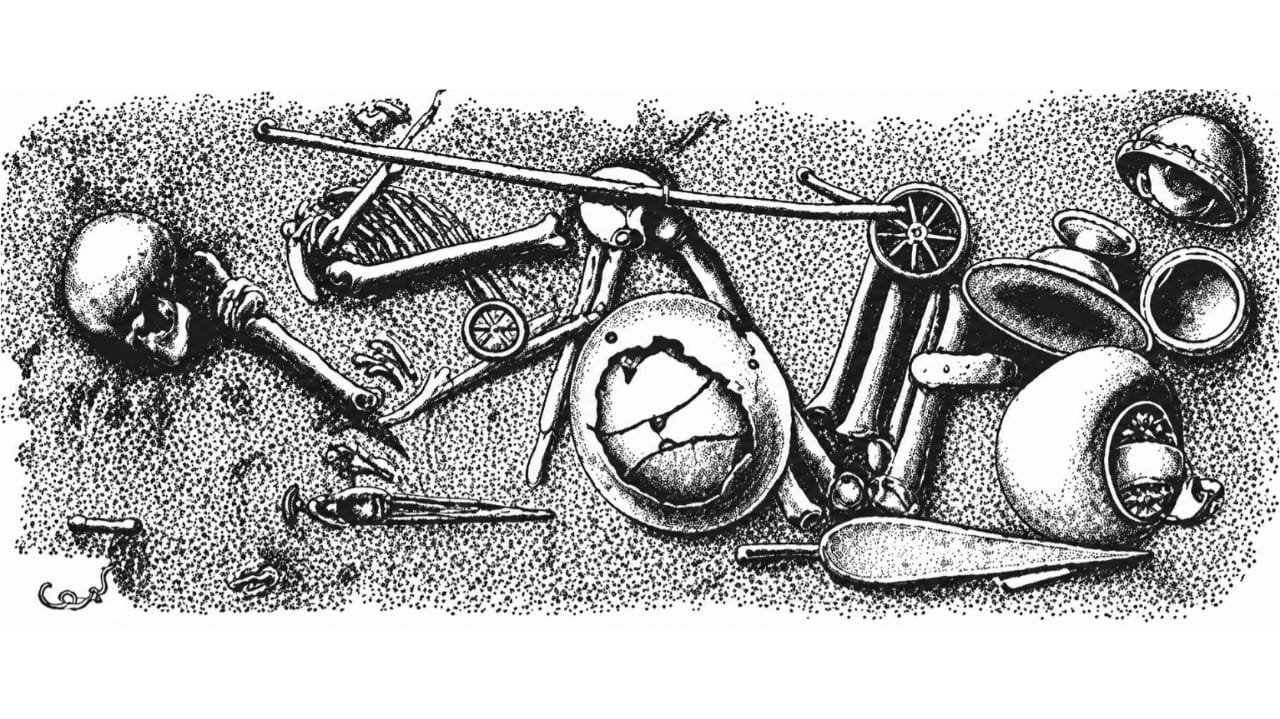 Male burial at the Servici Cemetery in the Novilara necropolis. Credit: David Randall-MacIver, Public domain
The study focused on the Novilara necropolis in central Italy, one of the largest burial grounds linked to the Picene culture during the Early Iron Age. An international team led by the University of Córdoba and the University of Pisa studied the remains of 148 people buried between the eighth and seventh centuries BCE.
The team measured stable carbon, nitrogen, and sulfur isotopes preserved in bone collagen. These chemical markers come from food and water people consumed during life. Bones keep those signals for thousands of years. By comparing isotope data with age, sex, burial customs, and signs of stress in the skeleton, the researchers built a picture of everyday life.
The results show people ate mostly cereals and meat from land animals. Their food came mainly from C3 crops such as wheat and barley, with a small amount of C4 plants. Fish made up little of their diet, even though the community lived only about 6 kilometers from the Adriatic Sea.
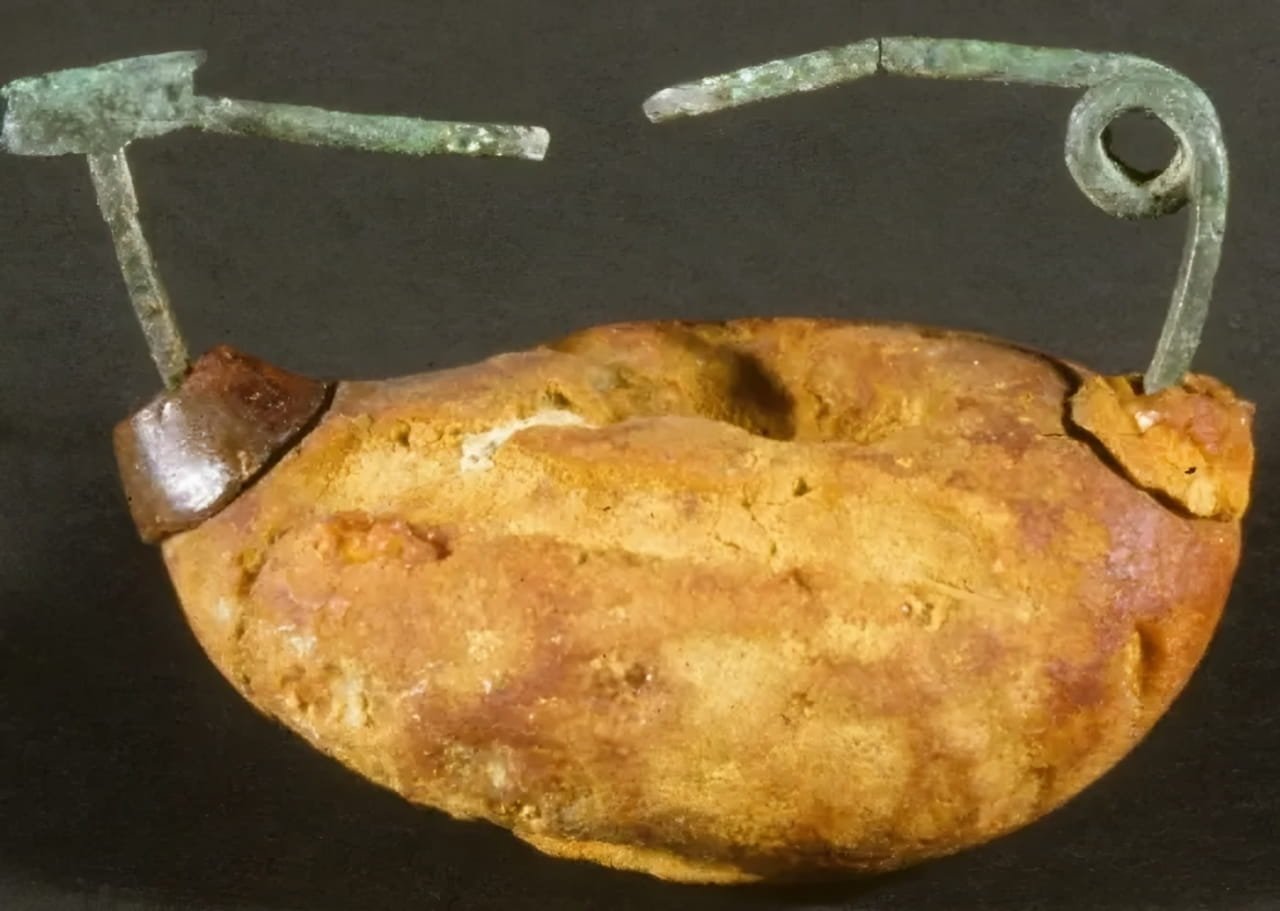 Fibula from the Novilara necropolis, dating to the 7th century BCE. Credit: Colombini et al., Heritage Science (2013), CC BY 2.0
Food choices also differed between men and women. Adult men ate more animal protein than adult women. The pattern points to social rules linked to gender, with different access to food or different daily work. Sulfur isotope values also show men moved more often than women during their lives.
The study found a small group of people whose sulfur isotope values did not match the local range. Between 1.4 and 6.4 percent of those buried at Novilara came from other regions. Their presence matches earlier evidence showing the community took part in trade and contact across both nearby and distant areas. People traveled along those routes as well as goods.
One result stood out. People buried with weapons, amber jewelry, and other costly objects did not eat better than those buried with simpler grave goods. Their isotope values looked much the same. The findings suggest burial displays reflected funeral customs and choices made by surviving family members instead of the daily lives of the dead.
The team also found no clear link between diet and signs of poor health or stress recorded in bones and teeth. Burial style, food, and physical health did not form clear social groups.
Published in the Journal of Archaeological Science, the study offers a closer look at life in Early Iron Age Italy. The researchers plan to add strontium and oxygen isotope studies, along with genetic and protein tests, to trace where nonlocal people came from and build a fuller picture of the Novilara community.
Publication: Laffranchi, Z., Beck De Lotto, M. A., Delpino, C., Lösch, S., & Milella, M. (2026). Multi-isotopic insights into diet, mobility, and status in the Picene necropolis of Novilara, Italy (8th-7th centuries BCE). Journal of Archaeological Science, 192(106633), 106633. doi:10.1016/j.jas.2026.106633