
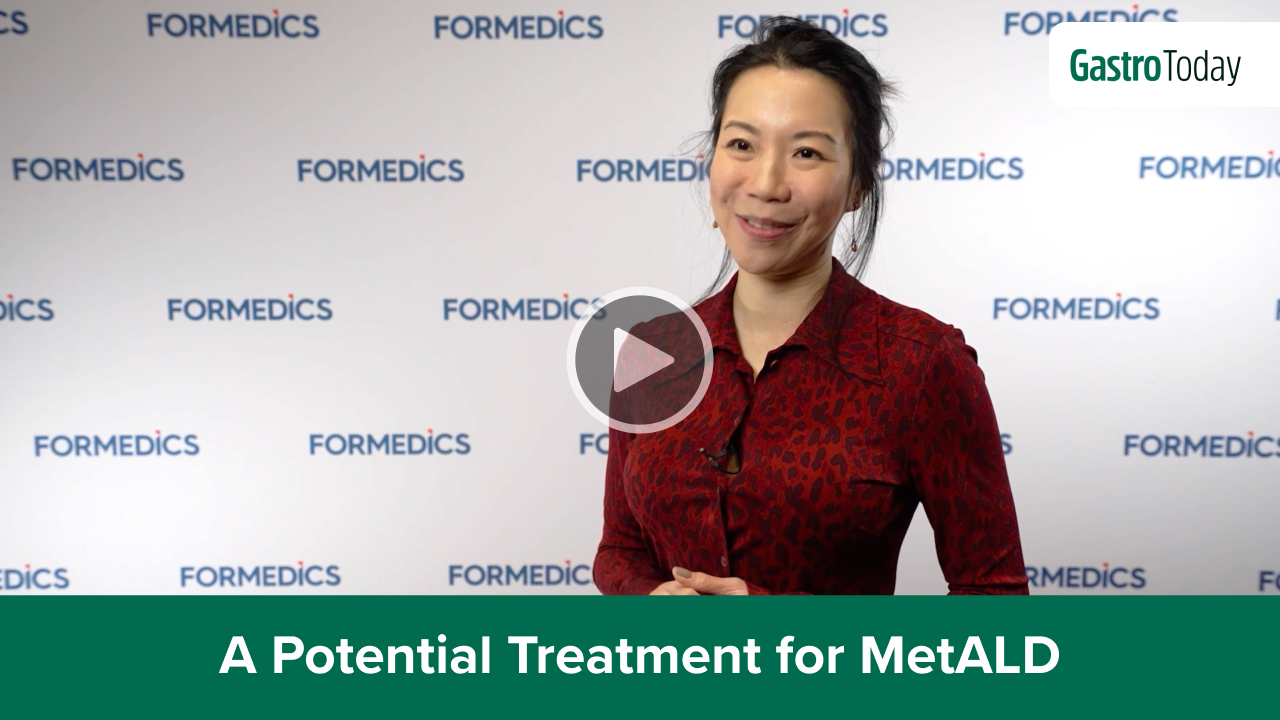
Sigh Pichamol Jirapinyo, MD, from Brigham and Women’s Hospital, Boston, Massachusetts, shares results from a study evaluating endoscopic bariatric therapies as a potential treatment for metabolic dysfunction and alcohol associated/related liver disease (MetALD).
Dr. Jirapinyo commented that clinicians are “going to be seeing more and more of these patients” with MetALD, for whom treatment is limited. From these study results, Dr. Jirapinyo concluded, “an endoscopic approach might be another option for these patients.”
Transcript:
This transcript has been edited for clarity.
Sigh Pichamol Jirapinyo, MD: Hi, everyone. I’m Sigh Pichamol Jirapinyo. I’m an advanced endoscopist specializing in bariatric endoscopy and endo-hepatology at Brigham and Women’s Hospital in Boston, Massachusetts.
Gastro Today: What is the background for the study?
Dr. Jirapinyo: The background of the study is that, right now, the most common cause for chronic liver disease is MASLD [metabolic dysfunction-associated steatotic liver disease], and it’s a very exciting time now. We have two medications that are approved for MASLD. However, within the steatotic liver disease, there are other etiologies, including MetALD and ALD [alcohol associated/related liver disease]. However, for these two entities, right now, the treatment is quite limited.
Today, our group has studied and showed that bariatric endoscopy or endoscopic weight loss procedures are safe and effective at treating MASLD. And therefore, we wanted to see if the same procedure endoscopic bariatric therapies can be used as a possible treatment for MetALD and ALD.
Gastro Today: What was the methodology?
Dr. Jirapinyo: For study design, it’s a single center retrospective study. We looked at our patients at Brigham who had MetALD or ALD and underwent endoscopic weight loss procedures.
For this study, the primary outcome was change in self-reported alcohol consumption and secondary outcomes included changes in non-invasive tests for hepatic steatosis and fibrosis. Every outcome was looked at 1 year after the endoscopic weight-loss procedures.
Gastro Today: What were the findings?
Dr. Jirapinyo: In this study, we included about 50 patients, all patients underwent an endoscopic weight loss procedure. In terms of primary outcome, we saw a significant reduction in the amount of alcohol used, from about 12 grams per day down to about six grams per day. For secondary outcomes, we saw a significant reduction in the amount of fat on non-invasive tests. Additionally, we saw a trend towards significant improvement in the amount of fibrosis at one year after the procedure, and all patients underwent the procedure with no serious adverse events.
Gastro Today: What is the significance of these findings?
Dr. Jirapinyo: Given that MetALD is a relatively new entity and there are a lot of studies looking into this disease, there are going to be more and more patients who are being diagnosed with this entity. It’s a combination of metabolic disease, but at the same time, they have some alcohol use, but not too extreme. We’re going to be seeing more and more of these patients, so we need more research to look at treatment options for this patient population. Our study shows that an endoscopic approach might be another option for these patients.