
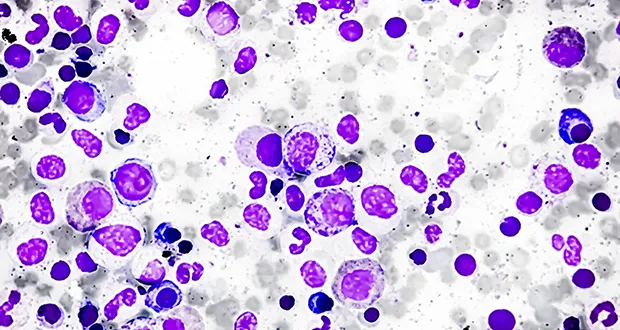
The country’s first genomics-based prognostic testing for multiple myeloma will provide clinicians with a better understanding of how patients are likely respond to personalised treatments, writes Michael McHale
For the first time in Ireland, multiple myeloma patients can avail of a major advance which allows clinicians to better understand one of the most difficult-to-treat cancers.
Dublin’s Beaumont Hospital has introduced the country’s first genomics-based prognostic testing for multiple myeloma. The service incorporates the use of a gene expression profiling test known as SKY92 (Skyline Diagnostics) along with next generation sequencing (NGS) which will enable advanced and rapid profiling of this blood cancer.
With 400 new cases of multiple myeloma diagnosed in Ireland each year, hundreds of patients are expected to benefit from the new service, which was launched last November.
In recent years new medicines have drastically changed the way this blood cancer is treated. However, to get the most benefit from these personalised treatments, a full understanding of the patient’s illness is required – and that’s where this advanced prognostic testing plays a vital role.
Prof Siobhán Glavey is principal investigator and research lead at the Molecular Pathology laboratory at the Beaumont RCSI Cancer Centre, which specialises in deep genomic diagnostic profiling of brain tumours, solid tumours and haematological malignancies.
“This testing will enable the availability of the best possible standards of diagnostic testing for multiple myeloma patients, which will enable clinicians and patients to develop a better understanding of how the disease may behave in the future and in response to certain treatments,” she said.
“It is also anticipated that this form of testing will enable some patients with less aggressive disease to have less treatment or to stop treatment for a period of time, which will increase their quality of life and reduce costs to the health service.”
This innovation in multiple myeloma testing arose from a research study that was conducted by Prof Glavey over the last number of years, involving the profiling of bone marrows of Irish multiple myeloma patients at diagnosis to understand their likely survival and treatment responses.
“This study identified for the first time the risk profile of Irish multiple myeloma patients at diagnosis and enabled us to examine responses to treatment and survival outcomes for patients across the country,” she said.
While the team at the Beaumont RCSI Cancer Centre have been using this testing for some time as a research tool, opening it up to clinical practice could be a game-changer in how multiple myeloma patients are treated.
“It is clear that having a deeper understanding of multiple myeloma cancer cells at diagnosis will lead to better outcomes for patients and allow us to personalise their treatment in the future. For patients with a very serious cancer diagnosis, this is an important advance, allowing them to have a much better understanding of their disease.”
The implementation of NGS testing for multiple myeloma is in collaboration with the Oxford University Translational Myeloma Centre. Its introduction has been supported by Dr Alanna Allen, NCHD Innovation Fellow, whose role involves the advancement of frontline-led innovation that improves patient care, supports service efficiency, and accelerates the use of modern diagnostics across the health service.
Establishing this testing in Ireland is in keeping with current international practice in this incurable cancer and will improve equity of access, and long-term productivity gains for the health system.
More accurate risk classification of Irish multiple myeloma cases will also help to offer patients suitable clinical trials and bring Ireland on par with UK and international counterparts in this regard.
“This project, supported by HSE Spark and the Consultant Innovation Fund, shows how innovation at the frontline of cancer care can benefit patients,” said head of the HSE Spark Innovation Programme Jared Gormly.
“Advancing genomic testing for Multiple Myeloma patients in Ireland, enables faster, more accurate risk assessment for patients and positions Ireland as a leader, internationally, in the use of new technologies in this space.”
According to a 2024 report from the National Cancer Registry, multiple myeloma is the third most common blood cancer diagnosed in Ireland. A patient’s median age when diagnosed with the disease is 70, with the country’s fast-ageing population contributing to an increase in cases seen here in recent years.
However, treatment advances have significantly improved survival rates. Between 1994 and 2007, just 34 per cent of patients survived for five years or more after diagnosis.
Between 2008 and 2021, this five-year survival rate rose to 58 per cent. Today, it is the median overall survival for patients with the disease in Ireland is 12 years from initial diagnosis. 