
As the incidence of emdometrial cancinoma has risen over the past three decades the importance of prompt investigation of postmenopausal bleeding and awareness campaigns have increased, writes Ms Claire Thompson
Endometrial cancer has quietly become one of the fastest-changing areas in gynaecological oncology. What was once a straightforward ‘hysterectomy and observe’ disease is now stratified by molecular subtype, treated with immunotherapy in advanced setting, and increasingly discussed alongside metabolic disease management.
Incidence and survival in Ireland
Uterine cancer — of which endometrial carcinoma accounts for more than 90 per cent of cases — is the most common gynaecological malignancy in Ireland and the fifth most common cancer in Irish women overall, excluding non-melanoma skin cancer. Estimates from the National Cancer Registry Ireland (NCRI) and affiliated bodies put the average annual incidence at roughly 540–570 new cases per year, with a five-year survival rate of approximately 78 per cent.
Most cases occur in women aged 50–64, however there is an increase noted in premenopausal women which can add to the challenge of diagnosis.
Global data show endometrial carcinoma incidence has increased by over 130 per cent in the past three decades, a trend attributed principally to population ageing and the growing prevalence of obesity (which is linked to 60 per cent of endometrial cancers) and type 2 diabetes. Both are established drivers of unopposed oestrogen exposure and endometrial proliferation.
Global data show endometrial carcinoma incidence has increased by over 130 per cent in the past three decades
Ireland’s obesity prevalence and ageing demographic profile suggest this upward trajectory is likely to continue locally, reinforcing the importance of prompt investigation of postmenopausal bleeding and awareness campaigns such as those run by the Irish Network for Gynaecological Oncology (INGO), which has highlighted persistently low public awareness of uterine cancer symptoms.
Available at: https://www.thelancet.com/journals/lanonc/article/PIIS1470-2045(25)00379-1/fulltext
Molecular profiling: From TCGA to routine practice
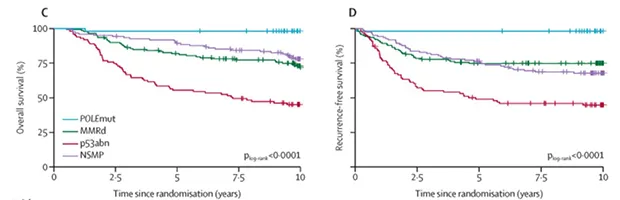
Perhaps the most significant shift in endometrial cancer management has been the move from histological-based classification alone to molecular stratification. Building on The Cancer Genome Atlas (TCGA) work, the ESGO–ESTRO–ESP guidelines (most recently updated in 2025) now recommend molecular classification for all endometrial carcinomas.
Tumours are now stratified into four groups:
POLE-mutated (POLEmut); 5-10 per cent of cases
Mismatch repair-deficient (MMRd): 25-30 per cent of cases
No specific molecular profile (NSMP): 40-50 per cent of cases
p53-abnormal (p53abn): 15-20 per cent of cases
A fifth subgroup (‘NSMP high-grade or oestrogen receptor-negative’) introduced in the 2025 update captures a subgroup of NSMP tumours that behave more aggressively.
Several large multicentre cohorts and randomised controlled trials such as PORTEC III have confirmed that molecular subtype is independently prognostic across all FIGO stages: POLEmut tumours have an excellent prognosis regardless of other features, p53abn tumours carry the worst outcomes, and MMRd and NSMP fall in between.
This has real clinical consequences — POLEmut cancers can often be safely de-escalated from adjuvant therapy avoiding potential morbidity from radiotherapy and chemotherapy, whereas p53abn tumours are now more consistently escalated to combined chemoradiation, with clear benefits in overall survival.
For Irish laboratories, the practical implication is that pathology services need reliable access to MMR and p53 immunohistochemistry as standard, and this is becoming well-established. Challenges persist with POLE sequencing and consensus is currently being sought regarding a hub-and-spoke or reference laboratory model where in-house sequencing is not feasible to improving access to full molecular testing for all women affected in Ireland.
Immunotherapy: A new standard in advanced disease
Historically there were significant challenges in the treatment of advanced or recurrent endometrial cancer. Recently evidence for the role of immunotherapy in certain patient cohorts has been hailed as ‘game changing’.
All endometrial cancers are routinely tested for mismatch repair (MMR) and will be deemed as either proficient (MMRp) or deficient (MMRd). The addition of immune checkpoint inhibitors to chemotherapy is now practice-changing for advanced or recurrent endometrial cancer, particularly in mismatch repair deficient (MMRd) tumours.
The phase III RUBY trial (dostarlimab plus carboplatin–paclitaxel) demonstrated a 68 per cent reduction in the risk of death in the MMRd population compared with chemotherapy alone, describing this as an unprecedented survival benefit in this disease. Overall survival benefit was also seen in the broader trial population, and dostarlimab in combination with chemotherapy has recently been approved for MMRd cancers. Recently, mismatch repair-proficient (MMRp) primary advanced or recurrent disease has also been approved in the USA and Europe. Reimbursement in Ireland remains challenging, and is currently via clinical trials only.
Parallel data from the phase III NRG-GY018 trial evaluated pembrolizumab added to paclitaxel–carboplatin. At 12 months, 74 per cent of patients with MMRd tumours treated with pembrolizumab were progression-free compared with 38 per cent on chemotherapy alone; corresponding rates in the MMRp group were 50 per cent versus 30 per cent. Updated overall survival and exploratory analyses published in Nature Medicine confirmed durable progression-free survival benefit across MMR subgroups, supporting regulatory approval of pembrolizumab-chemotherapy irrespective of mismatch repair status.
For clinicians, the take-home points are: molecular testing at diagnosis is no longer optional in endometrial cancer. Testing has made significant improvements in Ireland and ongoing work continues to obtain POLE testing for all women affected which may in some cases lead to the avoidance of adjuvant treatment. MMR status is crucial to inform first-line systemic therapy selection and although important progress has been made for patients with MMRd tumours there are still challenges with reimbursement via the HSE and the importance of clinical trials opening in Ireland remains vital.
GLP-1 receptor agonists: An emerging adjunct
Given the strong link between obesity, insulin resistance and endometrial carcinogenesis, there has been growing interest in whether GLP-1 receptor agonists (GLP-1RAs) might modify endometrial cancer risk or support conservative management.
A large 2026 cohort study using the TriNetX database (over 444,000 women with benign uterine disease or endometrial hyperplasia) found that adding a GLP-1RA to progestin therapy (such as the Levongesrtal IUD/Mirena®)was associated with a 66 per cent relative reduction in endometrial cancer risk compared with progestin alone (HR 0.34), an effect that was consistent across BMI, age and progestin route, and superior to metformin-progestin combinations.
A separate randomised-trial meta-analysis found a significant reduction in uterine cancer specifically among obese patients treated with GLP-1RAs, though not in trials conducted in diabetic populations, suggesting the protective effect may be more closely tied to weight and metabolic reduction than glycaemic control per se.
Preclinical and translational work published in Clinical Cancer Research proposes that GLP-1RAs may also restore progesterone receptor expression and help overcome progestin resistance, raising the possibility of a therapeutic role alongside progestins in fertility-sparing or medically inoperable patients, not merely a preventive one.
These findings remain observational or early-phase, and GLP-1RAs are not yet incorporated into any endometrial cancer treatment guideline. However, for GPs and gynaecologists managing women with obesity-associated endometrial hyperplasia, this adds another argument for considering metabolic optimisation — including GLP-1RA therapy where already indicated for diabetes or weight management — as part of a holistic treatment plan, pending prospective trial data.
Fertility-sparing management
For younger women with early-stage, low-grade (grade 1) endometrioid endometrial cancer or atypical hyperplasia who wish to preserve fertility, conservative management remains a well-established but evolving option. The 2023 ESGO/ESHRE/ESGE fertility-sparing guidelines, with a practical step-by-step update published in 2025, recommend hysteroscopic tumour biopsy followed by oral progestins (megestrol acetate or medroxyprogesterone acetate) and/or a levonorgestrel-releasing intrauterine device for six months, with weight control encouraged throughout to improve both response and subsequent fertility outcomes.
Endometrial cancer care in 2026 in Ireland looks markedly different from a decade ago. Rising incidence, closely tied to obesity, means Irish clinicians will see more cases, not fewer
Response rates of 75–80 per cent have been shown. However, the need for strict protocols and appropriately patient selection is crucial. Careful monitoring is required with response confirmed with two endometrial biopsies at least three months apart, and definitive hysterectomy remains the recommended fallback for non-responders, those who no longer wish to preserve fertility, or those who recur after initial response.
Molecular classification is increasingly being layered onto fertility-sparing pathways too, since POLEmut or MMRd status may eventually help identify which patients are best suited to conservative management, though this is not yet formally embedded in guidelines and remains an active area of research.
Conclusion
Endometrial cancer care in 2026 in Ireland looks markedly different from a decade ago. Rising incidence, closely tied to obesity, means Irish clinicians will see more cases, not fewer. Molecular classification is now central to prognostication and adjuvant therapy decisions with immunotherapy-chemotherapy combinations emerging a new standard for advanced or recurrent disease.
The role of GLP-1 receptor agonists as a plausible adjunct to metabolic and hormonal management is undergoing significant research, however there is no formal guideline or endorsement yet. Although most seen in post-menopausal patients there is an increasing incidence in younger women. Fertility-sparing approaches continue to improve in both oncological safety and reproductive outcomes for carefully selected younger patients. Multidisciplinary access to molecular pathology, oncology and reproductive medicine remains key to delivering this more personalised standard of care within the Irish health system. 
Author
Ms Claire Thompson is a consultant gynaecological oncologist with the Mater Private Network in Dublin and a member of the Irish Network for Gynaecological Oncology.
References:
National Cancer Registry Ireland. Survival and incidence statistics. www.ncri.ie.
Irish Cancer Society / Breakthrough Cancer Research. Uterine cancer awareness statistics, World GO Day.
Medical Independent. Uterine Cancer: An overview. 2025.
Concin N, et al. ESGO–ESTRO–ESP guidelines for the management of patients with endometrial carcinoma: update 2025.
Distribution of molecular subtypes in endometrial cancer following the updated 2025 ESGO-ESTRO-ESP guidelines. Int J Gynecol Cancer. 2026.
Molecular subgroup and tumour spread multicentre study, 2056 patients. Int J Gynecol Cancer / ScienceDirect, 2025.
Mirza MR, et al. Overall survival in patients with endometrial cancer treated with dostarlimab plus carboplatin–paclitaxel (ENGOT-EN6/GOG-3031/RUBY). Ann Oncol. 2024.
Aghajanian C, et al. Pembrolizumab plus chemotherapy in advanced or recurrent endometrial cancer: overall survival and exploratory analyses of NRG-GY018. Nat Med. 2025;31:1539–1546.
National Cancer Institute. Expanded role for immunotherapy to treat endometrial cancer. 2023.
Immunotherapy and chemotherapy for advanced or recurrent endometrial carcinoma. Anticancer Res. 2025;45(7):2711.
Yen TT, Hsieh TYJ, Lee GY, Toy EP, Wei JCC, Tanner EJ. GLP-1 receptor agonists plus progestins and endometrial cancer risk in nonmalignant uterine diseases. JAMA Netw Open. 2026;9(2):e2558205.
Podder V, et al. Repositioning GLP-1 receptor agonists in endometrial cancer: molecular rationale, preclinical insights, and translational opportunities. Clin Cancer Res. 2026;32(3):447–454.
Silverii GA, et al. GLP-1 receptor agonists and the risk for cancer: a meta-analysis of randomized controlled trials. Diabetes Obes Metab. 2025.
Catena U, et al. A practical guideline on the fertility-sparing treatment of patients with endometrial carcinoma and atypical endometrial hyperplasia. Int J Gynecol Obstet. 2025;169:453–455.
Carey MS, Rojas-Luengas V, Jang J, et al. Endomyometrial resection for fertility preservation in patients with progestin-resistant atypical hyperplasia or grade 1 endometrioid endometrial cancer. Presented at SGO Annual Meeting, 2025.