

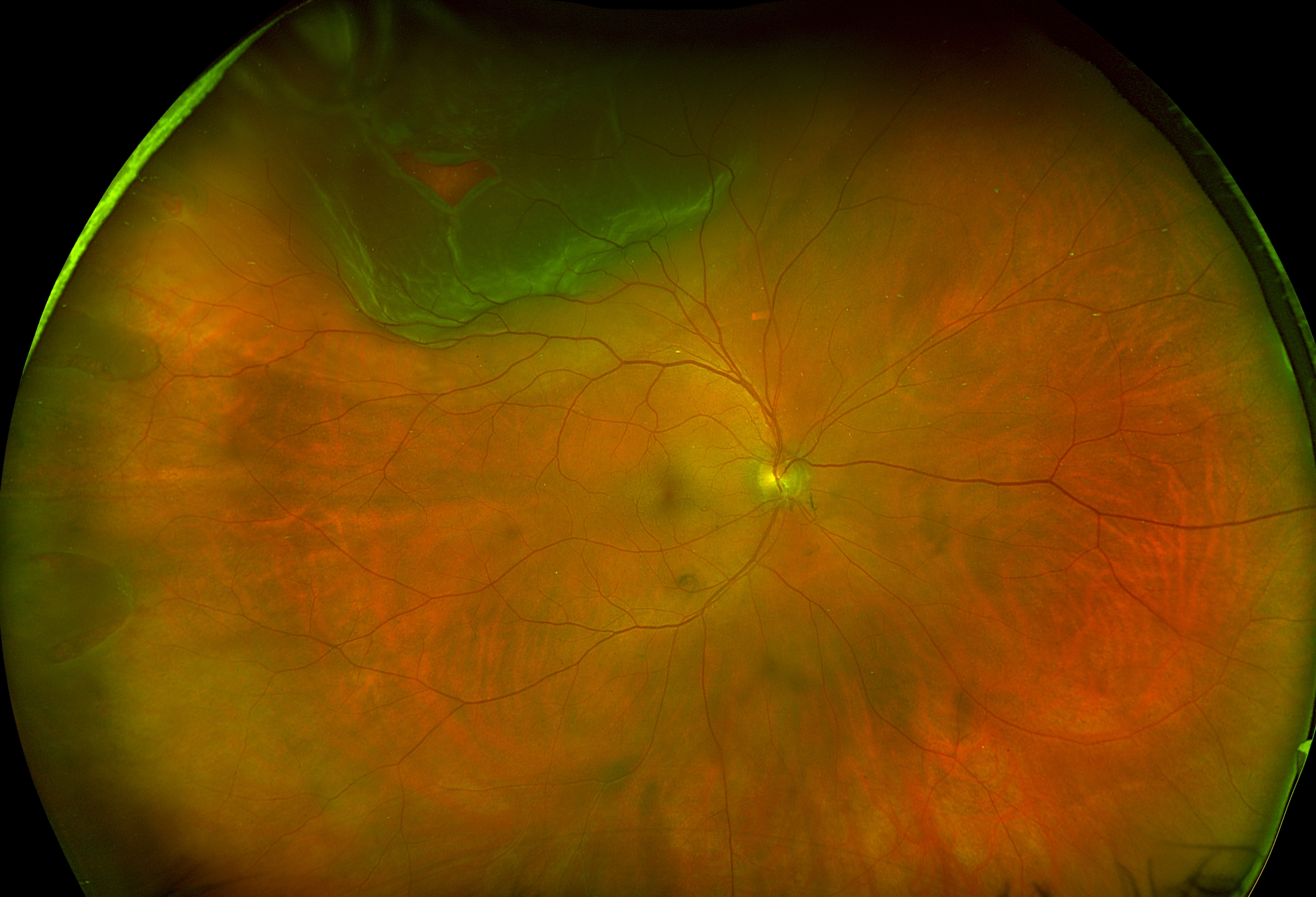
Certain disease characteristics—including giant retinal tears, total retinal detachments and the need for complex vitrectomy—were more strongly associated with repeat retinal detachment surgery than surgeon experience or case volume. Photo: Rami Aboumourad, OD. Click image to enlarge.
A leading concern in the management of primary rhegmatogenous retinal detachment (RD) is the potential need for repeat surgery in recurrent or persistent cases. A recent analysis of Medicare beneficiaries published in the journal Retina found that while surgeon experience and surgical volume were not associated with the likelihood of reoperation following surgical RD repair, the greatest risk of revision was seen among eyes with giant retinal tears, total retinal detachments and those requiring complex vitrectomy.
Researchers evaluated 25,456 primary RRD repairs performed in Medicare beneficiaries, examining patient-, surgery- and surgeon-related factors associated with repeat intervention. The analysis included procedures using scleral buckle, pars plana vitrectomy or a combination of both. Surgeon characteristics included retinal detachment case volume, years since training, practice volume and practice setting.
Overall, 14.3% of eyes required additional treatment within two years of the initial procedure. The median time to revision was 73 days. Eyes with giant retinal tears were nearly 40% more likely to require repeat surgery, while total retinal detachments and cases requiring complex vitrectomy with or without scleral buckle each carried roughly a 30% greater risk of revision.
In contrast, surgeon case volume was not associated with surgical success. Whether surgeons performed 10 to 25, 26 to 50 or more than 50 retinal detachment repairs during the study period did not significantly influence revision rates. Likewise, years of surgical experience, overall practice volume and practice setting were not significant predictors.
The authors noted that the findings suggest RD repair outcomes are driven more by disease complexity than by surgeon experience, which may help eyecare providers offer more accurate counseling regarding the likelihood of repeat surgery, especially when managing patients with the risk factors identified in this study.
“Our statistical model suggested the presence of unidentified factors influencing surgical outcomes, emphasizing the need for further research into predictors of proliferative vitreoretinopathy, the primary cause of RD surgery failure,” the researchers concluded in their paper.
Click here for the journal source.
This article was developed by the editorial staff in conjunction with experts in the field. In the process, AI may have been among the editorial tools used to meet the goals of human editors, who approved all content.