
Visitors are sending postcards from hell this summer but their 1.5 billion visits are adding fuel to the fires every yearNeil Leslie Group Editor Irish Daily Star, irish Daily Mirror, Irish Sunday Mirror
05:00, 31 Jul 2026
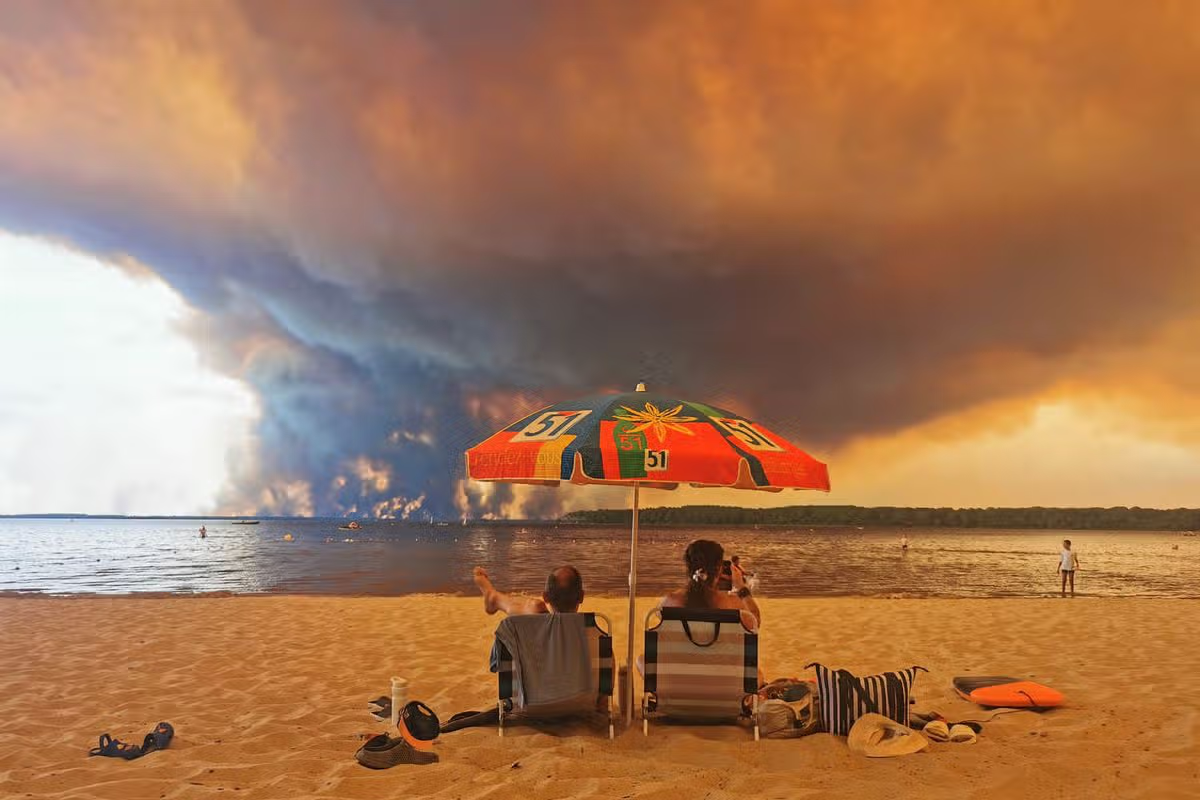
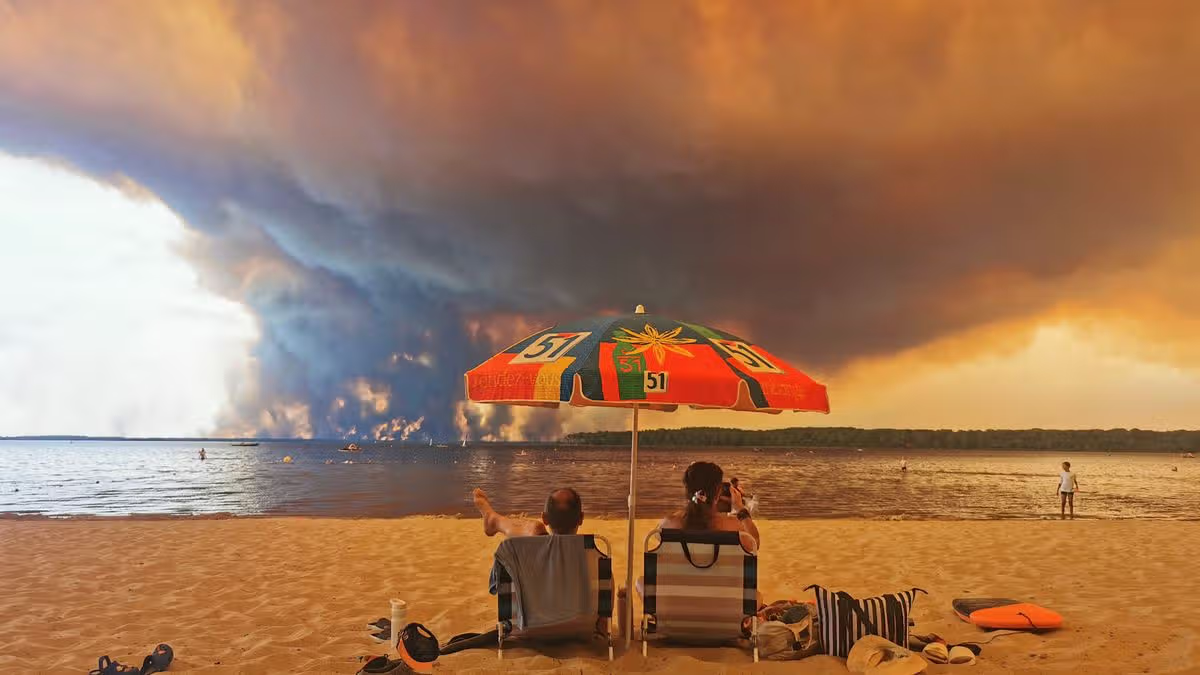
Beach goers in France watch the smoke from Europe’s biggest wildfire(Image: AFP via Getty Images)
Cassandra the prophet: “The citizens of Pompeii will befall the fate of Gomorrah – and Sodom.”
Lurcio the slave: “I agree. Sod the lot of ‘em.”
Frankie Howard’s 1970s TV farce Up Pompeii mercilessly trolled a corrupt and vacuous civilisation that lived out its final days under the shadow of a simmering volcano that was about to blow.
The Italian resort was the tourist mecca of the Roman Empire in 79AD.
The wealthy would escape the summer heat of Rome to lounge in its baths, spas and luxury villas, be waited on by its slaves and be entertained in its colosseum.
They enjoyed the good life, oblivious to the oblivion looming from the slopes of nearby Mount Vesuvius.
When their little slice of paradise was buried under a mountain of fire and ash, at least the citizens had the excuse of complete ignorance.
This week, families fleeing the flames of Europe’s biggest-ever wildfires described the scenes as like the conflagration that engulfed Pompeii as they sent home their postcards from hell.
Which is accurate except in one mind-blowing respect: we knew it was coming.
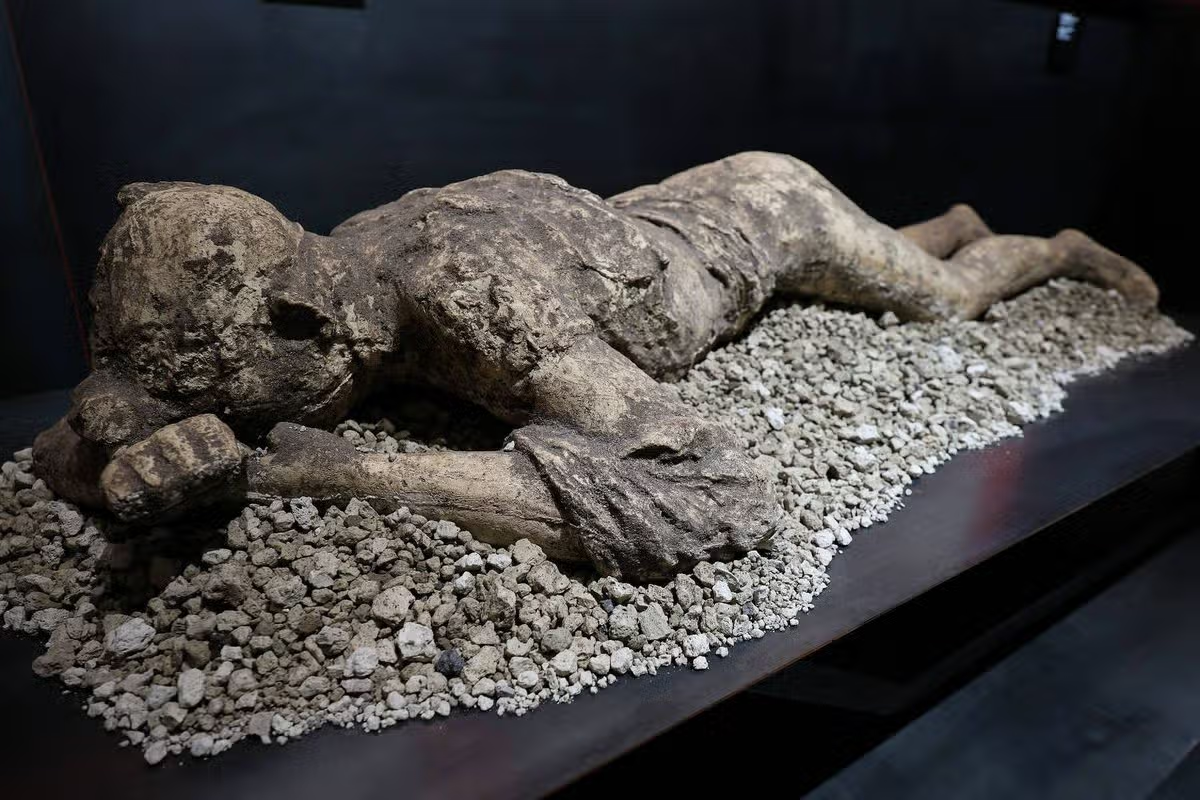
One of the citizens of Pompeii who didn’t know disaster was coming. We don’t have same excuse(Image: LightRocket via Getty Images)
In 2022, I was among the vacationing hordes on the Costa del Sol in what was then the hottest summer on record (it now stands as the coolest one we are likely to see from that date to the end of our days).
I watched people posing for smiling selfies in a bid to catch the firefighting planes as they swooped low over the beach, scooping up seawater to pour on an encroaching circle of fire in the nearby hills.
It reminded me then of the science-fiction writer Douglas Adams’ depiction of the ‘Restaurant at the End of the Universe’, where travellers would pay good money for a table to watch the moment that existence collapsed on itself, taking us all with it into oblivion.
Europe’s summer of 2026 has seen temperature records shattered, climbing towards a hellish new 50-degree threshold.
An area the size of Luxembourg has been torched stretching east to Ukraine and as far west as Killarney National Park. Countless birds and small animals were burned alive.
Farmers lost €2 billion in grains in the Mediterranean breadbasket that helps feed a continent – larger than the combined grain production of Austria, the Netherlands and Ireland.
It sparked a wave of refugees not seen since the Second World War. And we watched it all unfold – from a front-row seat on our sun loungers.
In a world of war and disaster, global tourism actually grew during the first three months of 2026.
According to UN figures, this year there will be over 1.5 billion trips taken, with Europe being the world’s top destination.
In a perfect vicious circle of flames, those travellers contribute around 10 per cent every year to the carbon blanket in the atmosphere that is turning Europe’s most beautiful places into flaming Pompeiis.
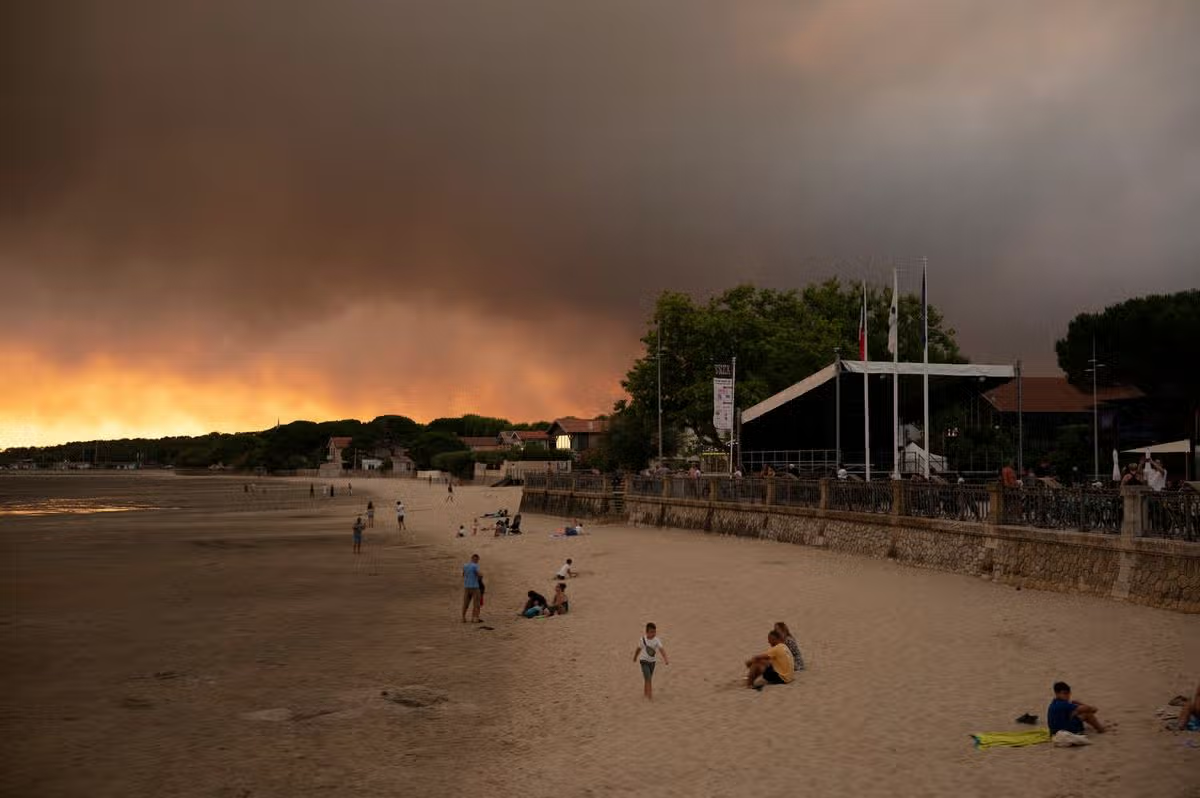
Beachgoers watch as flames and smoke gather in the distance from French wildfires this week (Image: AFP via Getty Images)
But for many, a ‘Flaming Pompeii’ sounds more like a cocktail to enjoy by the pool while holidaying in hell than a warning from history.
Like Cassandra – who was cursed by the Greek gods to always utter the truth but forever be ignored – scientists have been telling us for years about the fate that awaits us.
There is still a pathway to save the good life and all the things in it like holidays of course – by kicking the globe’s addiction to fossil fuels.
As voters and consumers, we already have the knowledge and the means to stop our own Vesuvius blowing its top.
But like a previous doomed civilisation by the Bay of Naples, we seem happier to dance ignorantly towards the flames.
If the citizens of the world are not prepared to listen, then I am inclined to agree with Lurcio: “Sod ‘em all.”
Subscribe to our newsletter for the latest news from the Irish Mirror direct to your inbox: Sign up here.