
Every day in the United States, thousands of medical procedures are delayed while clinics wait for insurers to approve treatment.
For Aaron Cullen and Jaylem Brar, this administrative bottleneck represented an opportunity.
A key difference between how health insurers in Ireland and the US operate is the practice of prior authorisation. Here, patients generally submit a claim after a procedure.
There, it’s predominantly the other way around. Patients need to get the go-ahead from their insurer before they can proceed.
The task of getting an insurer’s approval usually falls to the administrative staff in the clinic a patient is attending.
On the face of it, this sounds straightforward. In reality it’s not because there are more than 1,100 health insurers in the US, all with slightly different prior authorisation requirements.
As a result, clinic staff spend a huge amount of their time assembling the paperwork (lab test results, scans and medical reports, for example) related to preapproval requests.
For Cullen and Brar, this manual processing of pre-approvals appeared inefficient, labour-intensive and ripe for disruption.
Last January they set up Mendelia to develop an artificial intelligence-based workflow automation solution that takes the pain out of the preapproval process.
“Mendelia automates prior authorisation submissions, tracking and follow-ups so staff can stop chasing payers [insurance companies in US parlance] and patients can get care faster,” says Cullen.
He grew up in Dublin and moved to the US at the age of 18 to study economics at Yale. He met software engineer Brar when they were both working at Brellium, a healthcare start-up based in New York.
“Together, we became interested in the administrative burden facing clinics and the opportunity presented by technology to remove the repetitive back-office work involved,” says Cullen.
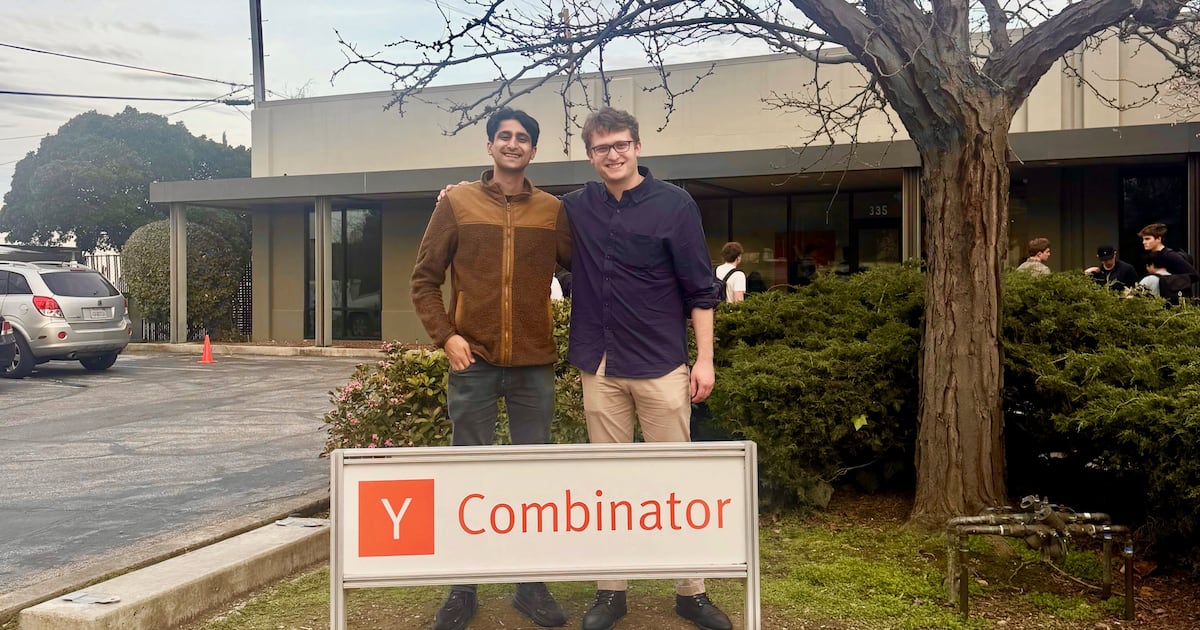
Mendelia is backed by the US-based Y Combinator accelerator, which also provided Mendelia with its start-up capital of $500,000 (€440,000).
“After leaving our previous company and raising our pre-seed funding, we spent days sitting with back-office staff in clinics to learn how they worked, the processes involved and where their time was going,” Cullen says.
“It quickly became clear that prior authorisations were one of the biggest drains on resources, and Mendelia was designed specifically to tackle this.
“Mendelia works by plugging into a clinic’s electronic health records and payer portals and pulling eligibility data, authorisation requirements and cover details together automatically.
“Our system also tracks authorisation progress, gets alerts if a payer changes its rules in any way and catches issues before they turn into denials.
“Prior authorisation is incredibly time-consuming because it’s complex, with some companies requiring portal submissions while others only use phone calls or fax,” Cullen adds.
“In addition, the rules vary widely by payer and procedure. As a result, clinic staff spend hours every day calling the insurance companies, chasing updates, logging into portals, preparing documentation, keeping up with approvals and following up on denials. Where there’s no access to a portal, a phone call about a single patient could last up to 45 minutes.
“Existing solutions include aggregating portals and giving clinics software to manage the process themselves. However, Mendelia is quite different,” Cullen says.
“We take responsibility for the entire process and have automated it from end to end. So, instead of giving staff yet another dashboard to work with, we take the prior authorisation task off their desks entirely.”
In the US, prior authorisation is required for a wide range of medical and surgical procedures from injections and infusions to surgeries of all kinds and rehabilitation therapies.
The starting point for Mendelia was to ingest all the different insurance companies’ requirements for each procedure, something that was made possible and at speed by AI.
“We have used AI a lot in our development, and as a result we have been able to integrate with our clinic customers a lot quicker than would have been possible even a couple of years ago,” Cullen says.
“Coding agents are amazing. They let you do things so fast, and it’s like having 10 engineers working on a task instead of one or two. We were building our system while we were on the Y Combinator accelerator, and as it’s only a three-month programme, they push you really hard to hit your development milestones.
“We’re still building out our system because the platform is essentially different for each speciality. So, the platform to support orthopaedics is a lot different to the one for ophthalmology or rheumatology.
“For now we are focused mainly on surgical specialities and are spending a lot of our time on orthopaedics and ophthalmology in particular, as they have a lot of prior authorisation requirements. This is due to the fact that the procedures involved can often be very expensive. For example, a retina injection can cost in the region of $5,000, so the insurance companies want guardrails to ensure that the procedure is medically necessary.”
Asked how two young graduates with a good idea but little else to establish their credibility got their foot in the door with the clinics that subsequently became their launch customers, Cullen says: “Doughnuts.”
Doughnuts? “Yes, we tried cold calling and got nowhere, so we went around the clinics delivering boxes of doughnuts to try to get a hearing from the practice managers. We found people were a lot more willing to talk to us when we had doughnuts.”
Mendelia already has its first cohort of paying customers, and Cullen says peer-to-peer recommendations from clinicians are proving the best way of getting new customers, as a certain level of trust is required to introduce the system into a clinic.
Mendelia makes its money by charging customers per authorisation, with volume discounts applying for heavy users.
The company is currently based in New York, and it employs six people, between staff and contractors. For now, Cullen has no plans for an automated workflow product for the Irish health insurance market, but neither is he ruling it out at some point in the future.