
St James’s marks milestone in pioneering treatment which can provide an effective cure for around 40 per cent of patients with chemotherapy-resistant lymphoma
More than 150 patients have received a ground-breaking new blood cancer treatment since it was introduced in Ireland five years ago.
CAR-T therapy enlists the patient’s own immune system to fight cancer. T-lymphocytes are removed from the blood and genetically engineered to express a chimeric antigen receptor (CAR) which recognises the tumour cell surface antigen. The engineered cells are then grown in the laboratory and infused back into the patient, where they bind to the antigen on the tumour cells and kill them.
St James’s Hospital treated its first patient with CAR-T therapy in December 2021. Since then, 150 patients from across the country have gone on to receive the potentially life-saving intervention in the Dublin hospital, a milestone celebrated at an event held on its inner-city campus on Friday.
In Ireland, CAR-T treatment is reserved for certain blood cancer patients who have responded poorly to chemotherapy, or where their disease has relapsed within a short timeframe, according to consultant haematologist at St James’s, Dr Robert Henderson.
“It has really been a lifeline to many patients who would have had a poor prognosis without it.”
The majority of Irish patients who’ve received the treatment have had high-grade lymphoma, with a smaller number of patients with acute lymphoblastic leukaemia also receiving the groundbreaking therapy here.
“If you’re to relapse fairly early with your lymphoma, or if you’re not responding to chemotherapy, the prognosis otherwise for those patients is very poor,” Dr Henderson told IMT.
“And that’s where CAR-T therapy has come in as a rescue treatment that can cure up to 40-50 per cent of patients that would otherwise have poor options without it.”
When St James’s first introduced the treatment, it was estimated that roughly one patient per month would receive CAR-T therapy. However, as the indications for who could benefit from this treatment have expanded, so too have the number of patients being treated. Last year St James provided CAR-T therapy to 45 people, with that number expected to be even higher in 2026.
“Those numbers have been increasing year-on-year since we started the programme,” added Dr Henderson. “This year again we’re seeing a very significant increase in the number of patients who are being referred and treated – we treated a very high number of patients this year compared to where we were this time last year.”
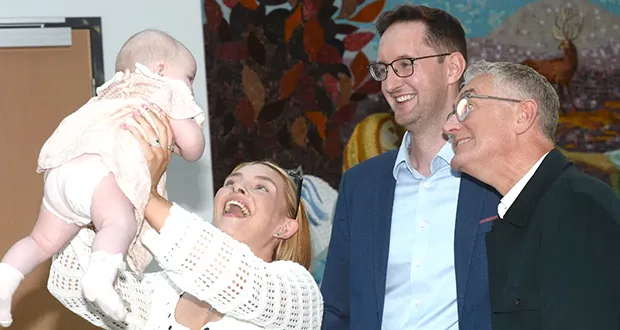
Friday’s event held to celebrate the pioneering treatment brought together patients, families and healthcare staff to celebrate its impact, while also remembering patients who have since passed away.
Present at the gathering was Louise Ward, daughter of the late Martin Ward, who was the first person in Ireland to receive CAR-T therapy.
“CAR-T gave our family precious time together that we will always cherish,” said Louise. “I know for my Dad, being able to receive the treatment here in Ireland made an enormous difference, removing the stress and uncertainty of having to travel abroad during such a difficult time.”
Dr Larry Bacon, consultant haematologist and clinical lead for CAR-T at St James’s Hospital, added: “Reaching 150 patients is an important milestone, but what matters most are the individuals and families behind that number.
“Since the programme began, CAR-T therapy has transformed outcomes for many patients with relapsed and refractory blood cancers who previously had limited treatment options. This achievement reflects the dedication of a multidisciplinary team whose expertise and commitment make this highly specialised treatment possible.”
Dr Bacon received the ‘Lifetime Achievement in Irish Medicine’ award at the Irish Healthcare awards some years ago for his pioneering work in bringing the treatment to Ireland.
While St James’s currently takes referrals across the country for this treatment, it is expected that the opening of a CAR-T therapy treatment facility in University Hospital Galway will provide access to the new treatment for even more patients in the future.