
On This Week: Irish moments from history (August 19th – 16th)
Welcome to On This Week, where we delve into the standout stories from the years gone by, featuring standout news stories, major sporting events, and pop culture highlights that helped shape Irish life. Here’s your dose of Irish history from August 10th – 16th.
This week in Irish life and news
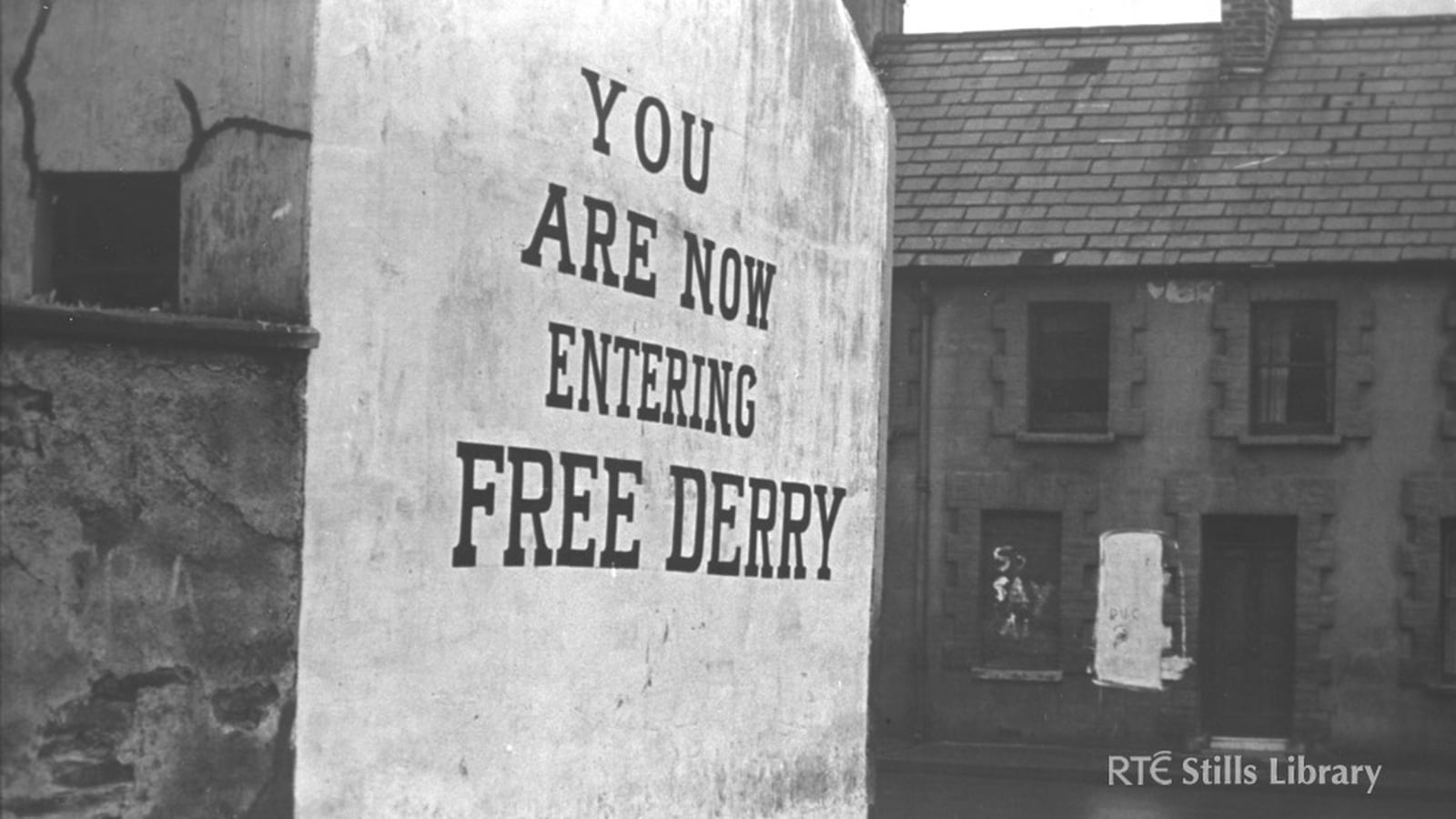
1969: Violence erupts in Northern Ireland
August 1969 was the month that Northern Ireland erupted into violence. Sectarian tensions manifested on the streets in a bloody conflict that would become known as ‘the Troubles’ and claim more than 3,500 lives over four decades. Presented here are RTÉ radio and television recordings of some of the major events of 1969 in Northern Ireland.
In January 1969, Prime Minister Terence O’Neill called a general election in response to opposition from within his own party to his policies. Across the political divide, a new generation of politicians began to emerge in this campaign. Although O’Neill and his supporters within Stormont would win the election, he could not shake off those who were opposed to him within the Unionist Party. By April, O’Neill was forced to resign and James Chichester-Clark became the next Prime Minister of Northern Ireland.
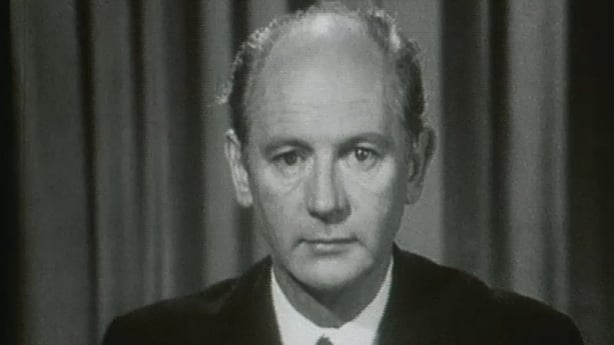
As violence broke out across the North, Jack Lynch addressed the nation in a speech broadcast on this week in 1969
Ivan Cooper, John Hume, and John Taylor were just some of the new political names to emerge in this period. However, it was the election of a 22-year-old woman, Bernadette Devlin, to Westminster that would attract world attention. Throughout the year, the sectarian tension increased until it eventually exploded in the violence of August.
In August, intense rioting following the Apprentice Boys parade in Derry on August 12 sparked conflict across Northern Ireland. For three days, the riots continued in what became known as the Battle of the Bogside. In Belfast there was further violence as Catholics and Protestants clashed with each other and the police.
On 13 August, Taoiseach Jack Lynch intervened in a broadcast to the nation. Lynch was highly critical of the Stormont government, stating that the RUC was no longer an impartial police force. He called for the UN to intervene and announced that the Irish army would establish field hospitals near the border. Unionists were angered by Lynch’s speech; Chichester-Clark commented that it was inflammatory. As the rioting continued, Prime Minister Chichester-Clark requested the support of the British army. On 14 August, British soldiers were deployed in Derry and were on the streets of Belfast the following day.
By the end of 1969, 16 were dead as a result of the violence and the IRA had split into Official and Provisional wings. Members of the Provisional IRA saw themselves as republican traditionalists and were prepared to use military force.
1995: The Sugar Loaf ablaze
While wildfires have been much more widespread in recent years thanks to climate change, on this week in 1995 gorse fire covered up to three miles of the Great Sugar Loaf mountain in County Wicklow.
It was a time of fear for many living in this area of Wicklow who were wondering if the fire will engulf their homes. Many local people had been critical of the Wicklow Fire Services and had taken it upon themselves to try to dampen the flames and contain the fire.
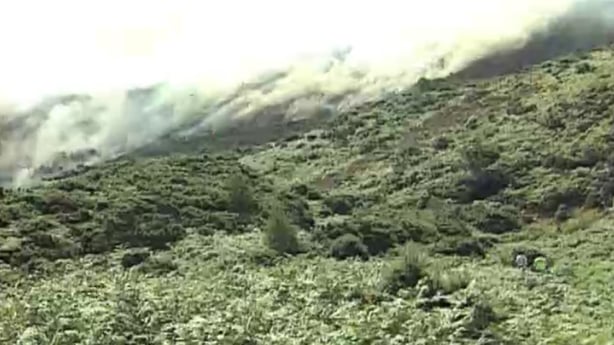
The Sugarloaf went up in smoke 31 years ago
The blazing Sugarloaf in County Wicklow made for a dramatic night time picture. Eileen Stephens said they got no help as she and her family tried to protect their home. Fire services were fully stretched coping with what many said has been the worst summer in twenty years for gorse fires. But Brian White of Wicklow County Council defended the efforts of the Fire Service who he says have managed to contain the fire and that no properties have been damaged.
An RTÉ News report broadcast on 10 August 1995. The reporter is Mary Wilson.
This week in arts and entertainment
1980: The world’s most famous mime artist
On this week 46 years ago, Marcel Marceau the world’s most famous mime artist explained how he developed the art of silent acting.
French mime artist Marcel Marceau was in Dublin for a performance at the Olympia Theatre. He talked about how, as a child, he loved the work of performers from the screen Charlie Chaplin, Buster Keaton, Stan Laurel and Oliver Hardy, whom he described as children at heart. His earliest experience of creating mime was when playing with other children in the street. At his aunt’s holiday camp for children, he formed his first pantomime group and theatre became part of his life.
We imitated butterflies. We were Robinson Crusoe. We were the heroes. We played fairy tales.
At the age of 20, he decided to become a professional mime artist. He had no idea then that he would end up resurrecting the ancient art of mime. Established his own Compagnie de Mime Marcel Marceau. He travelled the world with his character Mr Bip. Mr Bip had the traditional white face of the Pierrot clown but with a very different costume featuring a top hat with a red flower.
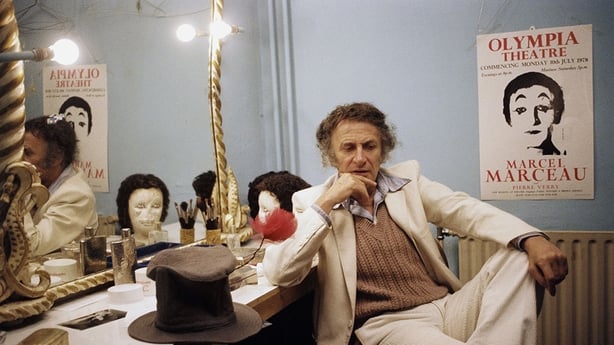
Marcel Marceau on a visit to Dublin
His material was inspired by his observations of life, which his audience could universally identify with. He created what he called style pantomimes, which made the impossible possible. In silent acting, a mime has to move in the air like a fish in water.
We reveal ourselves through sign language, symbols, dreams, reality.
When this interview took place there were currently three Irish students attending his school Ecole Internationale de Mimodrame de Paris Marcel Marceau. The Irish students include Conal Kearney, Vincent O’Neill, and Jonathan Lambert, son of the famous Irish puppeteer Eugene Lambert.
Marcel Marceau said the character of Bip was a reflection of man.
A mortal figure, representing the little man, the man in the street or the man in our dreams.
This episode of Summerhouse was broadcast on 12 August 1980. The reporter is Áine O’Connor.
1996: Oasis fans hit Cork
Three days after playing landmark concerts at Knebworth in England, Manchester band Oasis were in Ireland on this week thirty years ago to play two concerts at Páirc Uí Chaoimh in Cork.
Tens of thousands of music fans from all corners of Ireland converged on Cork City to see one of the biggest bands of the Britpop era. Last minute buses were laid on to ensure nobody was left behind as trains were full to capacity.
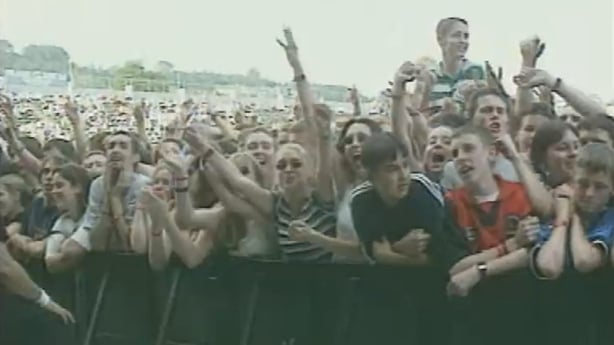
Enthusiastic fans at Oasis’s Cork show
Support band The Bootleg Beatles warmed up the 40,000 fans awaiting the five member super-group to take to the stage. Security surrounding the concerts has been tight and the arrival of the bad was shrouded in secrecy.
For Clinton it was strict, for Yeltsin it was bad, but they were nothing compared to this, no one gets in without the right ticket.
Bucking the trend was a nun called Sister Mary Francis who managed to get into the venue for free.
An RTÉ News report broadcast on 14 August 1996. The reporter is Flor McCarthy.
This week in sports
2009: Katie Taylor looks forward to the Olympics
On this week 16 years ago, boxer Katie Taylor was delighted with the announcement that women’s boxing will feature at the London Olympic Games in 2012. Ireland’s World and European Boxing Champion Taylor had her eye on a winning a fourth European title in a row and is hotly tipped to win a medal that until now, was not possible for a woman to win: Olympic gold.
The 22 year old Bray boxer was delighted and relieved with the International Olympic Council announcement that women’s boxing will feature at the London Olympic Games in 2012.
Hopefully it’s the start of something very special for me and I know the next three years is going to be very exciting for me, but I hope it’s going to go well.
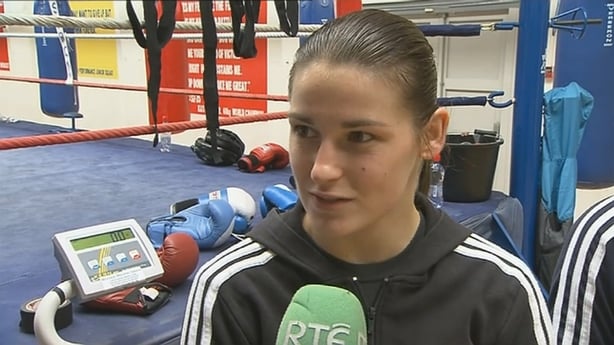
Katie Taylor was looking forward to London
The decision meant the Olympics in London would be the first to feature women and men competing in all of the sports. Boxing was the last Olympic sport to allow female participation and the decision has been widely welcomed.
To include three women’s weight classes in boxing, the number of men’s weight classes was cut to 10 from 11. Katie Taylor’s weight category was one of the three set for inclusion.
Irish Athletic Boxing Association’s high performance head coach Billy Walsh was pleased that women could finally take part on equal footing with the men.
We’ve trained Katie to be the best that she can be and no matter what tournament it’s going to be, you know we hope to go with the same ideas and the same tactics.
Thirty-six women’s boxers would be part of the Olympics in London and Katie Taylor was not only one of them, she won gold in her category.
An RTÉ News report broadcast on 13 August 2009. The reporter is Evanne Ní Chuilinn.
What was Number 1 in Ireland this week?
1976: ‘Don’t Go Breakin’ My Heart’ by Elton John and Kiki Dee
Elton John would go on to perform this classic with everyone from Miss Piggy to RuPaul, but the original duet with Kiki Dee stayed at the top of the charts for four weeks fifty years ago.
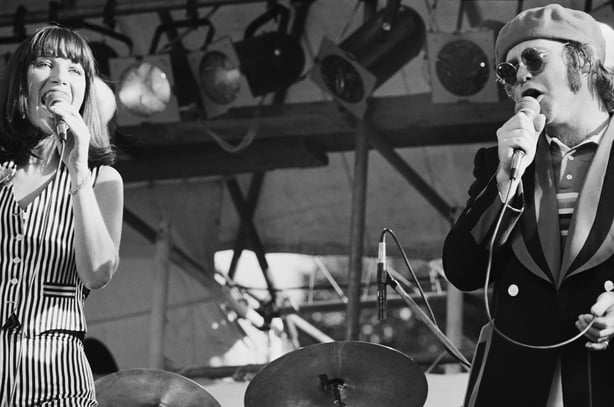
British singers Kiki Dee and Elton John performing on stage in August 1977, a year after their biggest hit topped the charts. Photo by Michael Putland/Getty Images
1987: ‘La Bamba’ by Los Lobos
This rock’n’roll version of a Mexican folk song was a hit for Ritchie Valens in 1958 and an even bigger hit when the Valens biopic La Bamba was released in 1987.
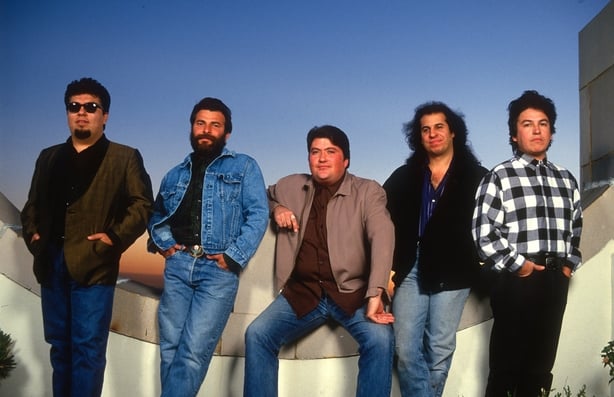
Los Lobos in 1990. Photo: Getty Images
2000: ‘Rock DJ’ by Robbie Williams
The former Take That member was at the peak of his success when he released this track 26 years ago. It topped the Irish charts for four weeks in 2000.
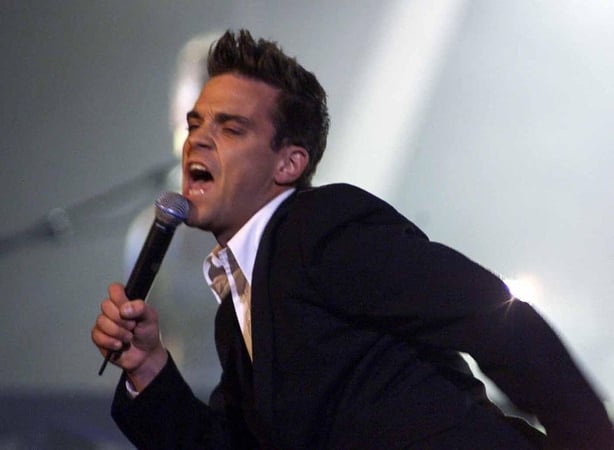
Robbie Williams performs at the MTV Europe Music Awards in 2000. Photo: JONAS EKSTROMER/SCANPIX SWEDEN/AFP via Getty Images
Famous Irish names celebrating birthdays this week
Roy Keane
The legendary footballer and commentator turns 55 on August 10th.
Claire Byrne
The broadcaster turns 51 on August 11th.
Evanna Lynch
The actor who rose to fame in the Harry Potter films celebrates her 35th birthday on August 16th.