
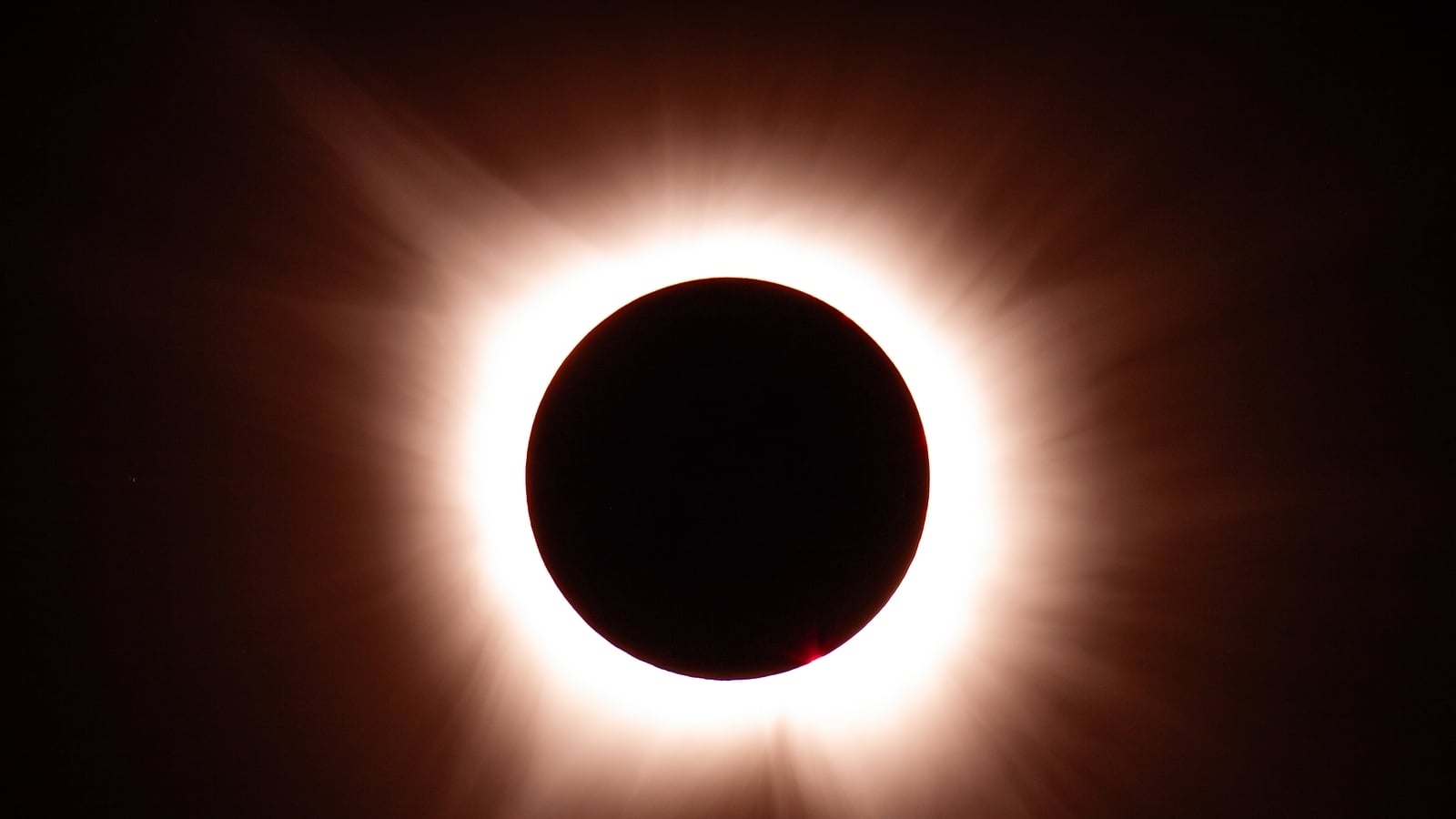
Parts of the world will see a rare total solar eclipse this week.
Spain will be one of the main destinations for astronomy enthusiasts, but the total eclipse will also be visible in Greenland, Iceland, Russia and a small portion of Portugal.
In Ireland, as with other parts of Europe and western Africa, it will be a partial eclipse – “a unique lifetime experience”.
People all over the country will get to experience the partial eclipse on Wednesday evening, 12 August, as the Moon moves in front of the Sun.
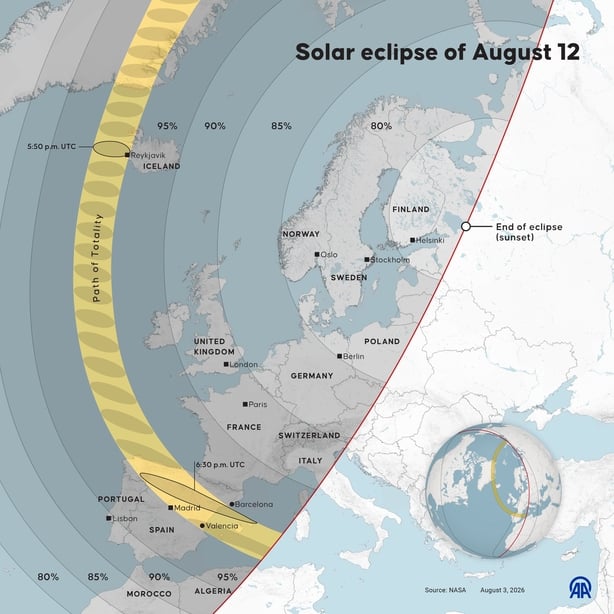
Spain is one of the main destinations for astronomy tourists for this event
The event will become visible just after 6pm with maximum coverage of the Sun occurring shortly after 7pm.
The Moon is expected to have cleared the Sun by around 8pm.
In Ireland, the west and south of the country should see up to 98% coverage of the Sun, while in the east and north it will be around 94%.
Director at the Dublin Institute for Advanced Studies (DIAS) at Dunsink Observatory Professor Peter Gallagher said this will be “a unique lifetime experience” as the next eclipse is not due here until 2090.
It was 1999 when the last significant eclipse was visible in Ireland.
Watch: RTÉ News reports on the solar eclipse in 1999 from the Phoenix Park in Dublin
Prof Gallagher will be part of a team on board an Irish Air Corps plane 400km off the west coast during the eclipse that will use an Italian-made solar telescope to capture high-resolution images of the solar corona on the outer layer of the Sun’s atmosphere.
A crew from the US space agency NASA will also be doing similar work above the north Atlantic Ocean, west of Iceland.
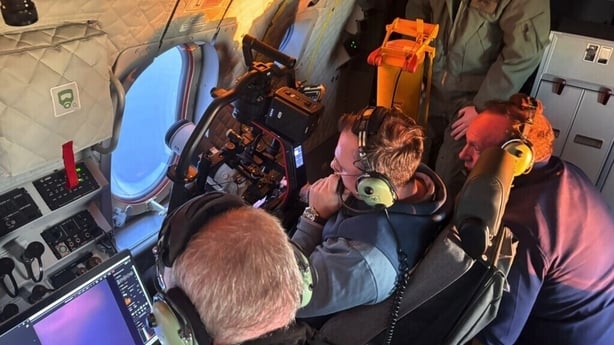
The Irish eclipse flight team on an Air Corps test flight (Pic: TCD/Air Corps)
Closer to home, many public events have been organised across the country to view the eclipse.
The observatories at Dunsink, in Dublin, and in Armagh, as well as at Blackrock Castle in Cork, have organised viewing events, with public events also orgainsed at Maynooth University in Co Kildare, Queen’s University Belfast and at Dublin’s Phoenix Park.
Many events are already sold out, so anyone planning to attend one of the organised viewings should check for availability before they travel.
Don’t damage your eyes
A big consideration during a solar eclipse is viewing safety, and the public are being advised not to try to look at the Sun using sunglasses or binoculars, as this can lead to damage to the retina in the eye.
Certified eclipse viewers or glasses are available to purchase at various retailers, as well as from some of the groups that are organising official viewing events.
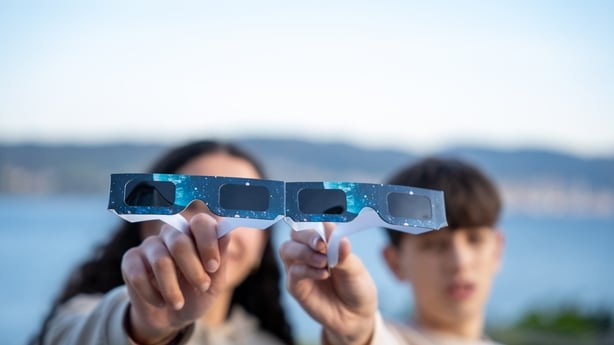
Eclipse glasses are available at retailers and from groups organising viewing events
Associate Professor at Maynooth University’s Department of Physics Dr Emma Whelan said this solar eclipse is a “really special event”.
Maynooth University has sold out its 450 tickets for a public viewing event, and there is a waiting list with hundreds more.
Dr Whelan said they have “never seen this level of interest before” in such an event.
She said people will need the special glasses and filters for telescopes to prevent eye damage during the eclipse as the radiation from the Sun will remain very strong.
However, she said there are many different homemade options to try, such as making a pinhole camera from cardboard packaging.
Describing what people can expect during the event, Dr Whelan said as it will happen close to sunset, it will get much darker and quieter as the Moon passes in front of the Sun.
Read More: All you need to know about the solar eclipse