
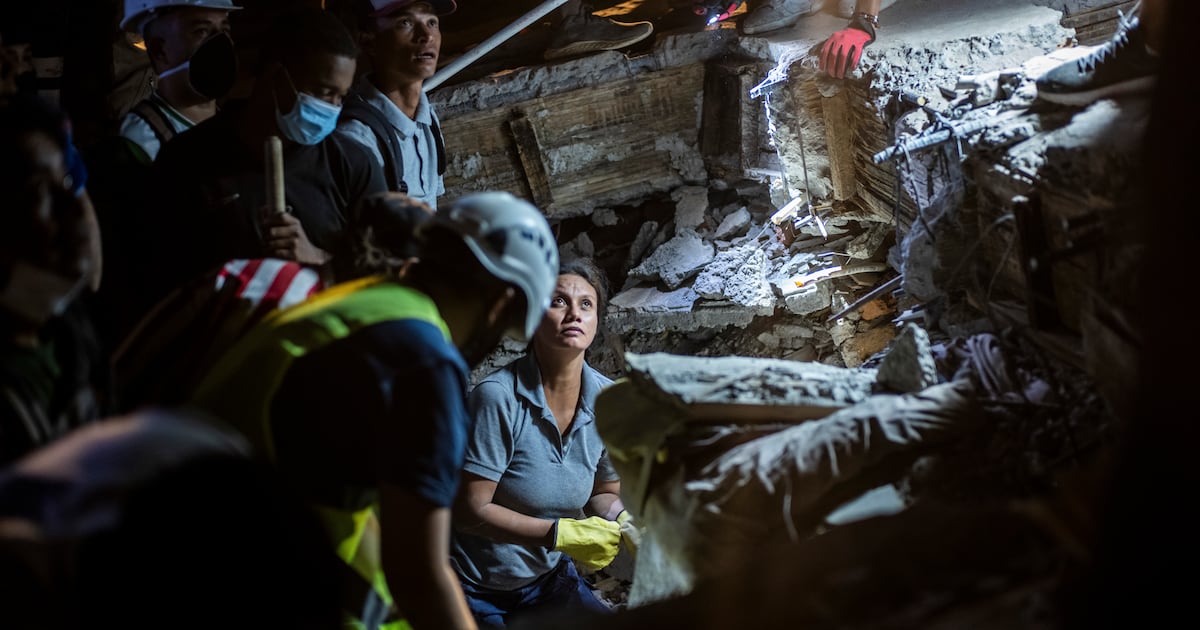
Rescue crews on Tuesday dug through mountains of rubble in western Colombia, shouting for quiet so they could listen for survivors still trapped under the buildings collapsed in a powerful earthquake estimated to have killed at least 250 people.
Families waited beside the rubble for signs of life.
The 7.4-magnitude quake, the most devastating to strike Colombia this century, tore through its coffee-growing heartland early on Monday, leaving apartment blocks, homes, schools and health centres cracked, leaning or flattened.
Separate reports from affected cities put the death toll at 254 on Tuesday morning, with 101 people killed in Pereira, deep in coffee country, and 95 in Cali, the country’s third-biggest city.
The South American country’s president, Abelardo de la Espriella, said around 2,595 were injured, while at least 195 remained missing.
Many Indigenous communities in the forested Pacific-facing region of Choco close to the quake epicentre are still without power or basic services, complicating rescue efforts.
The earthquake struck just days after the inauguration of de la Espriella, who travelled to the affected regions and promised economic support to people who lost their homes.
The National Coffee Federation was working on the ground with families to assess damage to farms and rural infrastructure, its chief German Bahamon said on social media.
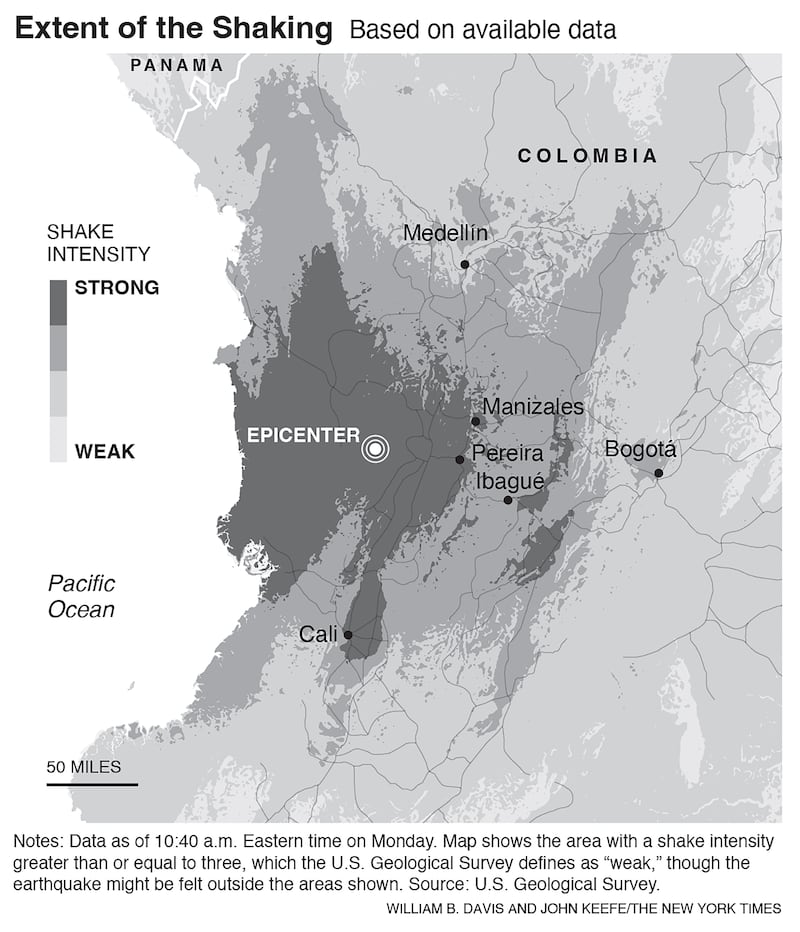 The 7.4-magnitude earthquake is the most powerful to hit Colombia in decades.
Meanwhile, rescuers worked through Monday night and Tuesday with cranes, excavators and their bare hands, creating human chains and passing buckets filled with debris as they searched for people still trapped.
“We are … focused on the immediate task of saving lives, guaranteeing the arrival of rescue teams, bringing in medical supplies and field hospitals,” interior minister Rodrigo Lara told Blu Radio.
The United Nations humanitarian office OCHA said almost 5,000 homes were damaged, while dozens of buildings collapsed and hundreds of residences were destroyed.
In Cali, residents gathered in the streets after parts of homes and apartment blocks gave way. Families cooked outside, salvaged what they could and braced for another day away from home.
Several of the top floors of one of the city’s hospitals – some dedicated to paediatric care – collapsed, leaving some patients trapped and 600 others tended to on a street strewn with rubble, Irne Torres Castro, the hospital’s director, told Caracol Television.
[ Irish in earthquake-hit Colombia: ‘Everything started shaking’Opens in new window ]
In Pereira, one of the cities hit hardest, whole sections of residential neighbourhoods were reduced to broken slabs of concrete and exposed rooms.
Residents and volunteers formed human chains, while others stood silently nearby, listening for tapping sounds or cries from below.
“They’ve already pulled several people out, some alive and some dead. I still can’t believe it – yesterday at this same time I said hello to them and today they’re gone. It’s very painful,” said Fernanda Gaviria (33), speaking from a grocery shop opposite a collapsed building.
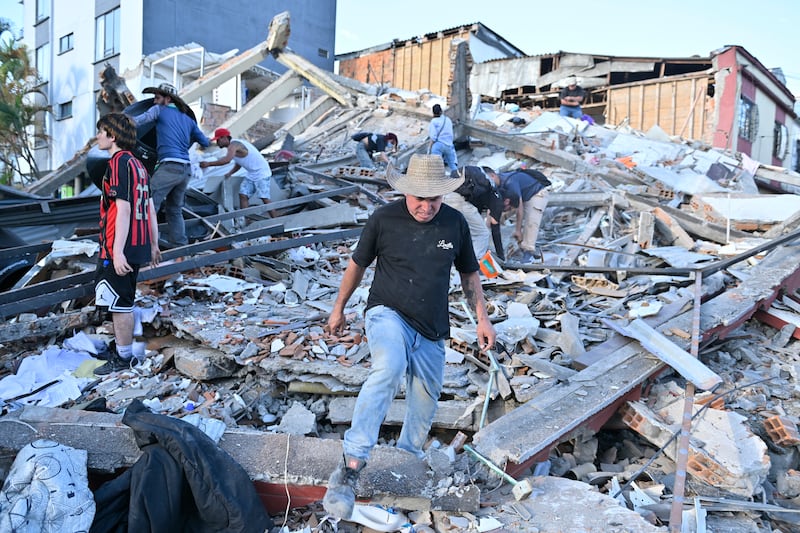 People and rescuers search for victims in the debris of a collapsed building in Pereira, Colombia. Photograph: Gabriel Aponte/Getty Images
 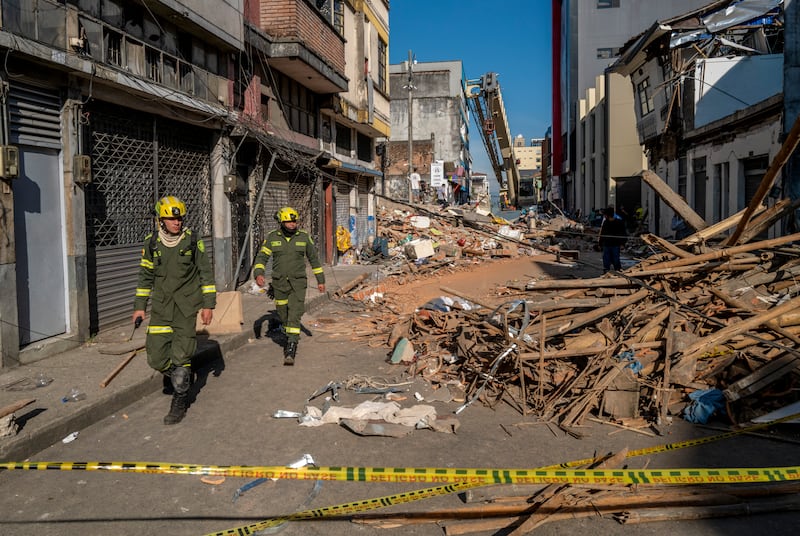 First responders walk down a rubble-strewn street in Pereira, Colombia. Photograph: Juan Arredondo/New York Times
Gaviria said she spent the night sleeping in a park after her own apartment building was badly damaged.
The earthquake also knocked out vital infrastructure. Civil aviation authorities closed six airports – Quibdo, Pereira, Manizales, Armenia, Cartago and Buenaventura – due to damage, while dozens of roads were reported to be affected.
Electricity, water, healthcare and phone service remained disrupted in several areas, especially in Choco near the epicentre, complicating rescue efforts and aid delivery.
Authorities activated command centres as emergency workers, volunteers and humanitarian agencies rushed in shelter supplies, drinking water, hygiene kits, food and medical support.
International assistance was beginning to arrive. The United States said it had allocated $15.5 million (€13.4 million) for emergency shelter, food, protection and damage assessments, while the Inter-American Development Bank said it had made $50 million immediately available for reconstruction support if requested by the government.
With communications still patchy in some of the worst-hit areas, officials said the full extent of the damage and the final death toll could take days to establish. – Reuters/PA