
With the exceptionally rare partial solar eclipse set to darken our skies this evening, scores of people will be out hoping to catch a glimpse of the celestial spectacle. But as exciting as the event is, protecting our eyes from severe sun damage is vital.
Dr Mark Cahill, Consultant Ophthalmologist and Retina Specialist at the Royal Victoria Eye and Ear Hospital and spokesperson for the Irish College of Ophthalmologists, the training and professional body for eye doctors in Ireland, spoke with RTÉ Lifestyle about the risks of exposing our eyes to the sun and how to care for our eye health, whether there is a solar eclipse scheduled or not.
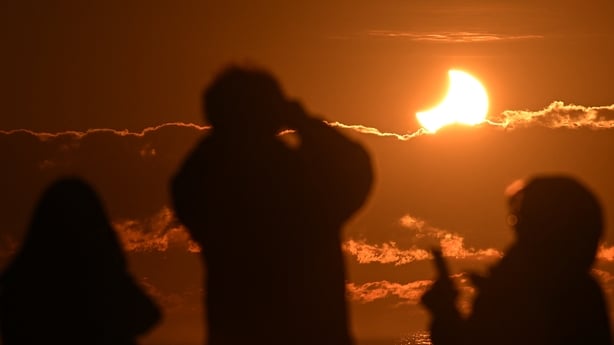
People watch a partial solar eclipse at New Brighton on September 22, 2025
We’re told not to look at the sun with the naked eye, but what damage does this cause exactly?
Your eye’s job is to focus light from the outside onto the retina and the retina turns the light into electricity. And the retina has two parts to it. It has the peripheral retina and the very centre, which is called the macula. That macula is a very small central area where most of the electricity connections are made to the brain.
The retina sits on pigment, and that pigment absorbs light. So if you look at a very strong light source, including the sun, which is the strongest light source, the energy from the sun is absorbed by the pigment under the retina, which is damaged beyond repair. And when that happens, the overlying retina is also damaged, and you can’t see in the centre of your vision.
That process is not painful, so you don’t notice that it happens. And it doesn’t happen straight away. The total effect takes a number of days to build up.
If you look at the sun, your vision will feel affected. So you will think, oh my God, my vision’s a bit blurry, and then over time that amount of blurriness will increase and get worse and become permanent.
What sort of glasses do you need to view the eclipse?
The solar glasses are a black polymer, which block 99% of the light, and they block the UV and the infrared as well. And it’s very specific; they have to have an ISO number, and the number is 12312-2. And so if you put those glasses on in a normal room, it’s completely black; you can’t see anything. If you put sunglasses on, you’re blocking about up to 40% of light, but you’re not blocking any infrared light with sunglasses.
The problem with sunglasses, if you look at the sun during the eclipse, is you think you’re okay, so if you put sunglasses on, you might be able to look at the sun a little bit, but that would be really terrible because you’re still getting all the bad sunlight and the infrared. Some people use X-ray film to look at it. [That’s] absolutely bonkers. That doesn’t reduce much of the intense energy or the infrared coming from the sun rays.
So putting glasses on and thinking, oh, I’m good now, I can see the sun, I’m not hurting myself— you’ve had so much energy onto your centre of your macula that you’re probably going to get damage as well.
How can you tell the difference between correct protective glasses and knock-off glasses?
One is the ISO number, and two is looking at them to make sure that they’re complete, you know, that there’s no scratches or anything on the lenses. And three, you put them on in a room, and if you can’t see anything, there’s a good chance if all three of those things are there that they’re the correct glasses.
Aside from the eclipse, how should we protect our eyes on a typical sunny day?
Now, what we really recommend is that you wear sunglasses on a sunny day. Sunshine has great health effects on our general health because of vitamin D, well-being, and all of those things. So, wearing sunglasses that are proper UV-blocking sunglasses or Polaroid glasses, they’re really recommended as a widely adoptable prevention risk.
General [sun] exposure can be associated with progression of cataract, but that really depends on how much sunlight you get. So, in Northern European countries, that risk is quite small, although we do travel a lot now for holidays, and so we get a lot more sunshine than we used to.
How often should we go for eye tests?
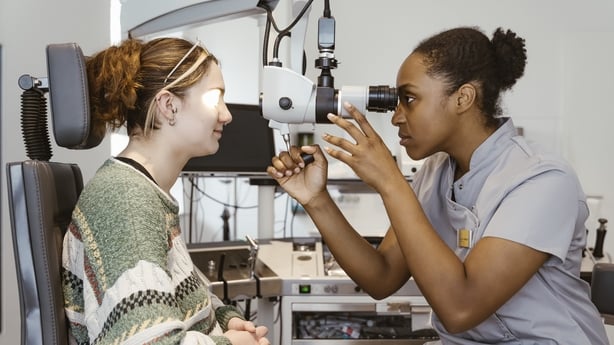
General eye health is very important, particularly after we’re over the age of 50. So, the College of Ophthalmologists would recommend, and general eye doctors would recommend, that after the age of 50, you have a full eye check every couple of years. And if you have a family history of eye disease, particularly age-related macular degeneration or glaucoma, then it may need to be more frequent than that.
If people have good vision, they’re not short-sighted, then they may get away with not having any eye check until they start to get problems with their reading vision. If they have a family history, they need to be checked at least once between the age of 20 and 40. If people are short-sighted, they’re probably having their glasses changed at 2-yearly intervals anyway, and the vast majority of the population have excellent vision between that age of 20 and 40, and they don’t require glasses for anything. So they’re usually fine as long as they have a good healthy diet.
Compared to a sunny day, what sort of damage is done to our eyes from using screens for long periods?
For very young children, screen time is a problem because it’s an association between screen time and being indoors and the onset of short-sightedness, meaning you need glasses for distance, and the progression of short-sightedness or the progression of myopia.
It’s due to the intense fixation for looking at screens when you’re reading on them and also the fact that children are not outside relaxing the accommodation of the eyes. When you’re reading, your eyes are accommodating. The little muscles in your eyes are squeezing the lens in the eye to help with the fine focus, and that’s thought to be a significant factor in the progression of the length of the eye, which causes short-sightedness.
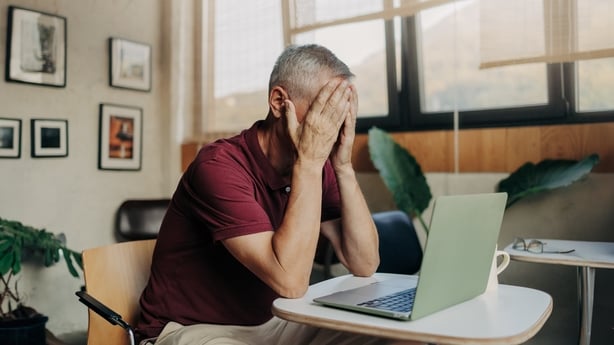
Screen time in adults, when they’re looking at computers or their phone, is more to do with when you look at a screen, your eyes don’t blink as much, and you can start to get exposure sorry, you can get reduction in the tear film leading to eye strain.
The idea is that you take a break for 2 minutes, you look in the distance and give your eyes a rest if you’re doing a lot of screen time. Then some people, as their tear film is breaking down because their eyes aren’t blinking, they use teardrops and that can alleviate it.
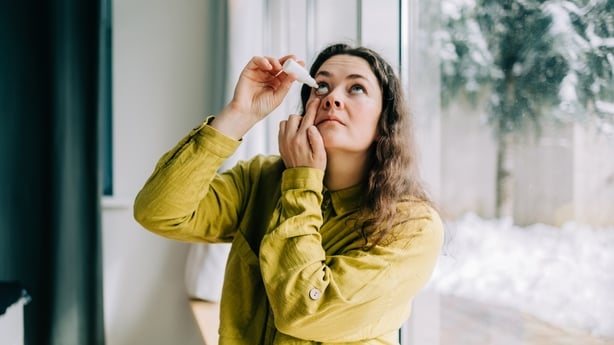
We’ve all heard that carrots are great for our eye sight, is that true? Are there other foods we should prioritise for our eye health or habits to take up?
A good healthy diet is important. One is the tear film, so good healthy diet and omega 3 fatty acids [such as in] flaxseed is great for the tear film.
Vitamin A deficiency is very rare now in most countries because people’s diets are so good and carrots are full of vitamin A. So carrots, in their own way, are good and a great source of vitamin C, but a good, healthy diet in the long term is really important for the retina and its underlying pigment. A diet that’s low in red meat, low in alcohol, high in vegetables, high in whole fruits, not just the juice, and in pulses. Fish is particularly good.
Worst thing ever for your eyes is smoking, and a lot of smoking is on the way up. Smoking damages the circulation and produces toxic chemicals that damage the retina and the pigment that it sits on. So smoking and vaping— vaping is not as bad as smoking, but younger people are smoking in higher numbers, and it’s terrible for your eyes. Absolutely terrible.
If you have any health concerns, be sure to speak with your GP or a relevant health professional.