
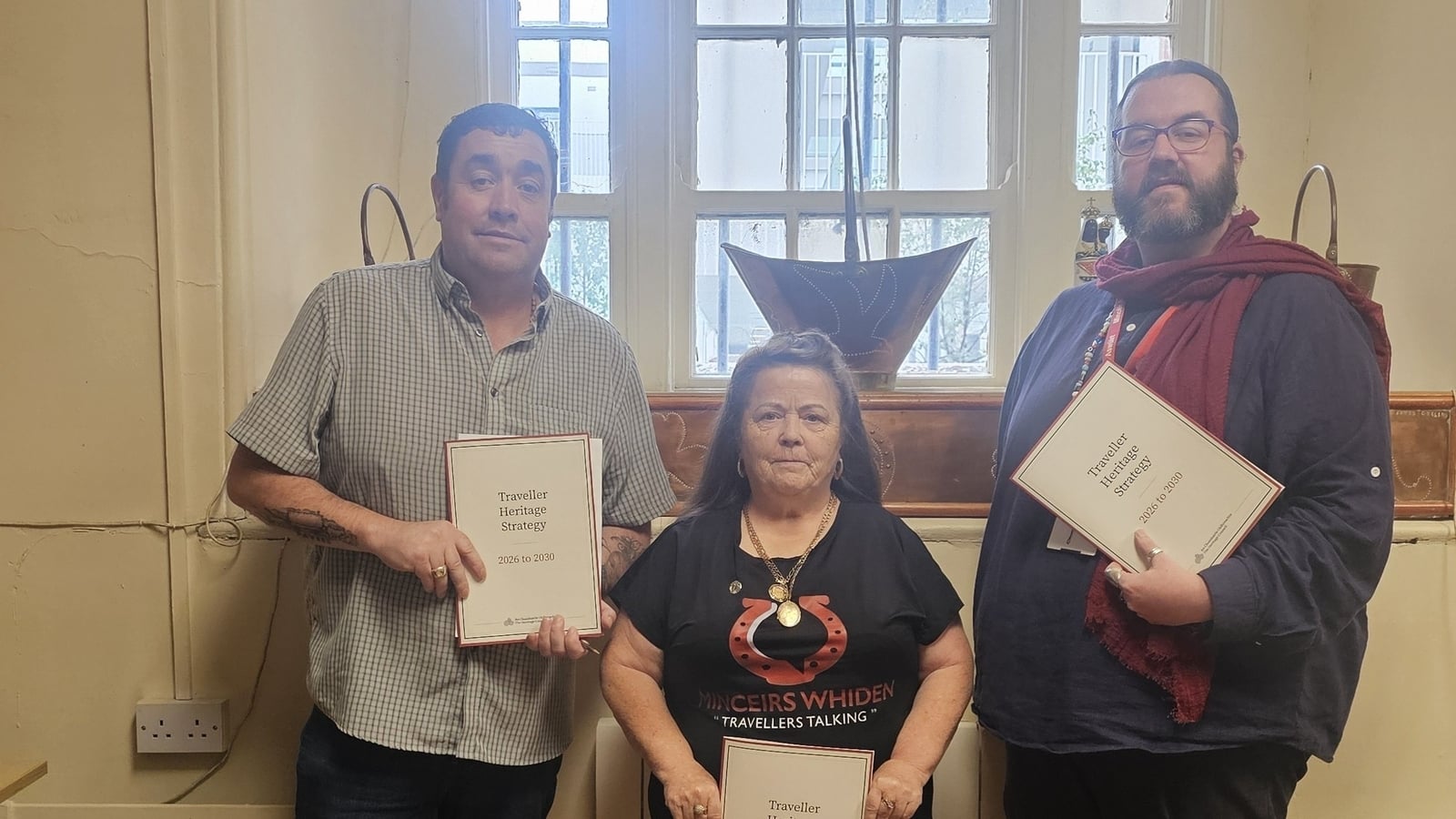
Ireland’s first-ever Traveller Heritage Strategy aims to protect oral history, music, craft skills and a distinct way of life.
Published by the National Heritage Council, it has been developed over three years through a Traveller-led working group and sets out a national framework to support Traveller cultural heritage.
The strategy has some key strategic aims including: directing dedicated funding to heritage projects within the Traveller community, establishing a Traveller-led working group to safeguard Traveller language, and undertaking a scoping study for a National Centre for Traveller Heritage.
This is the first such strategy since the formal recognition of Irish Traveller as an ethnic minority in 2017.
Owen Ward, Convenor of the Traveller Heritage Strategy Working Group, said the framework set out in this strategy is something they hope will develop and increase over time.
Mr Ward said Irish Traveller heritage can often be confined to the margins.
“This is a transformative journey to try and address that,” he said.
For other members of the Traveller community, this is a significant milestone.
We need your consent to load this rte-player contentWe use rte-player to manage extra content that can set cookies on your device and collect data about your activity. Please review their details and accept them to load the content.Manage Preferences
John Paul Collins, community development worker with Pavee Point Traveller and Roma Centre, said there has been a real lack of underinvestment in Traveller culture and heritage.
He said a “key one” for him “will be preserving our language Cant”.
“It’s really important that it is recorded, is understood, it’s developed, and it’s recognised as a language in its own right,” said Mr Collins.
Maureen Ward, co-ordinator for Minceirs Whiden, echoes the calls for the preservation of Cant but also wants to see the preservation of Traveller skills.
“We need to preserve paper flower making, beady pockets, even the skill of sewing, you know what I mean, seamstressing, and for our young people to be learning those skills so that they can be independent and have another way of earning a living,” said Ms Ward.
Oein DeBhairduin, Inclusive Histories Curator of Traveller Culture at the National Museum of Ireland, said that Travellers have long been custodians of so many precious parts of Irish culture.
He hopes this strategy will also protect their crafts; “from tinsmith, to the shoes and paper making, to the ways in which we engage our environments and with animals and traditional contemporary nomadism,” said Mr DeBhairduin.
John Paul Collins also hopes that recognising Traveller culture and heritage in this way will allow future generations of Travellers to take ownership of their culture and be proud of it.
Maureen Ward would like to see the establishment of a Traveller museum.
“If we had our own museum where Travellers and everybody could come and see what the Traveller culture is about, there might be more understanding and less discrimination and oppression in relation to Travellers,” she said.
While Mr DeBhairduin believes that their impact on music, curative matters, and the preservation of holy wells, has always been there.
“I think what’s lacking is that understanding and ability to connect with the community and with the people in our histories,” he said.
The launch of the strategy took place ahead of National Heritage Week 2026, which runs from tomorrow to 23 August 2026.
Coordinated by the Heritage Council, this year’s theme, Heritage at Risk, encourages communities to identify and explore heritage assets, traditions and practices that are vulnerable or under threat.