
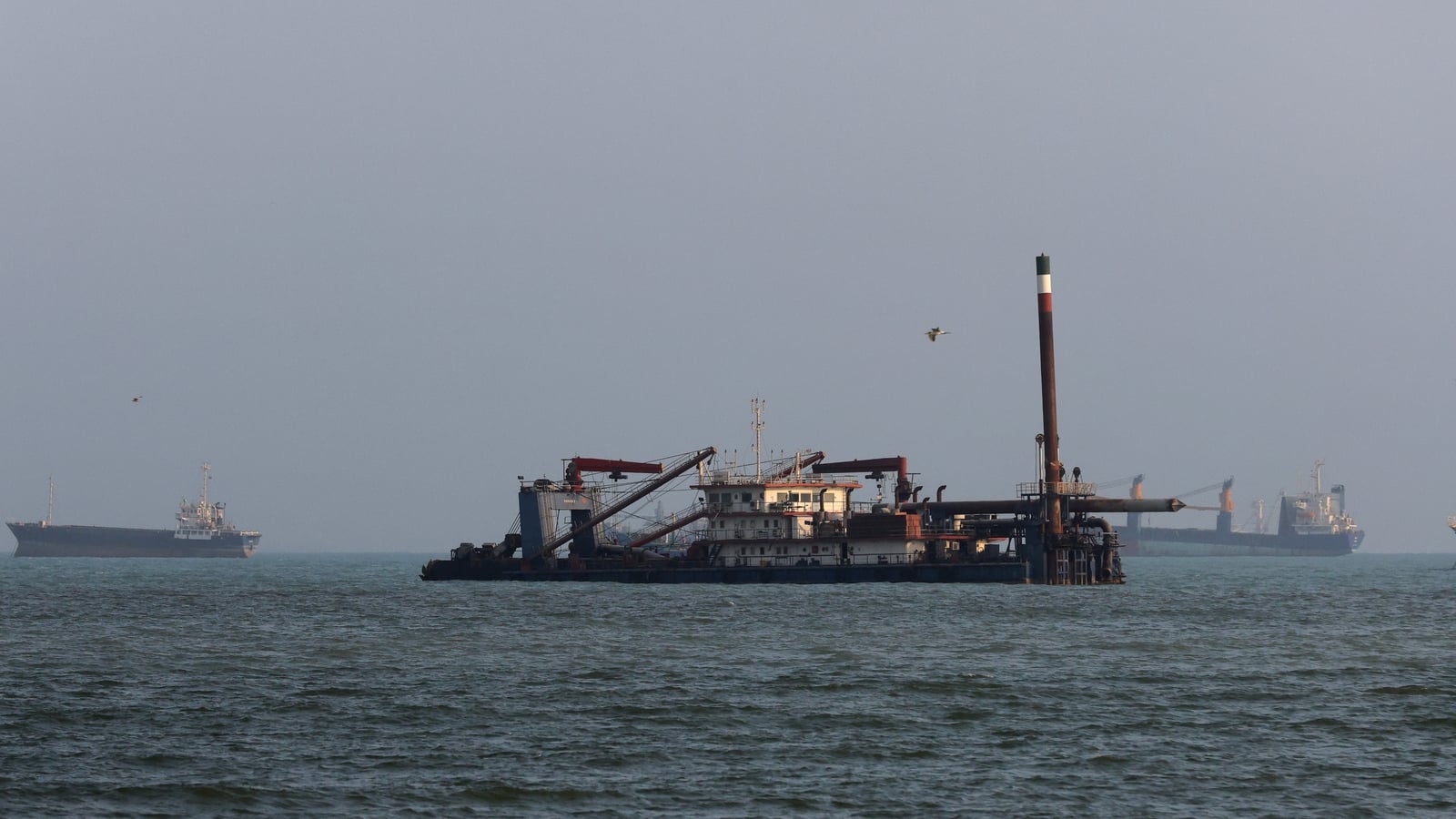
President Donald Trump has threatened to bomb Oman if it “gets in the way” of a US deal with Iran on the Strait of Hormuz and called for Iran to surrender in a war that has become a growing political burden.
Control of the waterway, which Iran has effectively closed since the conflict began on 28 February, remains at the heart of the deadlock between Iran and the United States.
With whipsawing fuel prices and public opposition to the war weighing on Republicans ahead of November’s midterm elections, Mr Trump has faced mounting pressure to end a stalemate that has dragged on for nearly six months.
“If Oman gets in the way, we’ll bomb the sh** out of them,” Mr Trump told Fox News journalist Trey Yingst, referring to ongoing talks between Oman and Iran on control of the strait, which lies between the two countries.
Oman, a US ally in the Gulf, has not publicly commented on Mr Trump’s remarks.
Iran and Oman have been discussing for weeks future navigation arrangements through the route, and Iran’s foreign ministry said earlier Monday the two sides were working on a joint declaration.
Iran’s coast flanks the northern side of Hormuz, while Oman sits on the south.
Their talks follow the collapse of a Pakistan-mediated US-Iran interim deal aimed at keeping Hormuz open to traffic.
Renewed fighting over the waterway quickly derailed the arrangement, spreading the conflict to Gulf allies and commercial shipping across the Middle East.
Mr Trump also said that Iran should “put up the white flag of surrender,” according to Yingst’s account of the interview on X.
The president has repeatedly insisted that the strait is under US control despite traffic remaining heavily throttled.
On Friday, he said he would declare the Strait of Hormuz part of US territory, prompting Iran to retort that the energy chokepoint “will remain Iranian”.
Before the war erupted on 28 February, the strait was considered an open, international waterway carrying roughly a fifth of global oil supplies as well as other commodities.
Iran has used its effective control over the strait as leverage against the US-led attempts to destroy its military and force it to abandon a controversial nuclear power program.
Mr Trump insisted that he was in no hurry to reach a deal despite the unpopularity of the war and opposition Democrats seeking to take control of Congress from the Republicans in the midterm elections.
He told Yingst that there is a direct back-channel between his administration and officials of Iran’s Revolutionary Guard.
“They’re good poker players, but they’re dying,” he was quoted as saying.
‘Utilising diplomacy’
The rhetoric came as allies continued pressing for negotiations.
Turkish President Recep Tayyip Erdoğan discussed the conflict in a phone call with Mr Trump, according to Turkish state news agency Anadolu.
Mr Erdoğan stressed the importance of “fully utilizing diplomacy” to ease tensions between Iran and the United States and said Ankara would continue supporting efforts to secure peace.
The Strait of Hormuz remains the central flashpoint in the conflict.
The narrow passage links Gulf producers to international markets and its closure triggered a surge in oil prices earlier in the war, prompting warnings from major importing nations about supply disruptions.
As Iran restricts traffic in Hormuz, its Houthi allies in Yemen have declared a parallel maritime blockade on Saudi ports in the Red Sea, the kingdom’s only alternative maritime route for oil exports.
Iran wants to control access to the strait and charge transit fees, powers it did not exercise before the war and which Washington strongly opposes.
The closure of Hormuz has driven up fuel prices for US consumers, creating another political challenge for Trump as November’s midterm elections approach.
Iran threatens fresh offensive against US
Meanwhile, a senior Iranian official has said Iran will shift to a “fully offensive” military posture because efforts to negotiate a permanent end to the war with the US have stalled.
The US ruled out extending a temporary ceasefire agreement.
“Iranian entities must be prepared to escalate tensions in the Strait of Hormuz and wider region, as Iran will be ready to make decisions and take action on difficult decisions,” the Iranian official said, adding that Tehran would conduct a “timely and precise” military attack to break the US naval blockade if diplomacy failed.
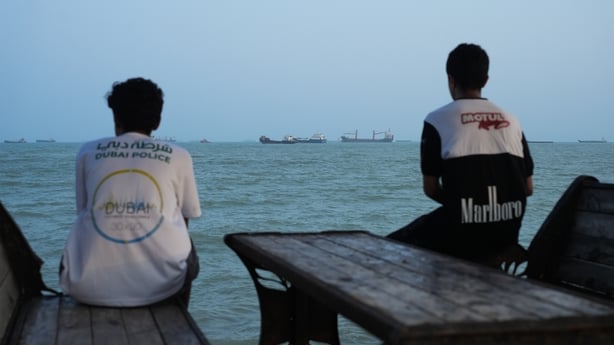
Two youths look out on the Strait of Hormuz last week
A memorandum of understanding signed in June to end the war had given Iran and the US until yesterday to reach a final peace agreement.
Signed on 17 June, the memorandum set a 60-day time frame for a broader deal on Iran’s nuclear programme and US sanctions.
The agreement, which declared the “immediate and permanent termination of military operations on all fronts,” quickly unravelled over a dispute about control of the Strait of Hormuz, the narrow waterway through which a fifth of global oil and liquefied natural gas flowed before the war.
Asked by reporters yesterday if the US was seeking to extend June’s interim agreement, US President Donald Trump said no.
In one glimmer of diplomacy, media reports said Trump had opened back-channel discussions with the Islamic Revolutionary Guard Corps (IRGC), which has become more powerful during the war and controls large parts of Iran’s armed forces and the economy.
Axios, citing two sources with direct knowledge, reported that former Director of National Intelligence Tulsi Gabbard spoke with an Iraqi Kurdish leader with close ties to the IRGC, and that through this intermediary the US delivered a message to IRGC commander General Ahmad Vahidi.
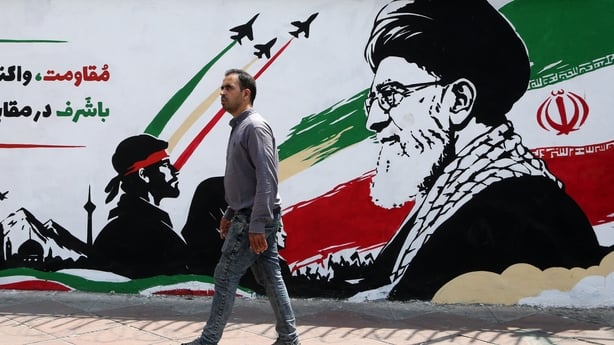
Daily life continues amid ongoing tensions between the United States in Tehran, Iran
The Trump administration was concerned whether Iranian negotiators across the table actually spoke for the IRGC, Axios said, at a time when Reuters was reporting that Mr Vahidi had become a pivotal figure.
Mr Vahidi responded that he was aligned with the Iranian negotiators, Axios said.
“I can’t go into the details of it, but I will say that the conversations between the US government and different areas of the Iranian government at all areas is probably more robust than it’s maybe ever been,” Jared Kushner, Trump’s son-in-law and special envoy, said in a separate interview with Fox News Channel’s Chief Foreign Correspondent Trey Yingst on Monday.
READ MORE:
Hamas disarmament could begin within 30 days – Kushner
Iran said point 5 of the Memorandum of Understanding gave it the right to manage the strait, which it shares with US ally Oman, while the US rejected that interpretation.
Hostilities resumed as Iran began firing on vessels it said were trying to sail through Hormuz on an unapproved route, and Mr Trump said on 7 July that the pact was “over”.
The Iranian official said the US must meet the entirety of the Memorandum of Understanding’s provisions within a few weeks as a precondition for further negotiations.
Even as Iran projects resilience in the war, its leaders are worried that a threat of more economic punishment could increase hardships, reignite unrest and further erode the Islamic Republic’s legitimacy, according to three Iranian officials.
Iran entered the war with high inflation, a weakening currency, energy shortages, sanctions and deep structural weaknesses, and must now contend with damaged infrastructure, disrupted trade, lost production and the cost of rebuilding.
High fuel prices
Mr Trump warned Americans in a speech at a rally on Friday to prepare for continued high fuel prices because of the war.
Benchmark Brent crude oil futures have surged during the conflict, hitting a peak of $126 a barrel, roughly 75% above pre-war levels.
Brent crude settled more than $2 higher yesterday to $90.87 a barrel.
For Americans who will vote in November congressional elections, gasoline prices have risen above $4 per gallon, up from less than $3 before the war, according to the automotive group AAA.
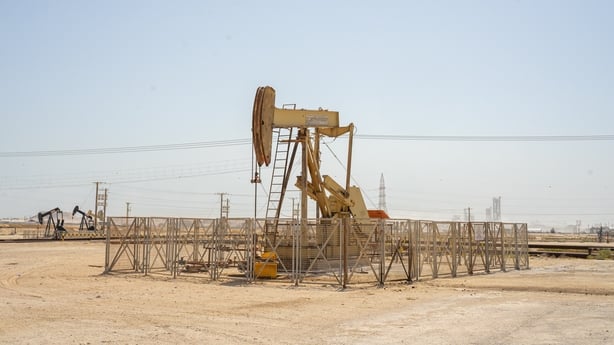
Oil prices are rising as a result of the conflict
Ship crossings via the Strait of Hormuz were still in single digits yesterday, despite rising slightly from the weekend, according to preliminary shipping data.
Six commodity ships transited the strait yesterday, of which three were exiting the Gulf and three were entering, Kpler ship tracking data showed, compared with the 10-day average of 11 ships.
Three ships transited on Saturday while two moved through the waterway on Sunday.
There were no very large crude carriers or tankers carrying liquefied natural gas passing through.
Some vessels could be passing through the strait with their transponders switched off and they are not considered in the tally.