
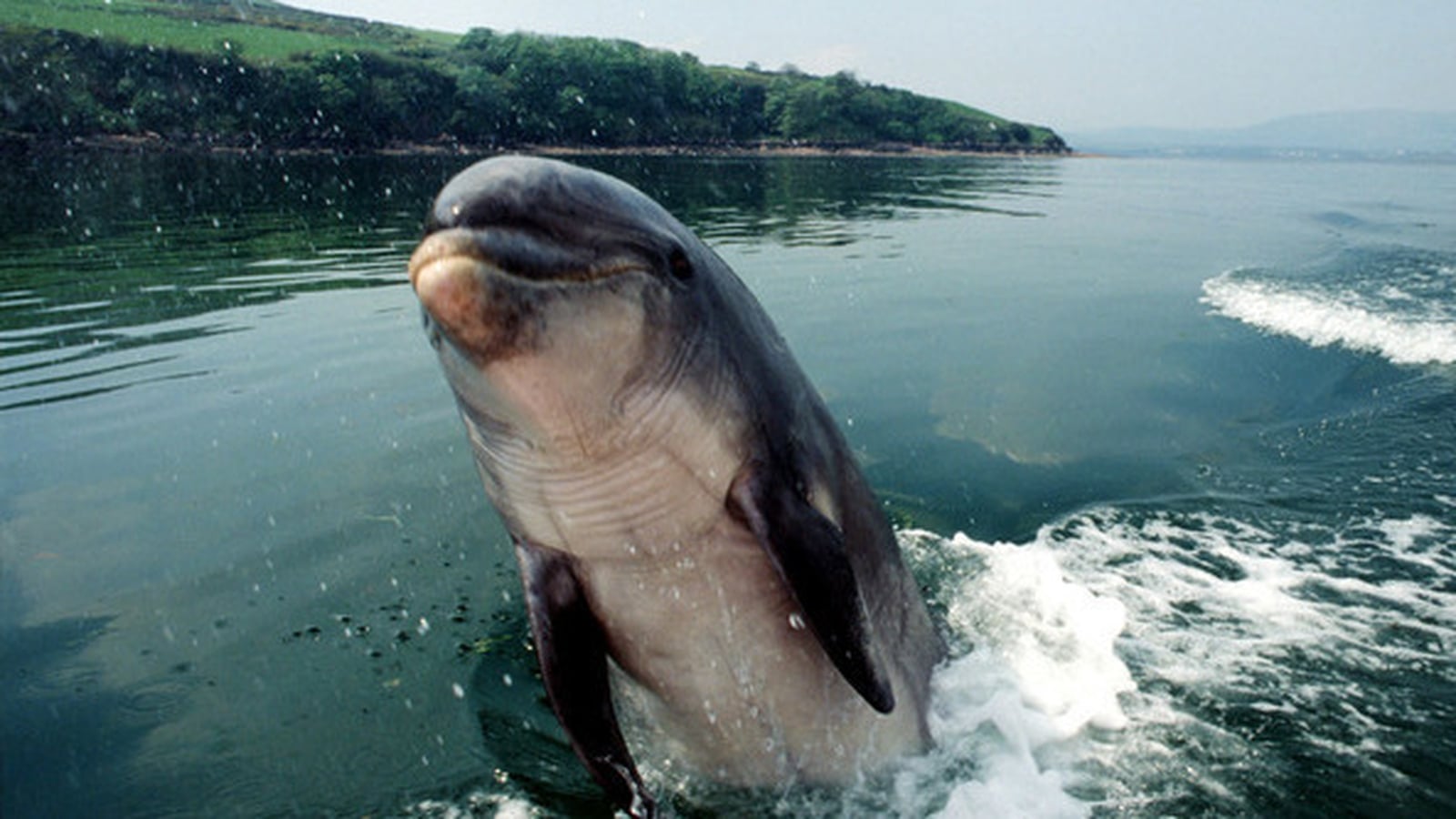
A study has found that Fungie, once Ireland’s best-known dolphin, had ties to both the Shannon Estuary bottlenose dolphins and a much larger offshore population.
Scientists at Atlantic Technological University in Galway have used DNA recovered from a wetsuit worn during swims with Fungie to identify his ancestry.
The solitary bottlenose dolphin lived in Daingean Uí Chúis Harbour, Co Kerry from 1983 until he disappeared in October 2020.
Fungie disappeared when the ATU project examining solitary dolphins was in its infancy.
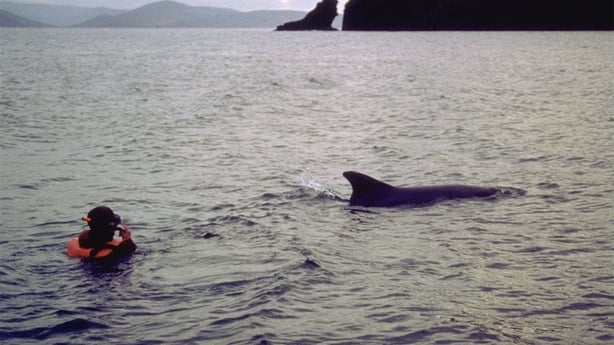
A solution came from Irish Whale and Dolphin Group member Denis O’Regan, who wore the same wetsuit while regularly swimming with Fungie, provided it for DNA sampling.
Several areas of the wetsuit were swabbed, and samples were sent for analysis.
Laboratory testing confirmed that the genetic material recovered was dolphin DNA rather than human DNA, allowing researchers to investigate Fungie’s genetic ancestry.
Fungie’s genetic mix
Fungie’s DNA ancestry was genetically a mix between Ireland’s Shannon Estuary bottlenose dolphin population and the much larger Offshore population.
It is believed to be unusual as bottlenose dolphins sampled in Ireland tend to be genetically assigned to one distinct population or another.
The study published in the international journal Ecology and Evolution found that four of five well-known solitary dolphins studied in Irish waters were linked to offshore population.
Scientist said the findings raise questions about the origin of Ireland’s solitary dolphins and why they remain apart from other dolphins and develop interactions with humans.
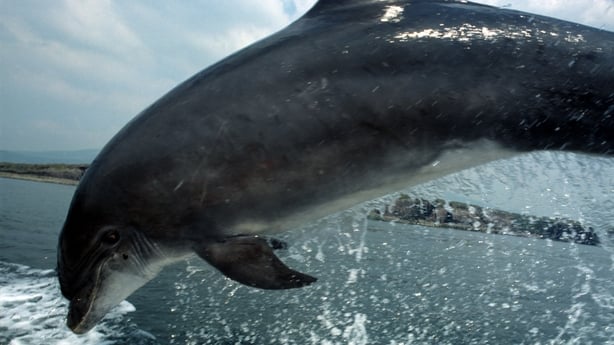
Fungie disappeared when the ATU project examining solitary dolphins was in its infancy
Other solitary dolphins from the same population
Five well-known solitary dolphins were sampled: Fungie in west Kerry, Nick in Cork Harbour, Finn in Carlingford Lough, Dusty in north Clare and Nimmo in Galway.
Nick, Finn, Dusty and Nimmo- were genetically assigned to the Offshore population, while Fungie stood out because of his mixed ancestry.
ATU PhD candidate and study co-author Seán O’Callaghan said the study which used non-invasive sampling techniques contributes to knowledge of solitary dolphins.
“A lot of work has been done to record these unique solitary dolphins, but this study provides a new insight into some of these familiar dolphins using non-invasive sampling techniques and contributes significantly to the wider knowledge of solitary dolphins globally and from where they may originate,” Mr O’Callaghan said.
Questions remain about solitary of dolphins
Founding member of the Irish Whale and Dolphin Group and ATU Lecturer Dr Simon Berrow said why these mammals become solitary remains an important question.
“”Why these dolphins seek human company rather than socialise with other bottlenose dolphins has long been a mystery.
“Maybe they do not understand each other and use different vocal dialects, confounding communication, or perhaps they just have very different ecologies,” said Dr Berrow.
Scientists have noted that Ireland has documented a high number of solitary dolphins in recent decades, with bottlenose dolphins accounting for most of these individuals.
Publication completed in memory of the late Lorenzo de Bonis
The research carries particular significance for the ATU team because it was led by the late Lorenzo de Bonis during his IMBRSea Master’s studies.
Mr de Bonis died in a rock-climbing accident in Baltimore, Co Cork last year. Colleagues completed the publication in his memory and as a legacy of his contribution to marine research.
ATU lecturer Dr Luca Mirimin, who supervised Mr de Bonis and co-led the research alongside Dr Berrow, said it advances knowledge of the iconic marine mammals.
“Publishing this work was important to advance our knowledge of such iconic marine mammals in Irish waters, but most importantly was a way to ensure that the work of Lorenzo was made publicly available to future generations of scientists,” she said.
‘Enhancing intra-specific population genetic studies of bottlenose dolphins (Tursiops truncatus) in Irish waters by integrating least invasive sampling and environmental DNA’ is published in the Ecology and Evolution open access Journal.
It was authored by Lorenzo de Bonis, Bogna Griffin, Seán O’Callaghan, M. Daly, J. Maes, Simon Berrow and Luca Mirimin.