
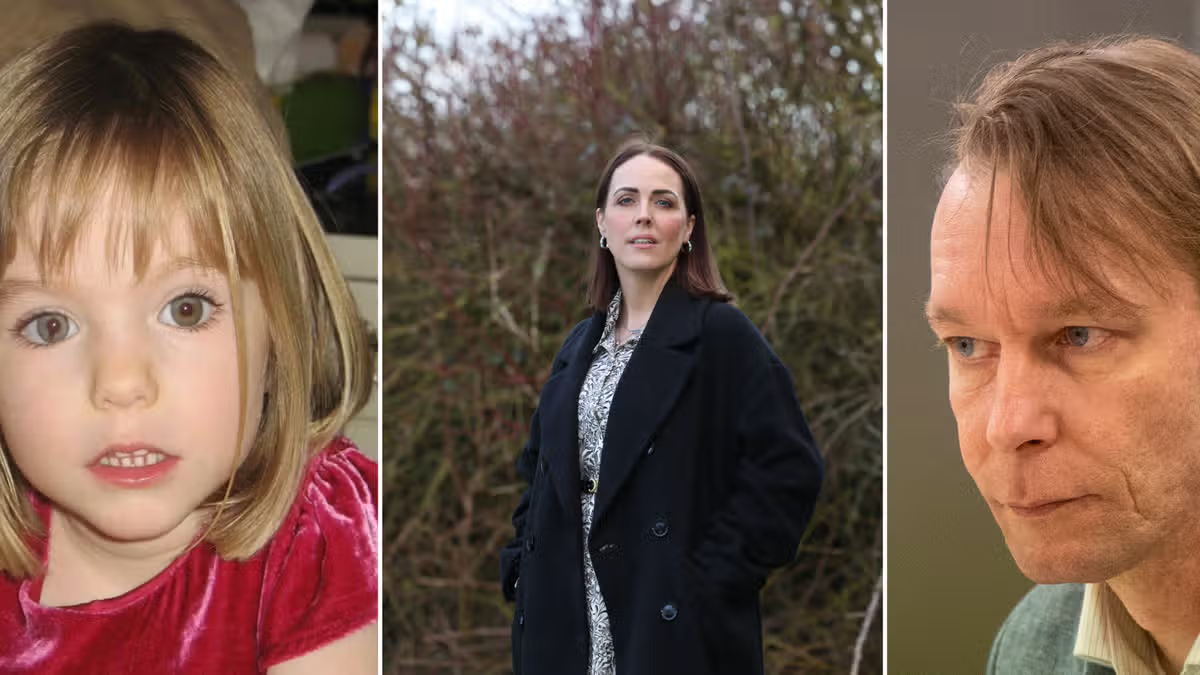
The Irish woman who accused Madeleine McCann suspect Christian Brueckner of rape has been given fresh hope as a German court is now set to hear a prosecutor’s arguments for a retrial.
Brueckner was acquitted of the rape charge in 2024 – but Dubliner Hazel Behan has been hopeful that the prosecutor in Germany would be granted a hearing to argue for his retrial.
It is now understood that the hearing has been granted and will proceed in January of next year.
The prosecutor will have an opportunity to argue why the court should hear the rape claims again, and a judge will then decide whether to proceed or whether the acquittal stands.
The move has given Hazel — who believes Brueckner raped her while on holiday in Portugal in 2004, three years before Madeleine was snatched — hope that her case can be heard again.
When contacted by the Irish Mirror, Hazel declined to comment on the development, citing legal advice.
Hazel made headlines around the world after she accused Brueckner, who is suspected of abducting and killing British tot Madeleine, of being the man who broke into her apartment in Portugal, where he tied her up and violently raped her at knifepoint in 2004.
She recognised Brueckner as her masked attacker by his distinctive eyes when his mugshot was released in 2020 – and subsequently contacted Operation Grange. German prosecutors are now set to appeal after Brueckner was acquitted on the matter following his 2020 trial.
Speaking to the Irish Mirror previously, Hazel, who has become a strong advocate for abuse survivors, said she is now living in fear all over again, thanks to Brueckner’s release from prison.
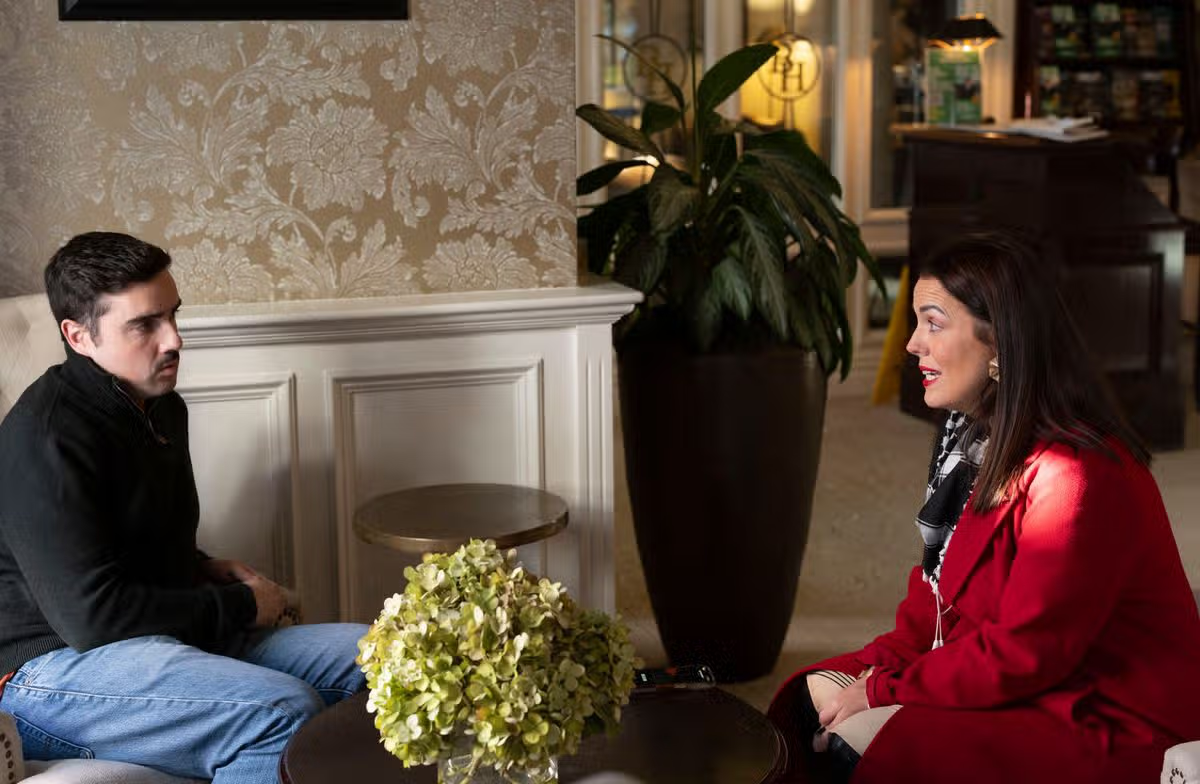
Journalist Paul Healy interviewing Gender violence campaigner and co-founder of Éist, Hazel Behan
“In regard to the pending release of the man I believe raped me in 2004 – this has left me struggling to put into words how I feel. I thought I had moved forward, but the news has forced me to take a massive step backwards — my faith in justice has, once again, been shaken,” Hazel told us.
“The most overwhelming feeling I have right now is fear. Fear for myself, fear for the other people who believe he harmed them. Fear for the safety of our communities, and particularly for women and girls.”
Citing how experts have described Brueckner – who denies killing Madeleine – as a “psychopath”, Hazel said she fears it is likely he will re-offend.
“That knowledge makes it incredibly difficult to make peace with the idea of him returning to everyday society. While I understand the legal principle that someone may reintegrate once a sentence has been served, there are crimes that leave deep, lifelong harm — crimes that, for survivors, do not feel like they deserve freedom,” she told us.
The now Mullingar resident, who has since set up a support and advocacy organisation for victims of sexual and gender-based violence, Éist, says the terror of the attack she suffered back in 2004 hasn’t gone away.
“For sixteen years I lived not knowing who harmed me; that uncertainty was a source of constant terror. Now I know who I believe did this to me, but knowing brings no solace because I know what he is capable of. The terror remains. His sentence has ended — and for me, in many ways, the sentence begins again,” she said.
“I am not alone in this. Hundreds of thousands of victims and survivors live with this uncertainty and fear every day: the person they believe harmed them not being investigated, not convicted, or being released from custody. That reality silences people, it deters reporting, and it prevents survivors from accessing the support and justice they deserve.
“Right now I have very little hope, but I am doing my best to hold on to what I have left. I remain open to the possibility that another jurisdiction may take up a case and that the pursuit of justice might continue. Until then, I will continue to speak out about the harm caused by gender-based violence and the urgent need for a justice system and a society that protects survivors, listens to them, and prevents further harm.”
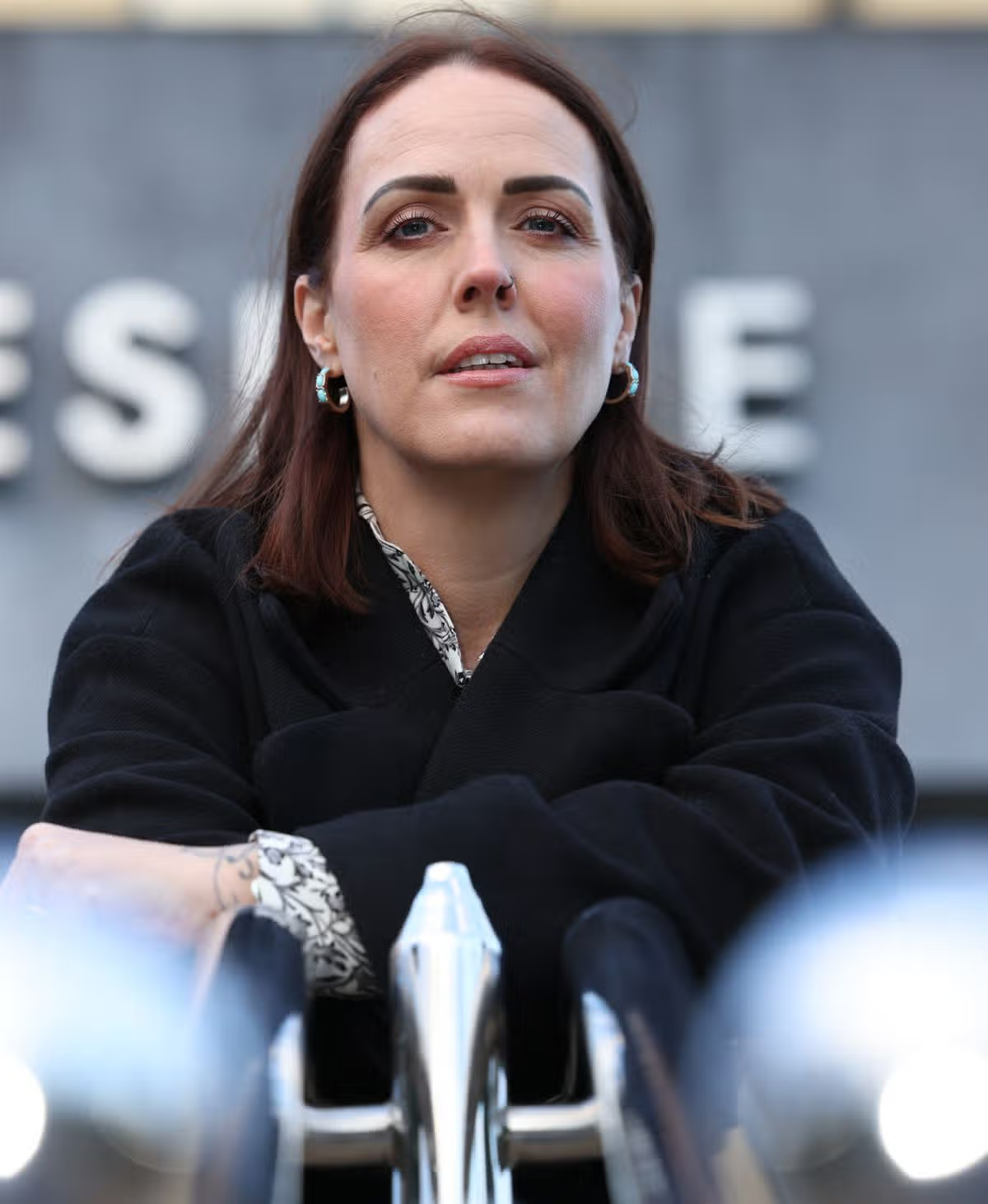
Hazel Behan(Image: Mick O’Neill)
Hazel also became subject to horrific abuse online – with vile trolls on social media mocking her and attempting to cast doubt on her claims.
Speaking about the horrendous ordeal she told us: “While I consider myself a strong person, I am also human, and naturally, reading such comments is hurtful. Many of those who post these remarks believe they understand my experience, when in reality they do not. I know my truth, and I stand confidently in it.
“What has struck me most throughout this experience, however, is the broader issue it highlights: the abuse faced online by victims and survivors of rape and all forms of sexual violence. These harmful narratives, often fuelled by certain online “celebrity influencers” who normalise or encourage such behaviour, reflect a dangerous trend in our society.
“Their influence emboldens others to believe that posting hate-fuelled attacks against a woman who has survived violent rape is somehow acceptable.”
Hazel says she and many others have grown concerned at the level of hatred on social media – directed at survivors of abuse.
“I want to be clear: I fully respect people’s right to share opinions. But when it comes to rape and gender-based violence, sensitivity and respect are not optional—they are essential.
“Too often, those who hide behind a keyboard disregard the profound harm their words cause. I would ask them to reflect on whether they would say the same things if such violence had been inflicted on someone they love,” she said.
“The most concerning consequence of this culture of online abuse is the impact it has on other victims and survivors. When they witness the way survivors are treated publicly, many may feel too afraid or discouraged to report crimes committed against them. This silencing effect denies them the care, support, and justice they so deeply deserve.
“This is not just about me. It is about the urgent need for meaningful societal change. We must confront and challenge the normalisation of abuse—online and offline—so that survivors of sexual violence can step forward without fear of further victimisation.”
German Prosecutor Hans Christian Wolters has repeatedly stated that Brueckner is the “prime suspect” and that he remains “the only suspect” they have in the Madeleine McCann case.
However, authorities in Germany have been unable to charge the sex offender despite their claims – and he has served his seven-year sentence for a separate rape charge.
Subscribe to our newsletter for the latest news from the Irish Mirror direct to your inbox: Sign up here.