
Analysis: Nepotism is surprisingly common in the workplace where the tendency to hire and promote family members can have wide-ranging negative effects in organisations.
Nepo babies are in the news. A surprising number of Hollywood stars such as Nicolas Cage, Emma Roberts and George Clooney are children or close relatives of earlier stars or important figures in the entertainment industry.
Politics is awash with nepotism that it sometimes looks like a family business. More than 70 years after the assassinations of John and Robert Kennedy, there are still Kennedys holding or running for office, including Robert F. Kennedy Jr.. Indeed, nearly 10% of all US presidents represent father-son tag teams.
Nepotism is also surprisingly common in the world of work. This is most obvious in family businesses, where the tendency to appoint family members to positions of power and authority and the failure to adequately develop realistic succession plans are thought to be leading causes of the failure of these ventures.
We need your consent to load this rte-player contentWe use rte-player to manage extra content that can set cookies on your device and collect data about your activity. Please review their details and accept them to load the content.Manage Preferences
From RTÉ Radio 1’s The Business, Anna Carey on what we learned from TV series Succession about running a family business – inbetween the fueding, swearing and conflict
Nepotism does not always lead to failure. Roy O. Disney was a major force in developing the Disney empire with his brother, while the Walton family is still very successfully running retail chain Walmart. However, the tendency to hire and promote family members can have wide-ranging negative effects in organisations. The most obvious problem is when family members are promoted into positions they are not qualified to fill, but nepotism also leads to perceptions of unfairness and to reduced engagement and satisfaction among managers and executives who are not part of the family.
The Dungeons and Dragons game developed a scheme for developing and describing characters according to two dimensions, Good versus Evil and Law versus Chaos. Some characters might be described as Lawful-Evil (think of Ivan the Terrible), Chaotic-Good (eg Robin Hood, Han Solo) and so on.
A related taxonomy might be developed or thinking about nepo babies, classifying them in terms of Competent-Incompetent and Good-Bad. For example, Michael Douglas (son of Kirk Douglas) is an example of a Competent-Good category. He almost certainly benefited from his father’s connections, but he is a very talented actor in his own right who might have done quite well without direct or indirect help from his father.
We need your consent to load this rte-player contentWe use rte-player to manage extra content that can set cookies on your device and collect data about your activity. Please review their details and accept them to load the content.Manage Preferences
From RTÉ 2FMs Dave Fanning, nepo babies with Sarina Bellissimo
Billy Carter (brother of former US president Jimmy Carter) is a poster boy for the Incompetent-Good category, at least early in Jimmy’s presidency. Billy was widely known for his drunken hijinks, so much so that he eventually sponsored Billy Beer, an awful larger targeted at rednecks. He eventually migrated in the direction of Incompetent-Bad, taking money from the Libyan government, who plainly hoped he could influence US policy.
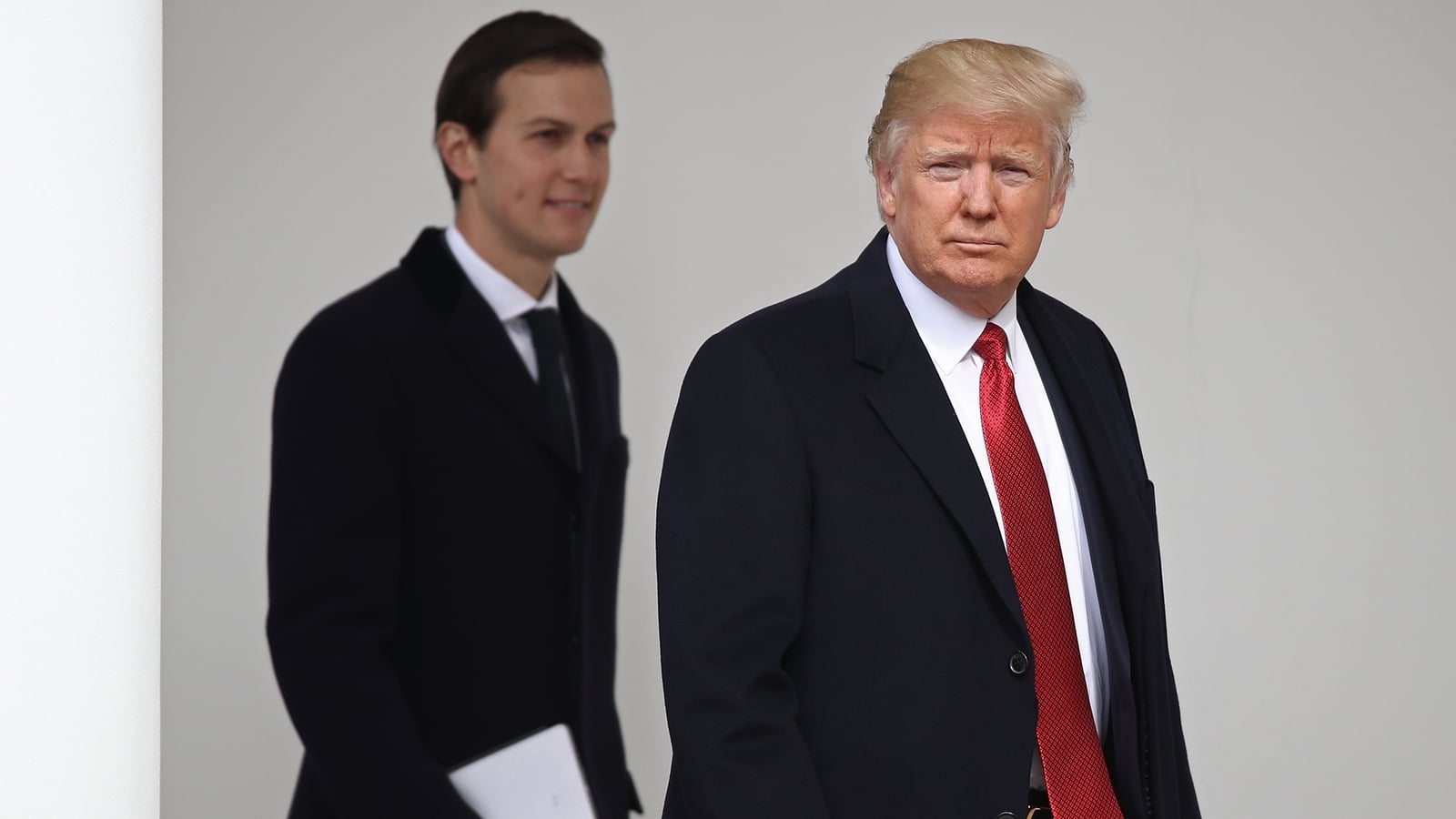
Jared Kushner, Donald Trump’s son in law, is, in my opinion, an exemplar of an Incompetent-Bad nepo baby. He has received many important diplomatic assignments, some handled reasonably well (the Abraham accords) and others (Iran, Ukraine) decidedly less successful. American diplomacy is not doing well right now, and while Kushner cannot be blamed for some questionable decisions (such as the trade war with Canada), his negotiating skills often seem less than what the job requires. He appears to be involved in early efforts by the Trump administration to force Ukraine to surrender to Putin’s demands, which in my books qualifies as Bad. The Trump family itself also provides other examples of Competent-Bad. Say what you want about Donald Trump Jr., but he is adept at securing lucrative contracts and crypto ventures.
The Incompetent-Competent, Good-Bad classification scheme is useful for someone who is thinking about appointing, sponsoring or facilitating a close family member, particularly in business settings. First, it is important to think realistically about the competence of family members for their organisational roles, and if the son daughter, nephew, etc. who you want to advance to a responsible position is not up to the job yet, to create a program to develop that person for the role.
We need your consent to load this rte-player contentWe use rte-player to manage extra content that can set cookies on your device and collect data about your activity. Please review their details and accept them to load the content.Manage Preferences
From RTÉ Radio 1’s Drivetime in 2024, Donald Trump’s nephew Fred speaks about his uncle Donald
Hiring or promoting a competent family member is risky, because it contributes to perceptions of unfairness and of a ceiling on how far non-family members can progress in the organisation. Hiring or promoting an incompetent family member is potentially disastrous.
Many discussions of the risks of nepotism focus on competence, but Good-Bad might be an even more important dimension. It can be deeply uncomfortable to discipline or fire a relative whose behaviour crosses the line, but bad behaviour that is not punished can come back to haunt the organisation in two ways.
We need your consent to load this rte-player contentWe use rte-player to manage extra content that can set cookies on your device and collect data about your activity. Please review their details and accept them to load the content.Manage Preferences
From RTÉ Radio 1’s The Business, what’s the best way to avoid inter-sibling strife when planning who takes over a family business?
First, if you are unwilling to deal seriously with a family member who breaks rules or laws, you are tolerating behaviour that can directly harm the organisation. Second, you are spreading the impression that bad behavior is tolerable, creating risks of contagion. It can be hard to think of family members as potential criminals or worse, but this is exactly the sort of hard thinking that is necessary if you are thinking of hiring or promoting a relative.
Finally, nepotism is often unfair to the relative you hire or promote. If you son becomes vice-president, or your niece rises to the head of the line for plum jobs, they might never receive the respect they deserve, because the presumption will always be that it is their family connection, not their competence, that got them the job. Think carefully before you turn a talented child into a nepo baby.
Follow RTÉ Brainstorm on WhatsApp and Instagram for more stories and updates
The views expressed here are those of the author and do not represent or reflect the views of RTÉ