
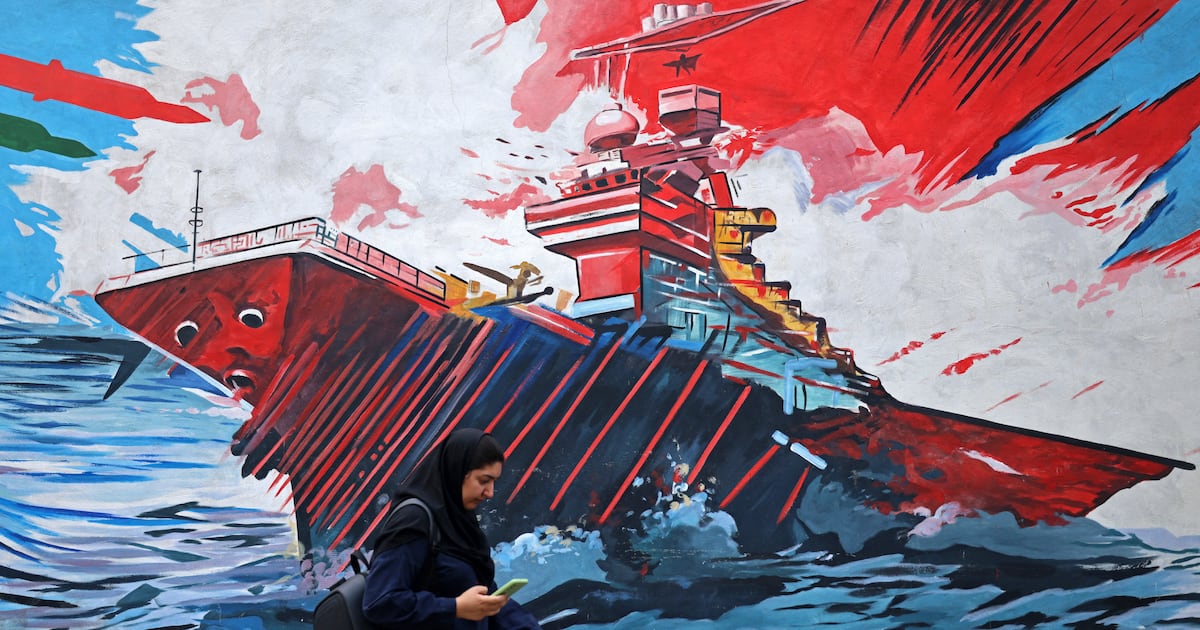
Iranians and their Arab neighbours were plunged back into war on Wednesday by the biggest exchange of fire between Tehran and Washington since July, with US forces striking Iran’s southern coast and Iran firing at American bases across the region.
The US threatened more devastating strikes, while Iran accused Washington of hitting a wedding party, killing five people and wounding dozens.
Asian and European stocks tumbled after the renewed US air strikes, which pushed oil prices back up to levels unseen since July, compounding the economic impact of a global sell-off in bonds as disrupted energy supplies fuel inflation worldwide.
The US military said it struck Revolutionary Guard air defences, radar systems, maritime assets, minelaying capabilities and communications sites on Tuesday.
Iran reported hits on multiple targets near the Strait of Hormuz – the narrow waterway where Tehran has threatened tankers attempting to pass without its permission.
[ The wheels are coming off the US world orderOpens in new window ]
“Last night was like the end of the world,” Mahmoud (38), a municipal worker in Sirik County along the strait, told Reuters by telephone, describing the attacks on the area which includes the city where the wedding was reported to have been hit.
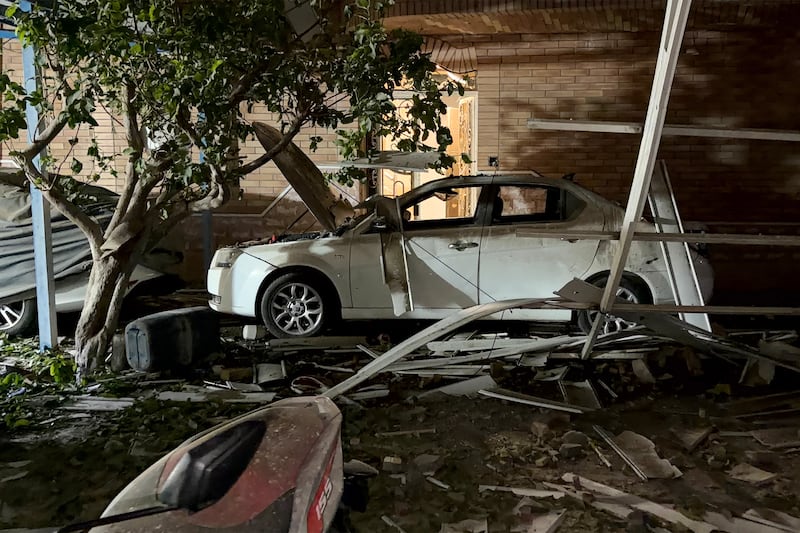 A destroyed vehicle is pictured at the site of an overnight strike in Kuhestak, Sirik County, in Iran’s southern Hormozgan province. Photograph: Masoud Mohamadi/Tasnim News/AFP via Getty Images
Iran responded by striking what it said were US assets in Bahrain, Jordan, Kuwait and Iraq, and said its aim was now to drive US forces from the vast network of military bases they have occupied for decades across the Middle East.
“American evil in the region will be met with heavier, more widespread, and devastating responses, and any country that co-operates with the aggressive American army must accept its dangerous consequences,” Iran’s military command said.
Jordan’s military said it dealt with 13 missiles, 10 of which were intercepted and three which fell in remote areas. Iran said it killed US forces in Jordan, but US said there had not been any casualties, according to initial assessments.
In Kuwait, Iran said it had carried out a missile and drone attack on the vast US Ali Al Salem Air Base and targeted the accommodation of a US commander. Kuwait’s fire service said crews put out a blaze at a residential complex early on Wednesday that was struck by an Iranian drone causing damage but no casualties.
Qatar, home of the largest US airbase in the Gulf, said it “holds the Islamic Republic of Iran fully legally responsible for these attacks and their repercussions and consequences.” Bahrain, which houses the regional headquarters of the US Navy, said Iranian drones were intercepted and destroyed.
Iran’s Revolutionary Guards said they also carried out missile and drone attacks on US bases in Erbil in northern Iraq, claiming to have killed several US personnel there. Neither Iraq nor the US confirmed the attack.
Iran also said two tankers had been struck by mines while being steered through the Strait of Hormuz by US personnel through a channel Tehran says it has closed. Saudi Arabia’s national shipping company reported on Wednesday that two Filipino crew had been killed aboard an oil tanker in the strait two days earlier.
Iranians who endured US strikes for much of the past six months were fearful that the war could restart at full throttle.
“It’s very difficult to live like this. We don’t know when America will strike. My family and I are constantly worried about where will it strike,” Mahpari (28), a woman in the southern port city of Bandar Abbas, said.
Iran reported at least 12 deaths from the night of US strikes, with five people including a four-year-old said to have been killed while celebrating a wedding at a home in Sirik.
Iranian media said as many as 68 people were wounded there, and released images of several injured children in hospital. Iranian officials compared the incident to a strike on a girls’ school that killed 160 people on the war’s first night.
Iran’s foreign ministry spokesperson, Esmail Baghaei, accused the US of committing a war crime. In a post on X, he said: “The truth of this unlawful war of choice – and the true face of the war crime – is in Sirik, where a wedding ceremony was brutally bombed as part of America’s desperate struggle to conceal its failure, not in AI-generated videos portraying American officials as triumphant heroes.”
Video filmed by Iran’s West Asia News Agency at the purported site showed rubble strewn across rooms and a courtyard of a home. A pair of strappy women’s dress sandals lay abandoned on a blood-soaked carpet.
“I am just glad the casualties weren’t even worse,” said Ali Molahi, identified as the father of the bride.
The exchange of fire was the worst since July, when US president Donald Trump abruptly halted two weeks of intense bombing of Iran after warnings from his military brass that they were using up munitions and running out of meaningful targets.
Trump, who has yet to achieve the aims he set when launching “Operation Epic Fury” in February – to end Iran’s nuclear programme, deprive it of the ability to strike its neighbours and create conditions for Iranians to topple their rulers – repeated his declarations that victory was at hand.
“I like our position now much better, with almost total control of the Hormuz Strait, and their economy totally collapsing,” he said on Tuesday. “They are just playing out the inevitable. When are the Iranian people going to rise up and fight?”
Trump aides have been trying to keep the war quiet for now to avert a rout in congressional elections in November, according to sources. A Reuters/Ipsos poll in late August showed Americans oppose the war by more than a two-to-one margin.
Iran, for its part, is determined to emerge from the war stronger than before, with sanctions lifted, billions in blocked funds released, and a newfound grip over the strait letting it collect fees from ships that normally carry a fifth of global oil.
Trump agreed to many of Tehran’s demands in a June deal, but the ceasefire collapsed within weeks over control of the strait, and no talks between the foes have been held since. – Reuters