
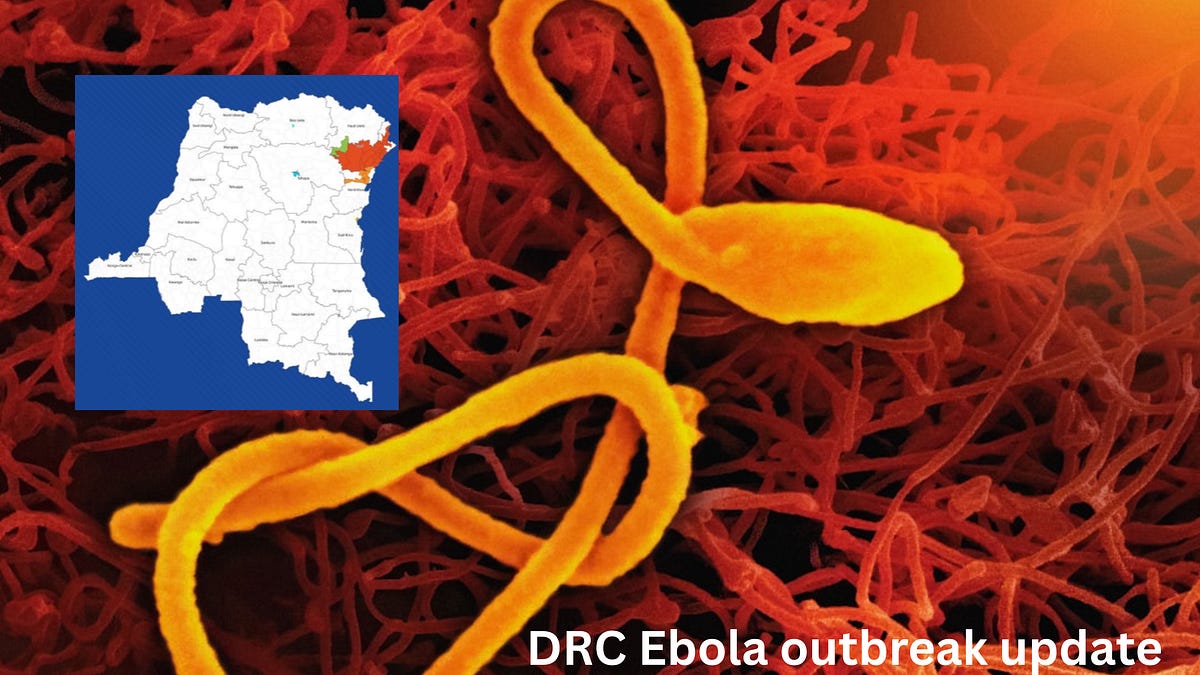
The Democratic Republic of the Congo (DRC) Ministry of Health (MOH) reported in a publication Thursday, 92 new confirmed cases of Ebola Virus Disease (EVD)—including 24 community deaths—were reported in the past 24 hours in the provinces of Ituri (60 cases), North Kivu (25), Haut-Uélé (5), and Tshopo (2). Additionally, 9 deaths occurred within Ebola Treatment Centers (ETCs)—6 in Ituri, 2 in North Kivu, and 1 in Haut-Uélé—bringing the total number of deaths for the day to 33.
36 patients were declared recovered after testing negative for EVD twice (28 in Ituri, 6 in North Kivu, and 2 in Haut-Uélé).
As of September 2, 2026, the DRC has recorded a total of 6,342 confirmed cases, including 3,072 deaths, representing a case fatality rate of 48.4%. Ituri province remains the epicenter, accounting for 81.4% of the country’s confirmed cases and 65.2% of the new confirmed cases reported in the last 24 hours.
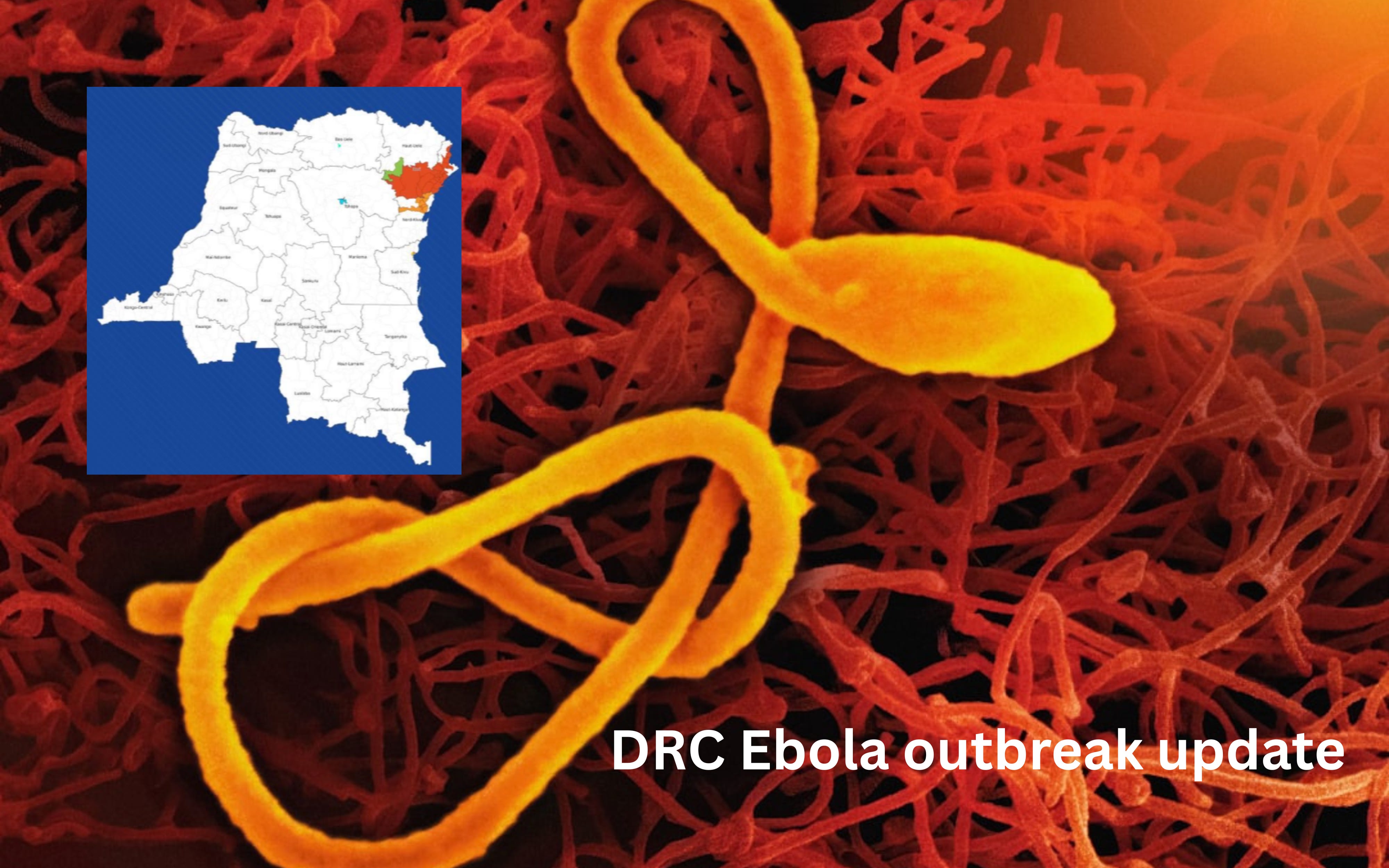
Since the start of the epidemic in the DRC, 60 out of 151 health zones (39.7%) remain affected across the six impacted provinces. Ituri has 28 affected health zones out of 36, followed by North Kivu (15/34), Haut-Uélé (6/13), Tshopo (7/23), South Kivu (1/34), and Bas-Uélé (3/11).
Ebola: Safe and dignified burials
Ebola disease was first identified in 1976 during two nearly simultaneous outbreaks in Central Africa. One occurred in Nzara (then Sudan, now South Sudan) and was caused by Sudan virus, with 284 cases and 151 deaths. The other struck Yambuku in what was then Zaire (now the Democratic Republic of the Congo), near the Ebola River, and was caused by Ebola virus (Zaire ebolavirus). That outbreak produced 318 cases and 280 deaths, a case-fatality rate of 88 percent. The virus takes its name from the nearby river.
Fruit bats are the suspected natural reservoir. Most outbreaks begin when the virus spills over to humans through contact with infected wildlife, often via hunting or handling bushmeat, then spreads through close contact with bodily fluids, contaminated medical equipment, or traditional burial practices. Three species cause significant human outbreaks: Ebola virus, Sudan virus, and Bundibugyo virus. Case-fatality rates have ranged from about 25 percent to 90 percent depending on the strain, healthcare access, and outbreak setting. Average overall fatality is around 50 percent.
The Democratic Republic of the Congo has recorded the largest number of outbreaks—more than a dozen since 1976. Other notable events include the 1995 Kikwit outbreak in DRC (315 cases), the 2000–2001 Uganda outbreak of Sudan virus (425 cases), and the 2018–2020 Kivu outbreak in eastern DRC (3,470 cases and 2,280 deaths). The largest epidemic by far was the 2013–2016 West Africa outbreak (mainly Guinea, Liberia, and Sierra Leone), which produced roughly 28,600 cases and more than 11,300 deaths and was the first to reach major urban centers.
Ebola Bundibugyo outbreak in Africa
Licensed vaccines and treatments exist only for Ebola virus (Zaire strain). None are yet approved for Sudan or Bundibugyo viruses, though candidates are in development. The ongoing 2026 outbreak in eastern DRC, caused by Bundibugyo virus and declared a Public Health Emergency of International Concern in May, has become the country’s largest on record and the second-largest globally. As of early September 2026 it has exceeded 6,000 confirmed cases and 3,000 deaths, centered in Ituri province and spreading across six provinces.