
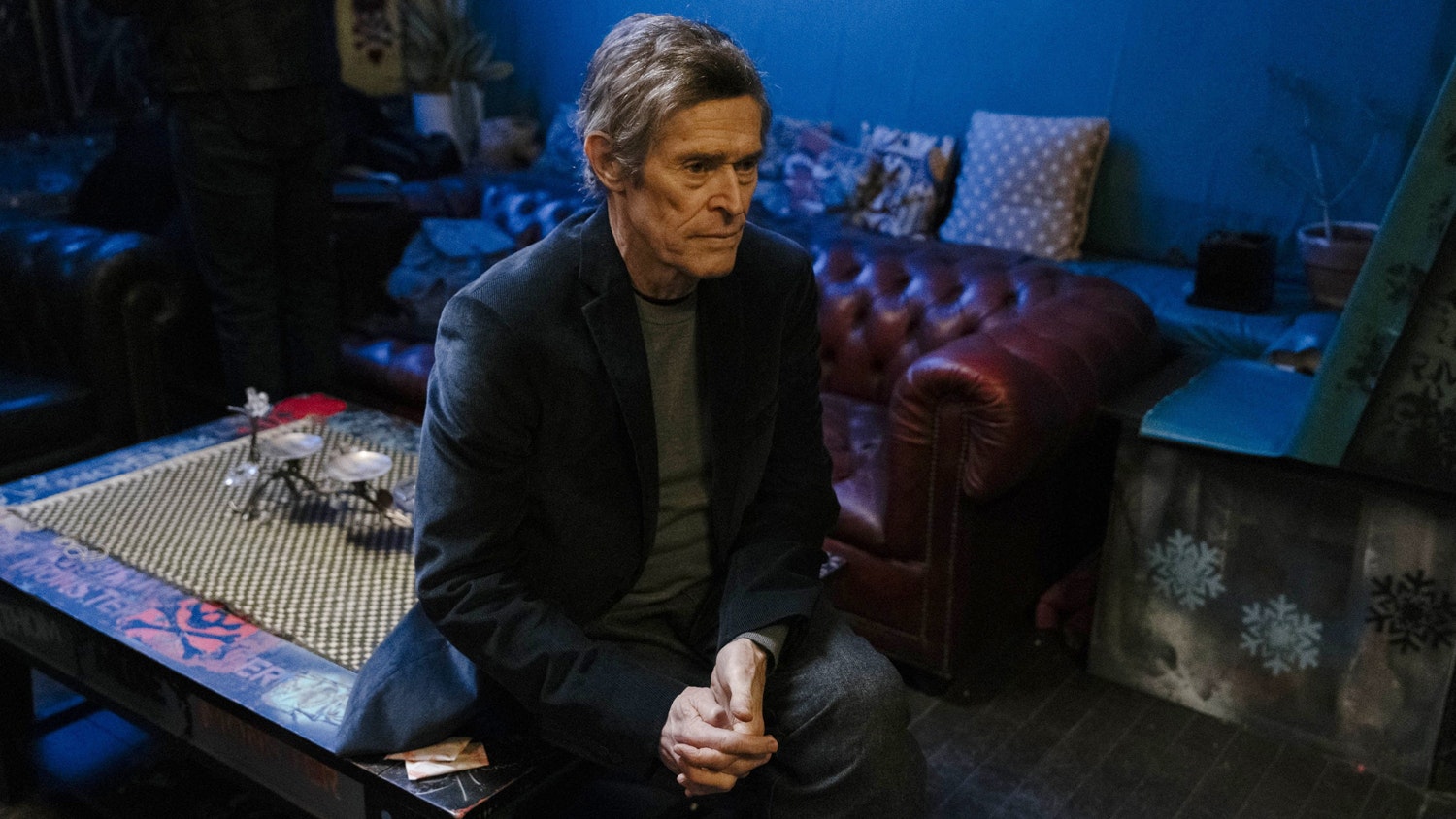
New York poet Ed Saxberger’s (Willem Dafoe) passion for writing is rekindled when a group of young admirers rediscover him, though he’s particularly charmed by the society’s only woman, flirtatious actor/singer Gloria (Greta Lee).
Willem Dafoe has a reputation for weird and wacky performances, from Poor Things, The Lighthouse and Nosferatu stretching all the way back to Wild At Heart. So it’s disarming to see him inhabit a role so rooted in normalcy. In critic-turned-filmmaker Kent Jones’ low-stakes drama, Dafoe plays ageing New Yorker Ed Saxberger, once a promising poet, now an unassuming post-office worker sorting the writing of others while his pen lies dormant.
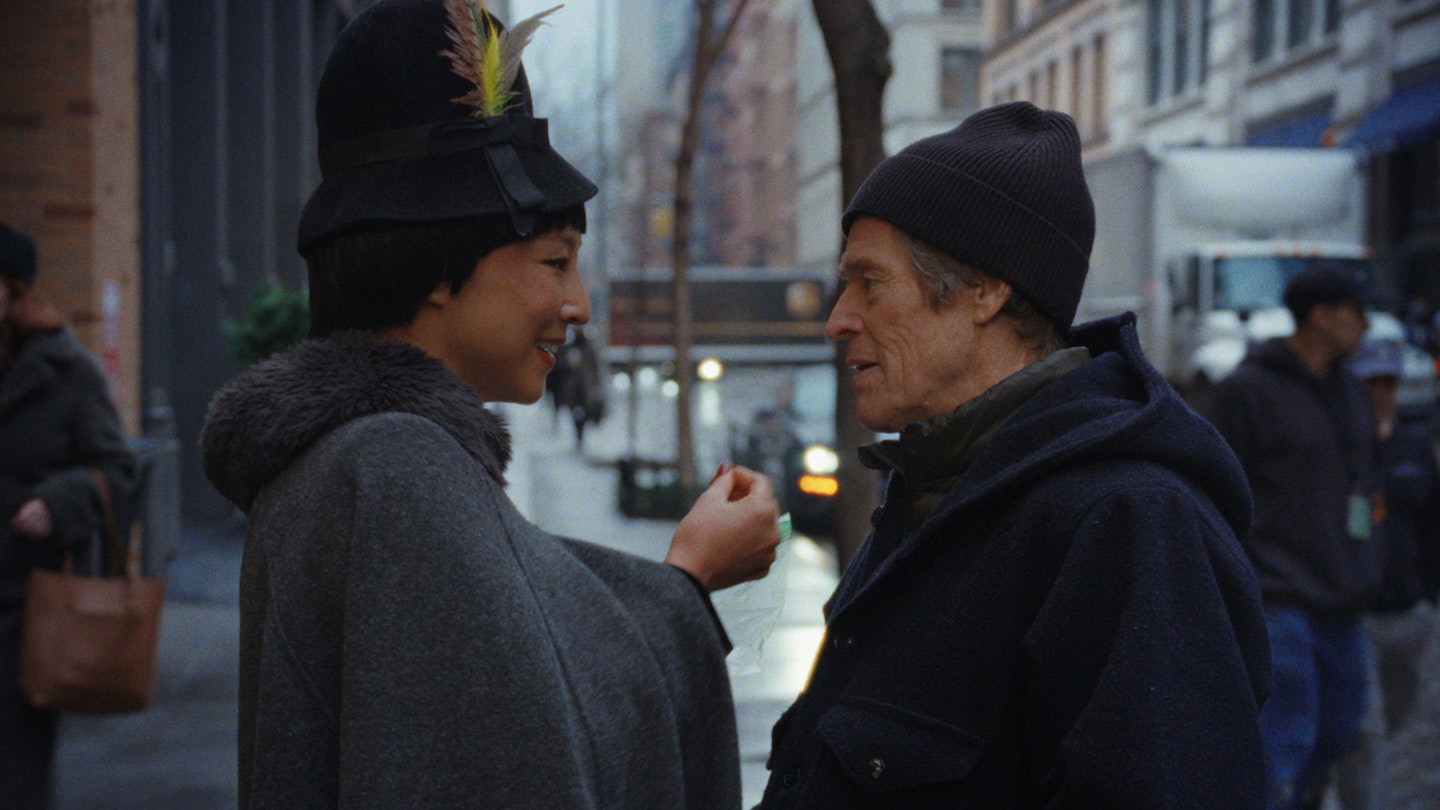
A chance meeting with Wilson Meyers (Edmund Donovan), a young writer with ambition bursting out of his turtleneck, leads Saxberger to The Enthusiasm Society, a group composed of sprightly writers (read: New York nepo babies). They become his devoted disciples as they excitedly plan a recital where he can premiere new material. However, his attention is drawn to flamboyant actor/singer and self-described ingénue Gloria Gardener (Greta Lee). The subtlety of Dafoe’s grounded performance clashes beautifully with Lee’s flirtatious theatricality; she sidesteps Manic-Pixie-Dream-Girl cliché with wonderfully sarcastic declarations: “There is nothing more exciting than a rediscovered male genius.” Though she has two impressive set-pieces, you can’t help but crave more screen time for Lee and her velvety croon.
Willem Dafoe’s stripped-back performance is a compelling treat.
Samy Burch comfortably adapts Arthur Schnitzler’s posthumously published 1895 novella for contemporary New York, while Jones frames dialogue as if it’s poetry, with staccato back-and-forth cuts before still shots imitating a breath between stanzas. Still, as Late Fame settles into its lyrical rhythm, following Saxberger as he roams the streets with acute familiarity, Dafoe’s poetic voice-over does teeter towards the sentimentality that it satirises.
Jones flits between Saxberger’s “lowbrow” pool-bar pals and lowlight literary events without judgement. Saxberger’s writer’s block, Meyers’ snobbery and Gardener’s aspiration are all regarded with dignity. Even the film’s conclusion, a sort of unflashy anti-climax, feels wise; like a ruminative line of meaningful poetry that lingers in the silence.
Willem Dafoe’s stripped-back performance is a compelling treat in this low-key but moving intergenerational portrait of ambitious writers.