
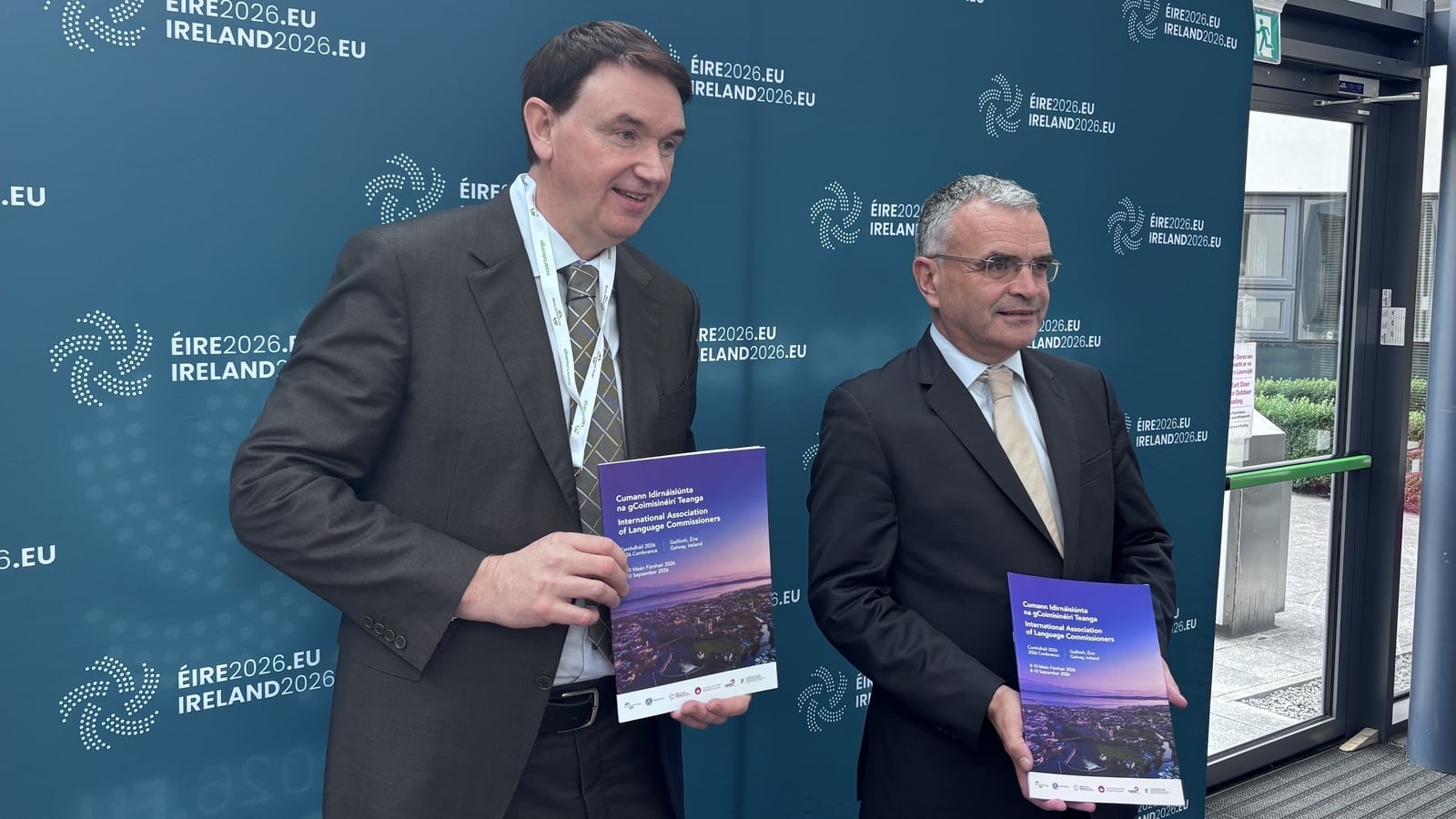
The challenges and benefits of achieving better provision of public services through Irish are being considered at a conference in Galway this week.
The discussions are taking place as part of a gathering of the International Association of Language Commissioners in the city.
The group brings together delegates from around the world, who are charged with safeguarding lesser spoken languages.
Much of their focus is on the manner in which people can access State provided services in specific languages.
The Canadian Official Languages Commissioner told the conference that, in her experience, adequate staffing was key to upholding rules about the use of English or French in her country.
“The key piece for me is to work on capacity. Does the Federal institution have the person power to actually deliver the service and I think that’s where most of our challenge lies,” said Kelly Burke.
She added that there was a role for the higher education sector to ensure that there was a strong graduate pipeline to meet the demand for people who could offer services in different languages.
That point was echoed by An Coimisinéir Teanga, Séamas Ó Concheanainn.
He said that in line with a commitment to ensure 20% of recruits to the public sector would have Irish by 2030, an audit of existing proficiency was needed, as well as examining what areas needed to be strengthened by that time.
He said that Irish language courses in universities needed to prepare for the increasing demand for fluent speakers under a range of headings and expertises.
Mr Ó Concheanainn said ensuring adequate competency was a vital to demonstrate that the needs and requirements of Irish speakers were being taken seriously and being properly vindicated.
Minister for the Gaeltacht Dara Calleary said every effort was being made to meet the 2030 recruitment goal.
He said he wanted to make sure the guidelines that would govern the targets would work, that they were ambitious and that they were practical.
Mr Calleary said it was important to recognise that there were a range of services being provided and that differentiating between the requirements of each sector would be an important element of the plans.