
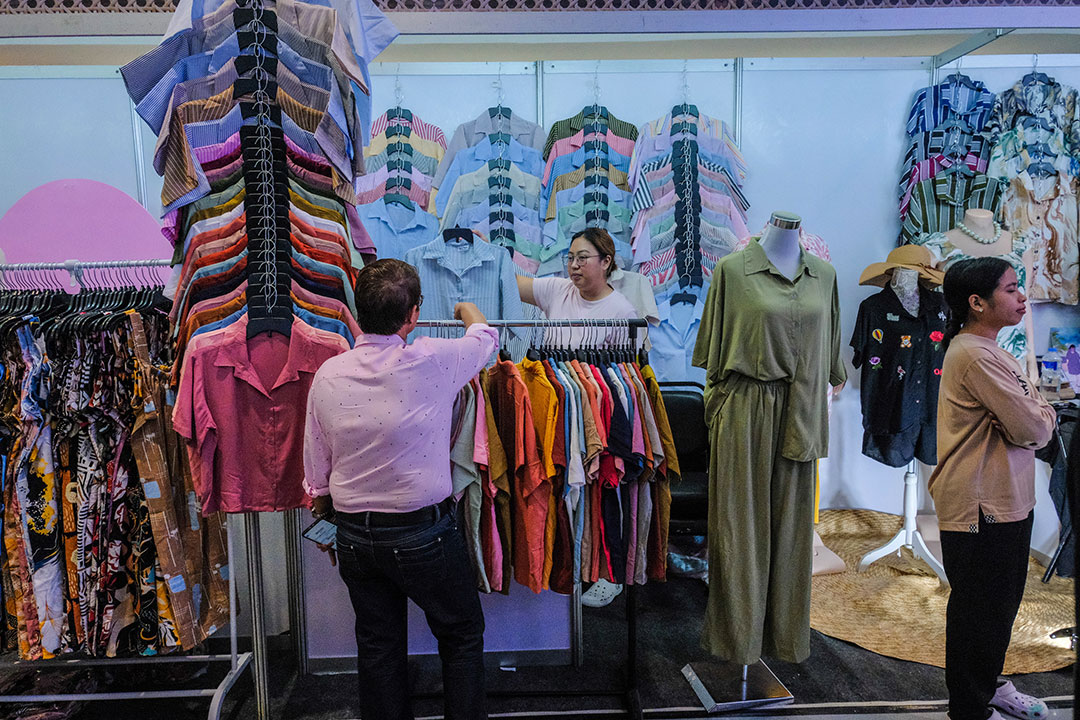
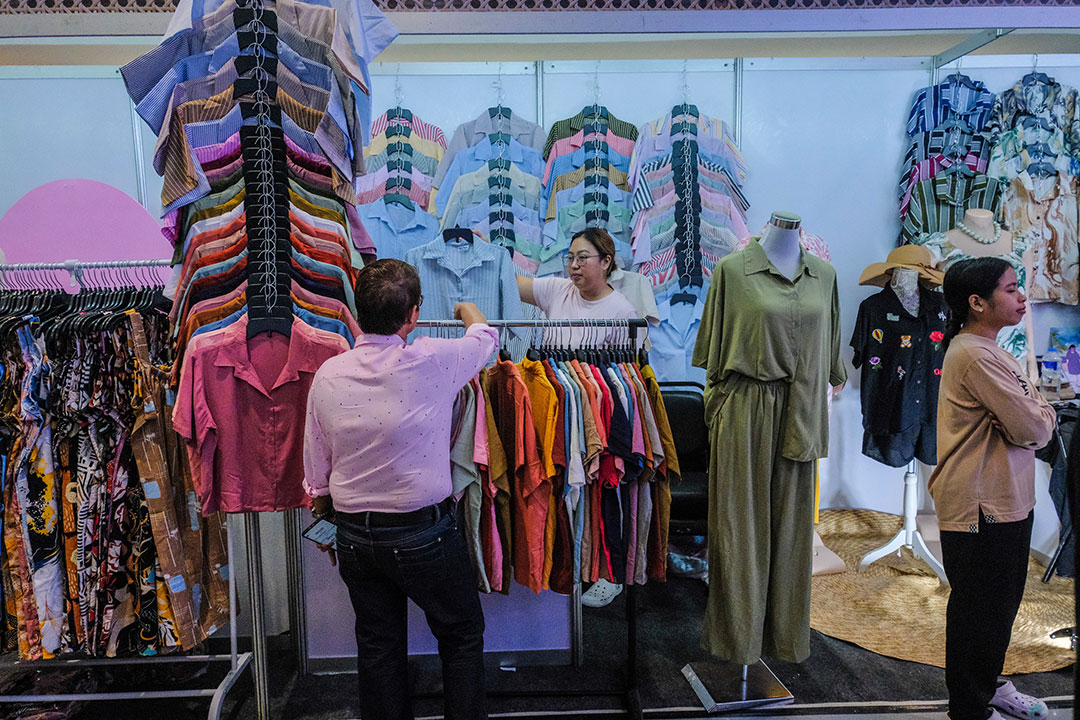
 PHILIPPINE STAR/RYAN BALDEMOR
By Edg Adrian A. Eva, Reporter
PHILIPPINE micro, small, and medium enterprises (MSMEs) are adopting cost-optimization measures while considering layoffs and passing higher operating costs on to consumers to stay afloat amid the fuel crisis triggered by the Middle East war, according to business groups, which urged the government to accelerate infrastructure spending, improve the ease of doing business, and expand access to MSME financing.
“(MSMEs) have to find ways to cut costs, the same way the government does. If they are short on funds, they have to prioritize where their money will go,” George T. Barcelon, chairman emeritus of the Philippine Chamber of Commerce and Industry (PCCI), said in an interview on the sidelines of the Go Negosyo MSME Summit 2026 on July 18.
“Normally, they look at carrying less inventory to reduce carrying costs. They can also let go of personnel to lower operating costs, which could lead to retrenchment, to cope with the situation,” he added.
PCCI, a non-stock, non-profit business organization, has around 25,000 member enterprises, more than 90% of which are MSMEs.
Mr. Barcelon said volatile fuel prices due to the ongoing Middle East conflict, along with the peso’s depreciation against the US dollar, have increased operating costs for MSMEs, including electricity, logistics, manufacturing inputs, and customs-related expenses.
He said businesses may eventually have to pass on these higher costs to consumers but must do so carefully to maintain competitiveness.
MSMEs account for more than 99% of all businesses in the Philippines and provide employment to around 63% of the country’s workforce, according to the Department of Trade and Industry (DTI).
One enterprise that was forced to slightly raise prices was C&H Cosmetics Industry, a Philippine-based skincare manufacturing and distribution company, due to higher fuel costs that affected its logistics expenses.
“The fuel crisis has had a huge impact on us,” Mary Jane “Apple” R. Raca, co-owner and chief finance officer of C&H Cosmetics Industry, said in an interview via MS Teams. The company has 24 distributors nationwide and 18 exporting countries.
“We have 20 trucks that deliver across the Philippines, and there was a time when fuel prices surged to around P130 to P140 per liter. This is really a challenging year for C&H,” she added. “We really had to increase our prices, but we are still within the consumer price range.”
During the height of the conflict in March, C&H Cosmetics Industry also experienced supply chain disruptions as cargo shipments carrying some of its imported raw materials passed through the Strait of Hormuz, delaying deliveries and tightening supply.
The Middle East, which accounts for 25% of the company’s export market, was also affected by the conflict, straining its cash flow and delaying shipments until the last week of April.
To cushion the impact, the company implemented skeletal work schedules and diversified its market channels and product offerings.
“This year is about survival, but we remain optimistic about our growth,” Ms. Raca said.
Philippine social enterprise At1ndahan, Inc., better known as Hapinoy, which represents more than 70,000 micro-entrepreneurs, mostly mom-and-pop stores, fondly known as sari-sari store owners, said its members are sourcing cheaper products to keep prices affordable amid inflation fueled by higher fuel costs.
“Sari-sari stores are adapting, especially when the products they sell are affected. They are really bargain hunting,” Mark Joaquin Ruiz, president and co-founder of Hapinoy, told BusinessWorld on the sidelines of the Hapinoy Caravan on July 17.
Since the Middle East war erupted in late February, domestic fuel prices reached a peak of above P100 per liter in late March as tensions around the Strait of Hormuz — a vital shipping lane that carries about one-fifth of the world’s oil supply — pushed global crude prices higher.
The Philippines imports more than 90% of its oil requirements from the Middle East, leaving the country highly vulnerable to fuel price volatility arising from geopolitical tensions in the region. As of Aug. 12, global crude oil prices remained elevated at around $90 per barrel, still above pre-war levels.
The sustained impact of higher fuel costs has placed additional pressure on businesses, particularly MSMEs, which continue to manage rising operational expenses.
The United Nations Development Programme (UNDP) identified small enterprises as among the groups most vulnerable to the economic spillovers of the Middle East conflict, alongside low-income households, informal workers, and migrants.
The agency estimated that the crisis could reduce Asia-Pacific’s, including the Philippines, economic output by as much as $299 billion and push 8.8 million people into poverty.
President Ferdinand R. Marcos, Jr. said the government is implementing a one-time tax abatement program through the Bureau of Internal Revenue (BIR) this year to provide relief to micro-entrepreneurs by allowing qualified taxpayers to settle outstanding tax liabilities with reduced penalties and interest.
“For our micro-entrepreneurs, the BIR is implementing a one-time tax abatement this year. It aims to provide some relief to those who suffered losses or whose incomes declined due to difficult economic conditions,” Mr. Marcos said during his fifth State of the Nation Address (SONA) on July 27.
The President also urged Congress to remove the minimum corporate income tax on micro and small enterprises.
DTI Secretary Maria Cristina Aldeguer-Roque said flexible, non-collateralized loan programs are available to help MSMEs cope with higher operating costs driven by the ripple effects of the Middle East war.
Another concern raised by the PCCI is the proposed P85 daily minimum wage increase for private sector workers in Metro Manila, which it said could further raise operating costs, squeeze already thin profit margins, and make layoffs and price increases by MSMEs more likely.
“An P85 increase is about 12% if you compare it with the previous minimum wage. If it’s that high, it could create wage distortion and trigger a domino effect,” Mr. Barcelon said.
“There are reports of retrenchment, and some businesses would rather close down,” he added.
However, Mr. Barcelon clarified that the PCCI is not opposed to a wage increase. Instead, he said the increase should be implemented in a way that is more manageable for businesses, particularly MSMEs, by spreading the two tranches over a longer period instead of immediately imposing the initial P60 increase.
The Pasig City Regional Trial Court Branch 152 issued a 20-day temporary restraining order on the first P60 tranche of the wage increase which took effect on July 25. The remaining P25 increase is scheduled to take effect in January 2027.
The Department of Labor and Employment (DoLE) said in a statement on July 31 that it is coordinating with the Office of the Solicitor General to pursue legal remedies and defend the validity of the National Capital Region wage order before the courts.
The Sentro ng mga Nagkakaisa at Progresibong Manggagawa (SENTRO), a labor group, called the temporary restraining order on the Metro Manila wage hike “an insult to every Filipino worker and taxpayer,” and renewed its call for Congress to legislate a nationwide wage increase so workers would not lose wage adjustments through prolonged court proceedings.
BOOST INFRASTRUCTURE SPENDING
Mr. Barcelon urged the government to accelerate spending on key infrastructure projects, saying these are critical to boosting economic growth and reducing operating expenses, especially logistics and energy costs for MSMEs.
While acknowledging concerns over possible corruption following last year’s flood control controversy, he said the government should continue investing in projects that directly benefit businesses, such as roads, bridges, and power generation facilities, noting that the Philippines continues to have among the highest logistics and electricity costs in Southeast Asia.
“We’ve been encouraging the government to be selective. Some of the projects have [a] significant impact on logistics and could generate jobs,” he said. “We’re hoping to see infrastructure investments pick up in the third quarter.”
The Philippine economy expanded by 2.8% in the first quarter of 2026, missing the government’s growth target, according to the Philippine Statistics Authority (PSA). Mr. Barcelon said the country’s economic growth may remain unchanged.
Meanwhile, government infrastructure spending declined 35.3% year on year from P123.8 billion to P80.1 billion in May amid stricter review, audit, and validation procedures for infrastructure payment claims, according to the Department of Budget and Management (DBM).
EXPAND MSME FINANCING, EASE OF DOING BUSINESS
Business groups said expanding access to financing remains crucial in helping MSMEs recover from the ripple effects of the Middle East conflict.
Mr. Ruiz said many sari-sari store owners still struggle to access formal financing, forcing them to rely on informal lenders that charge high interest rates.
Ms. Raca said faster loan processing by the DTI would also help businesses respond more quickly to the crisis, noting that three months had already passed since C&H Cosmetics Industry applied for purchase order financing under the agency’s program.
More than a month after the war broke out, the financing arm of DTI Small Business Corp. (SB Corp.), launched a P4-billion MSME Business Fund to provide financing support to enterprises affected by the Middle East crisis.
The program aims to help businesses address supply chain disruptions, rising logistics costs, cash flow constraints, and limited access to financing. It offers loans ranging from P30,000 to P20 million, with no collateral required for loans of up to P5 million.
Mr. Barcelon said the total amount allocated for MSME financing remains insufficient relative to the number of enterprises in need, underscoring the importance of prudent business management in navigating the current challenges.
The Trade secretary said MSMEs may also tap other DTI financing programs, including the OFW Negosyo Fund, Export Business Expansion Financing Program, and E-Transport Loan Program, to support working capital needs and help ease the effects of the Middle East war.
“We have different opportunities for them. When you run a business, you’ll always face different kinds of challenges, not just the Middle East crisis,” Ms. Roque told reporters during the DTI National Exporters’ Fair on July 22.
“But what’s important is that the Philippine government has opportunities available for them. We have very flexible, non-collateralized programs,” she added.
Ms. Roque also said the DTI is seeking an additional P5 billion for SB Corp. to expand its MSME loan programs, which would increase the corporation’s budget to nearly P18 billion next year from about P12.9 billion in 2026.
Mr. Barcelon also urged the government to implement measures that would make it easier for MSMEs to do business, saying many enterprises continue to face burdensome compliance requirements at the local government level.
In response, Ms. Roque said businesses, including MSMEs, may locate their operations within green lanes and Philippine Economic Zone Authority (PEZA) economic zones, where business processes and regulatory compliance are more streamlined.
She added that MSMEs may also seek assistance from the DTI’s regional offices and Negosyo Centers nationwide.
Over the remaining two years of the Marcos administration, Ms. Roque said the DTI aims to conclude 20 free trade agreements to expand market access for Philippine exporters.
This initiative underscores the administration’s goal of creating more opportunities for MSMEs to compete in both domestic and international markets.
“The legacy is for MSMEs to grow — greater market access, higher sales, and bigger financing opportunities that will help them expand and create more jobs,” she said.
With the ripple effects of the Middle East conflict continuing to weigh on businesses, Mr. Barcelon said MSMEs remain particularly vulnerable to currency depreciation and sudden wage increases, making government support for the sector more important than ever.
He said protecting MSMEs is essential to sustaining employment, supporting Filipino households, and strengthening the country’s economic resilience within the ASEAN region.
Mr. Ruiz, meanwhile, said the crisis could also encourage more MSMEs to accelerate their digital transformation, much like the rapid adoption of e-wallets during the COVID-19 pandemic.
He said wider use of online ordering platforms and other digital tools could help businesses reduce supply and logistics costs. For Mr. Barcelon, online selling may also help expand their market base, although it still begs the question of whether it would lower operating costs.