
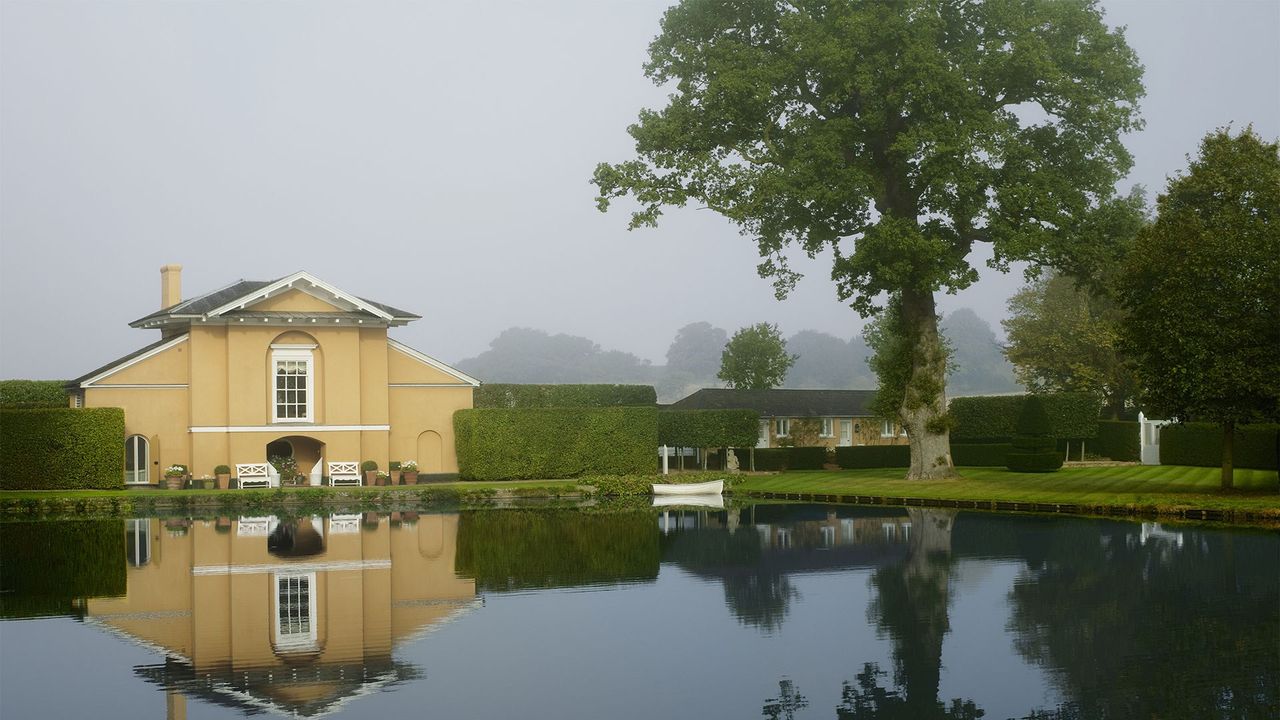
This may explain the folly’s second act. Many great houses were lost after the war; a surprising number of their follies survived, and, built as eye-catchers, they make some of the most seductive houses in England. A folly is small, and smallness is a discipline: with three rooms and no corridors, every decision tells. It is also theatrical. A building conceived to be admired from half a mile away arrives already composed, and it comes without instructions. An old rectory tells you how you ought to live in it; a temple declines to.
Interior designer Veere Grenney, who spent 40 years living in one, puts it better. ‘The essence is that you distil the beauty into a small space,’ he says, ‘and then everything you love is suddenly there, but distilled beautifully into a small scale.’ What he prizes in any room, however grand, is that it be ‘anchored with modesty’.
Two follies in particular have fixed this notion in the English imagination, each passing from decorator to decorator like a tenancy of an unusually enviable kind. The Hunting Lodge at Odiham, Hampshire, is perhaps the most coveted: three tall, narrow ogee gables in weathered brick, capped with carved stone finials, presiding over a pond deep in the Hampshire countryside. Supposedly built in the 15th century and refaced in the 1740s, it was said to have been used by both King Henry VII and King John. Historic England, less romantically, records an 18th-century cottage orné. The house is itself a fiction, and has to be seen to be believed.
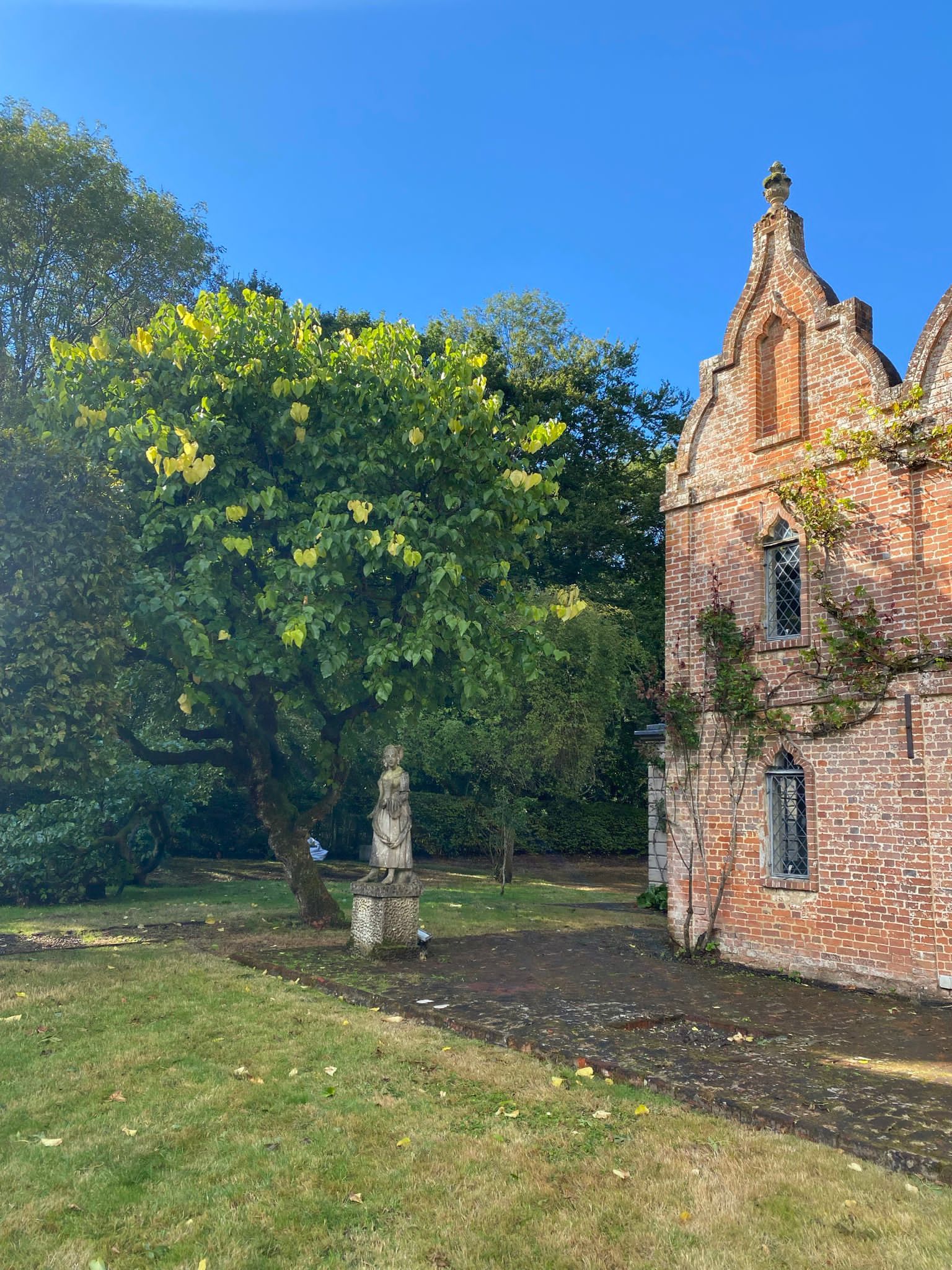
The Hunting Lodge was said to have been built in the 15th century, and used by both King Henry VII and King John. Historic England now records an 18th-century cottage orné.
Francis Sultana
John Fowler took it in 1947. What he did there – with pale distempered walls, chairs casually dotted about, the studied plainness he called ‘humble elegance’ – shaped English decoration more than any of the great houses he worked on. The Lodge passed to the National Trust on his death, and in 1978 to its most theatrical custodian yet: Nicky Haslam, who kept it four decades and gave the genre its title with ‘Folly de Grandeur’.
Since 2021, it has belonged to designer Francis Sultana – a succession greeted with something short of universal serenity, chiefly over a pair of electric gates. ‘Everyone has an opinion,’ Sultana says, ‘and I know that only too well.’
In his early teens, Sultana’s mother took him to Sibyl Colefax & John Fowler in London, as they were renovating his family house on Gozo. They ordered a pair of Fowler lanterns for its entrances and, years later, visiting the Hunting Lodge after Haslam had gone and shortly after his mother’s death, he found the same lanterns either side of the front door. ‘I had that personal connection as soon as I walked in,’ he says.