
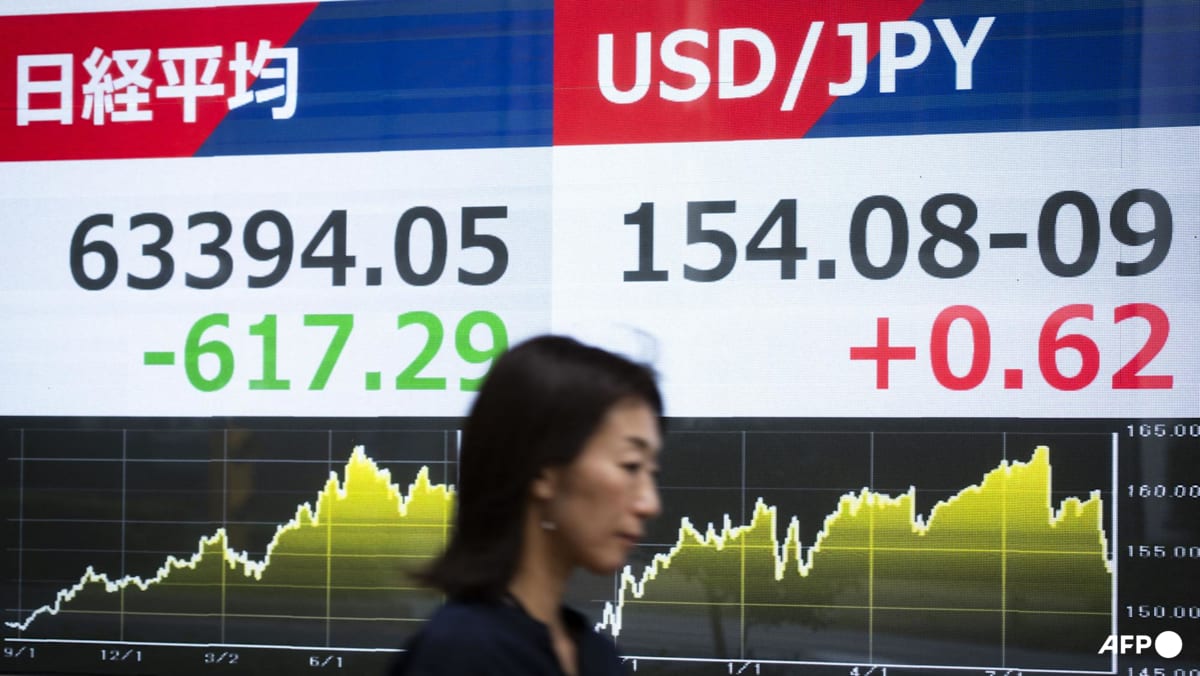
HONG KONG: Asian stocks struggled on Wednesday (Sep 16) as investors prepare for an expected interest rate hike by the Federal Reserve later in the day, though there was a little support from a dip in oil prices following their recent run-up.
With inflation still running well above the central bank’s target and the Middle East crisis keeping crude above US$100 a barrel, monetary policymakers are widely tipped to lift borrowing costs for the first time since 2023.
That has dealt a heavy blow to a rally in global equities that saw several markets hit record highs in the first half of the year, and there is growing speculation that officials could announce another lift before the end of the year.
Fed boss Kevin Warsh last month ramped up bets on an increase when he delivered what was considered a hawkish speech at a gathering of central bankers and economists at Jackson Hole, Wyoming.
Since then, data showing strong job creation and stubbornly high inflation have cemented expectations, with traders pricing a more than 90 per cent chance that board members will choose to tighten monetary policy.
Expectations that inflation will run hot for an extended time helped push up 10-year US Treasury yields this week above 5 per cent and to a level not seen since 2007, before the global financial crisis kicked in.
“For traders, the most interesting part of the statement will be the vote, specifically how many of the 12 members (if any) vote to leave interest rates unchanged,” wrote Matt Weller at FOREX.com.
“If there are three or more dissents, or if Chairman Warsh himself dissents (unlikely), then even an immediate interest rate hike may be seen as a potential one-off ‘insurance hike’, rather than necessarily the start of a new rate hiking cycle.
“Conversely, a unanimous decision to raise rates makes another interest rate hike this year more likely.”
After a sell-off on Wall Street and in Europe, Asian equities staggered between gains and losses Wednesday, with tech firms still coming to terms with a call among top AI leaders for a slowdown in development in the sector.
Tokyo, Shanghai, Sydney and Manila fell, while Hong Kong, Singapore, Wellington, Taipei and Jakarta fell.
Seoul was flat.