

The council of The Bar of Ireland said it is extremely concerned that the criminal legal aid dispute has not yet been resolved.
It said the prospect of continuing disruption on the advent of the new legal year is of the “utmost gravity”.
The dispute has resulted in large scale adjournments of criminal business across all court jurisdictions, including the Circuit Criminal Court and the Central Criminal Court, since July.
Minister for Justice Jim O’Callaghan has defended his reforms to the legal aid fee structure, which prompted a withdrawal of services by lawyers on the scheme.
Mr O’Callaghan has also rebuffed a request from the Law Society for the appointment of a mediator to help resolve the dispute over the new criminal legal aid scheme.
In a statement, the Council of The Bar of Ireland urged the minister to engage further with the Law Society and with criminal defence practitioners on the issues which have been raised by them in order to bring about a resolution to the dispute as soon as possible and before the new legal year begins.
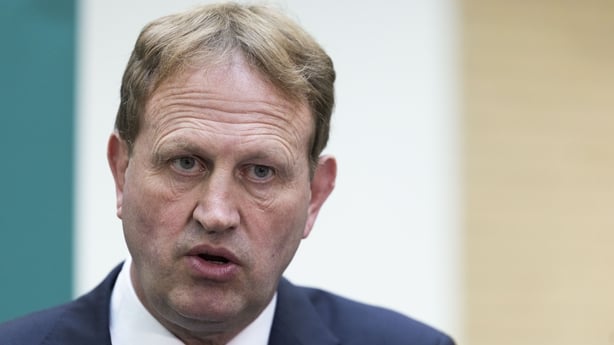
Jim O’Callaghan rebuffed a request from the Law Society for the appointment of a mediator
“The new legal year commences on October 5. The Council of The Bar of Ireland is extremely concerned that the dispute has not yet been resolved,” the statement said.
“The prospect of continuing disruption on the advent of the new legal year is of the utmost gravity.
“It is incumbent on the State to ensure that the criminal justice system is functioning in order to vindicate the rights of victims and accused persons and to protect the public.
“The Council of The Bar of Ireland urges the Minister for Justice to engage further with the Law Society and with criminal defence practitioners on the genuine issues which have been raised by them in order to bring about a resolution to this dispute as soon as possible and before the new legal year begins.”
New structure reduces willingness of practitioners to take on work
The Bar of Ireland said that the new fee structure risks reducing the willingness of practitioners to take on criminal legal aid work.
“It doesn’t appropriately reflect the fact that criminal proceedings vary so widely in length and difficulty,” the statement said.
“This has already happened in the civil legal aid system, to the lasting detriment of those most in need of legal assistance.
“The Criminal Legal Aid Scheme provides access to experienced and independent legal practitioners in a manner that is both efficient and cost-effective.
“Its continued viability is therefore essential to the proper functioning of the criminal justice system.
“Criminal legal aid is a fundamental part of ensuring access to justice and the right to a fair trial. Solicitors working in this area, and the barristers they instruct, provide a vital service on behalf of the State.
“Without them, the right of an accused person to a fair trial cannot be vindicated. Just as importantly, the State’s basic obligation to maintain a functioning criminal justice system for the protection of all citizens cannot be met.”
The Bar of Ireland’s statement also said in Dublin alone, hundreds of people, who stand convicted of serious criminal offences, remain in the community awaiting sentence, due to their scheduled sentence hearings being adjourned throughout the month of July and trials of serious criminal offences across the country have been adjourned.
It added that the full effect of this disruption has yet to be felt as the backlog of cases remains to be dealt with.
Additional reporting PA