
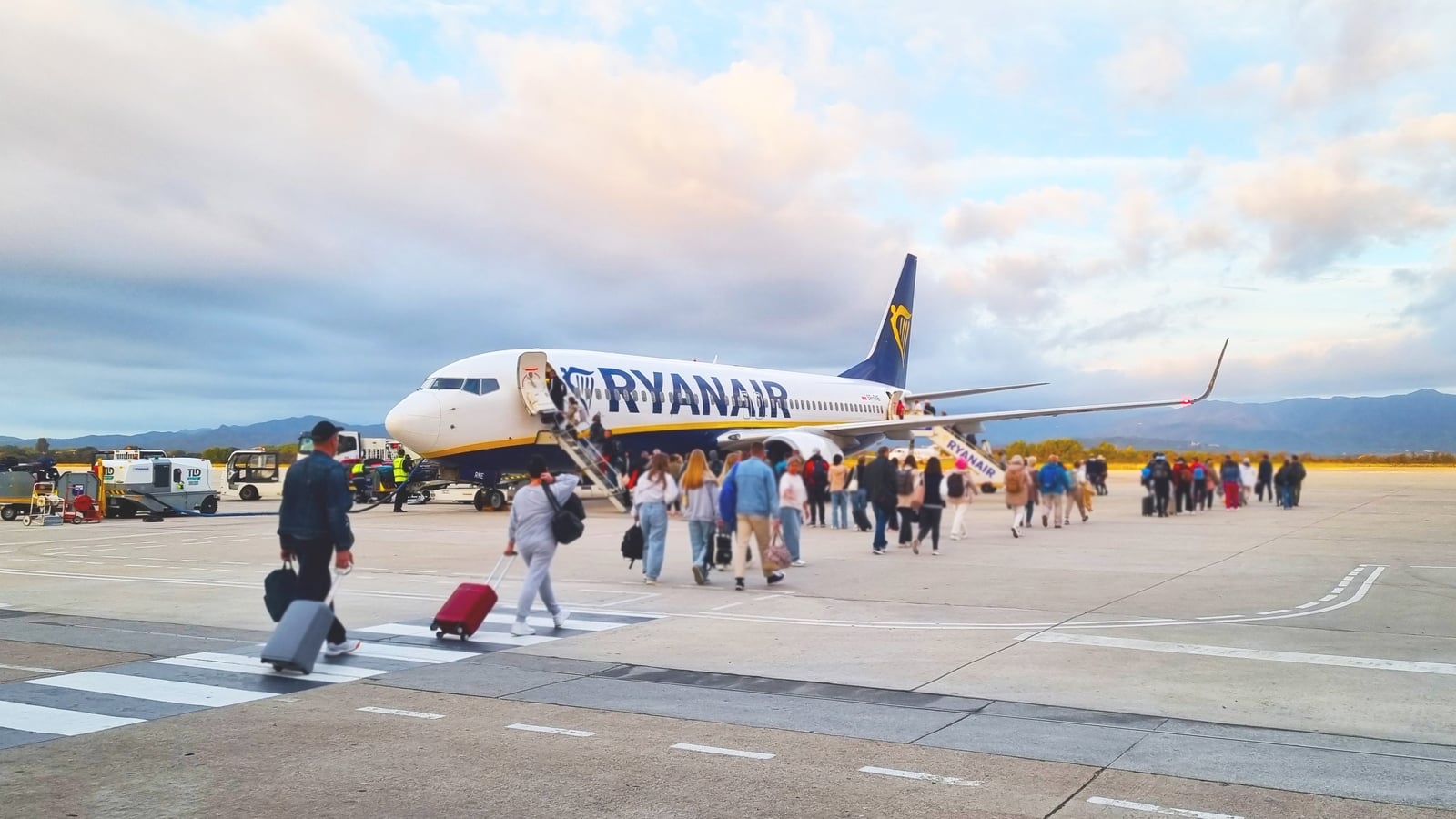
Analysis: The era of cheap flights isn’t going to go overnight, but expect change if oil prices stay high and airlines keep trimming capacity to match
For years, cheap flights have been one of the great bargains of European travel. Flying across the continent for €20 or €30 became normal, but that may be getting harder to sustain – and Ireland could be more exposed than most.
Ryanair has trimmed its passenger target for the year to March 2027 from 216 million to 214 million, and warned that European short-haul fares could rise materially if oil prices remain high, particularly if less well-hedged competitors are forced to cut capacity. This warning has sharpened in recent days. Chief executive Michael O’Leary said on 10 September that winter fares could come in flat or only slightly higher, rather than falling as previously expected – with a much bigger increase possible if oil stays expensive into 2027.
Why does fuel matter so much to the price of a ticket?
The mechanics are simple enough. Aircraft burn a lot of fuel, and fuel is one of an airline’s biggest costs. The hard part is deciding how much of that can be passed on to passengers without losing them to someone cheaper. Low-cost carriers compete almost entirely on price: add €20 to a ticket overnight and some passengers simply won’t travel. That’s why airlines hedge fuel well in advance: locking in a price today for fuel they won’t burn for months, so a spike doesn’t hit all at once.
We need your consent to load this rte-player contentWe use rte-player to manage extra content that can set cookies on your device and collect data about your activity. Please review their details and accept them to load the content.Manage Preferences
From RTÉ Radio 1’s Today with David McCullagh, oil prices reach highest levels since May
How exposed is Ryanair?
The airline says 80% of its 2027 jet-fuel requirements are hedged at about $67 a barrel, about as belt-and-braces as fuel hedging gets. But the remaining fifth sits exposed to the open market, and it’s already done real damage. In its July results, Ryanair said the price of that unhedged 20% had more than doubled to roughly $150 a barrel during the first quarter, pushing operating costs up 11% and dragging profit after tax down 34%. Ryanair’s own results are a useful gauge of how fast a fuel spike can bite, even for the carrier with Europe’s strongest hedging position.
That’s why the airline is pulling back rather than pushing through. Ryanair has cut roughly two million seats from its winter schedule, a move it says could shave €70 million to €100 million off its losses. The Financial Times reported the cut is Ryanair’s first significant winter capacity reduction since the pandemic – not a routine trim. Fewer seats can, in time, mean higher fares, particularly on routes where competition is thin to begin with.
What about Aer Lingus?
Aer Lingus faces many of the same pressures, though its position differs since it sits inside IAG, the group that also owns British Airways and Iberia. IAG hedges fuel across the group too – a cushion, but not immunity, since higher oil still pushes costs up regardless of whose balance sheet absorbs it first. Aer Lingus has reported a €103 million operating loss for the first quarter of 2026, and its parent has been managing higher fuel costs on top of the airline’s other well-documented pressures. The real question isn’t simply what fuel costs, but whether Aer Lingus can keep enough seats in the market while still turning a profit on them.
We need your consent to load this rte-player contentWe use rte-player to manage extra content that can set cookies on your device and collect data about your activity. Please review their details and accept them to load the content.Manage Preferences
From RTÉ Radio 1’s Morning Ireland, RTÉ’s Brian O’Donovan discusses Aer Lingus annual results, operating loss for the first half of 2026, the prospect of job cuts and other issues facing the airline.
Could Ireland actually lose some of its cheap flights?
It’s too early to say for certain, but Ireland has more skin in this game than most. Ryanair is headquartered here, and Dublin is a major base for both Ryanair and Aer Lingus. If fuel stays expensive, airlines tend to get pickier about which routes they keep running – and the quieter winter months are usually where that shows up first.
The bigger issue underneath all this is competition, not just the oil price. European airlines are already juggling aircraft shortages, maintenance backlogs and rising costs, and the industry is consolidating as a result – Reuters has reported European aviation is drifting toward a more concentrated market as weaker carriers struggle and larger groups expand around them. Cheap air travel was never just about cheap fuel – it depended just as much on airlines competing hard enough to chase demand with rock-bottom fares. Take the fuel cushion away, and that kind of growth gets harder to justify.
The airline with the deepest hedging book and the scale to absorb higher costs than anyone else is still cutting winter capacity rather than riding it out
My own view is that Ryanair’s warning is worth taking seriously precisely because of who is making it. This is the airline with the deepest hedging book and the scale to absorb higher costs better than almost anyone else flying out of Ireland – and it’s still cutting winter capacity rather than riding it out. That’s not the move of a company crying wolf over fuel prices. It’s the move of one that’s already done the sums and doesn’t like where they land.
The €20 flight is not going to vanish overnight and there’s no single event that ends it. But if oil stays high and airlines keep trimming capacity to match, the real change won’t be the price on any one ticket. It’ll be that finding a genuinely cheap seat stops being the safe bet it’s been for the best part of two decades.
Follow RTÉ Brainstorm on WhatsApp and Instagram for more stories and updates
The views expressed here are those of the author and do not represent or reflect the views of RTÉ