
Antidepressants May Affect Fish at Lower Concentrations Than Expected
Pharmaceutical residues in waterways are not a new concern, but fresh research suggests environmental risk assessments may be underestimating how some antidepressants interact with aquatic species.
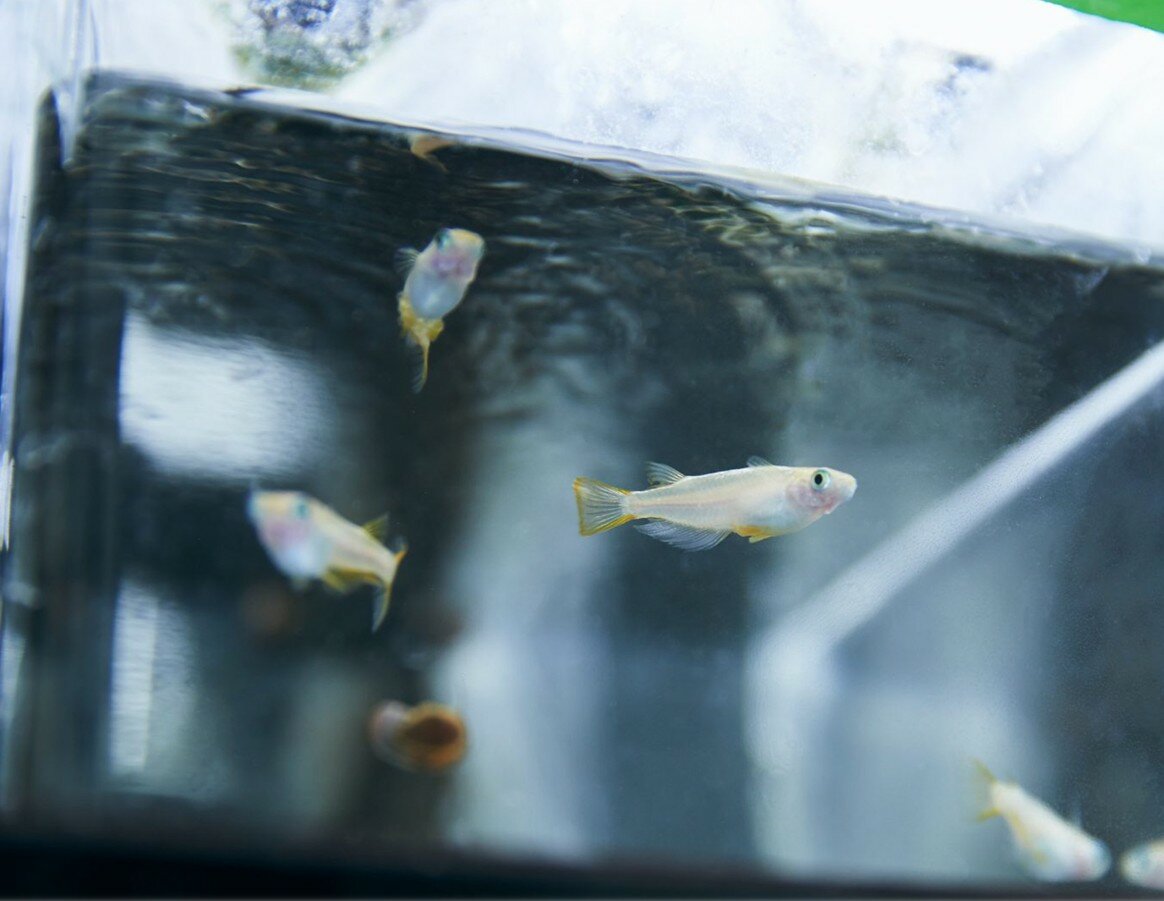
Researchers from Tokyo University of Science and Kochi University examined how antidepressants affect neurotransmitter transporters in medaka and ayu, two evolutionarily distinct fish species. The study, published Aug. 24 in Environmental Science & Technology, found that certain fish transporters responded to antidepressants at substantially lower concentrations than comparable human proteins.
The findings do not show that antidepressants currently detected in waterways are causing widespread harm to fish populations. Instead, they point to a potential weakness in environmental risk assessment: pharmaceuticals developed around human biology do not necessarily behave the same way in other species.
Fish Biology Could Change How Pharmaceutical Risks Are Assessed
Antidepressants and their metabolites can remain biologically active after passing through the human body. Wastewater treatment can remove or reduce many pharmaceutical compounds, but trace residues may remain in treated effluent and enter rivers, lakes and coastal waters.
For water utilities and regulators, the challenge is that fish share several neurotransmitter systems with humans, including serotonin, dopamine and norepinephrine. Antidepressants are designed to influence proteins associated with those chemical signals, including serotonin, dopamine and norepinephrine transporters.
The research team cloned transporter genes from medaka and ayu before producing the corresponding proteins in cultured human cells. The researchers then exposed those proteins to several antidepressants and measured how strongly each drug inhibited transporter activity.
One of the clearest findings involved SERTa, a form of serotonin transporter found in fish. In both species, SERTa was more sensitive to the antidepressants tested than another form, SERTb. In some cases, the concentration needed to affect fish SERTa was more than 10 times lower than the amount required to produce a comparable response in the human transporter.
That difference matters because environmental assessments often rely partly on what is already known about a pharmaceutical’s behavior in humans. The study suggests that approach may miss biological responses unique to other species.
Researchers also found that some antidepressants affected fish transporters they would not normally be expected to target based on human pharmacology. That makes cross-species assumptions less reliable when assessing ecological exposure.
The results gain additional relevance when compared with concentrations already reported in polluted waterways. Duloxetine, fluoxetine, citalopram and paroxetine inhibited medaka SERTa at concentrations ranging from several hundred to about 1,300 nanograms per liter. The researchers noted that this range overlaps with concentrations previously measured in some contaminated aquatic environments.
The overlap does not demonstrate ecological harm. The experiments measured molecular activity in cultured cells rather than behavioral, reproductive or population-level effects in fish. But it gives researchers and regulators another reason to examine whether existing monitoring thresholds adequately reflect species-specific sensitivity.
Wastewater Utilities and Drugmakers Face a Wider Monitoring Question
For wastewater operators, pharmaceutical manufacturers and environmental regulators, the study fits into the broader issue of contaminants of emerging concern.
Most conventional wastewater treatment plants were built primarily to address pathogens, nutrients and organic matter, rather than trace amounts of pharmaceuticals designed to remain biologically active at low doses.
Technologies such as activated carbon, ozonation and membrane treatment can improve removal of some pharmaceutical residues. Those systems can also bring additional capital costs, energy requirements and operating complexity. Better identification of the compounds most likely to create environmental risks could therefore help utilities focus investment where it has the greatest potential value.
The new research suggests molecular sensitivity data could become part of that prioritization process. If a pharmaceutical interacts more strongly with aquatic species than human pharmacology predicts, regulators may need to consider that difference when setting monitoring priorities or developing environmental thresholds.
The findings also add to growing pressure to consider pharmaceuticals across their full environmental life cycle. For manufacturers, that can mean assessing how much of a drug or its metabolites reaches wastewater, how effectively treatment removes those compounds, how long they remain in the environment and what happens when aquatic species are exposed.
There are still major questions to answer. Researchers will need to establish whether long-term exposure at environmentally realistic concentrations results in measurable effects on fish health, behavior or reproduction. Real waterways also contain mixtures of pharmaceuticals and other chemicals, making exposure more complex than the single-compound testing used in laboratory studies.
Still, the study raises an important point for environmental risk management: human biology may not always be a reliable shortcut for predicting what happens in aquatic ecosystems.
As pharmaceutical monitoring expands and water-quality standards evolve, understanding those biological differences could become increasingly relevant to wastewater infrastructure planning, pharmaceutical environmental assessments and regulatory policy.