
The Federal Reserve raised interest rates today for the first time since July 2023 and flagged further increases in borrowing costs in coming months.
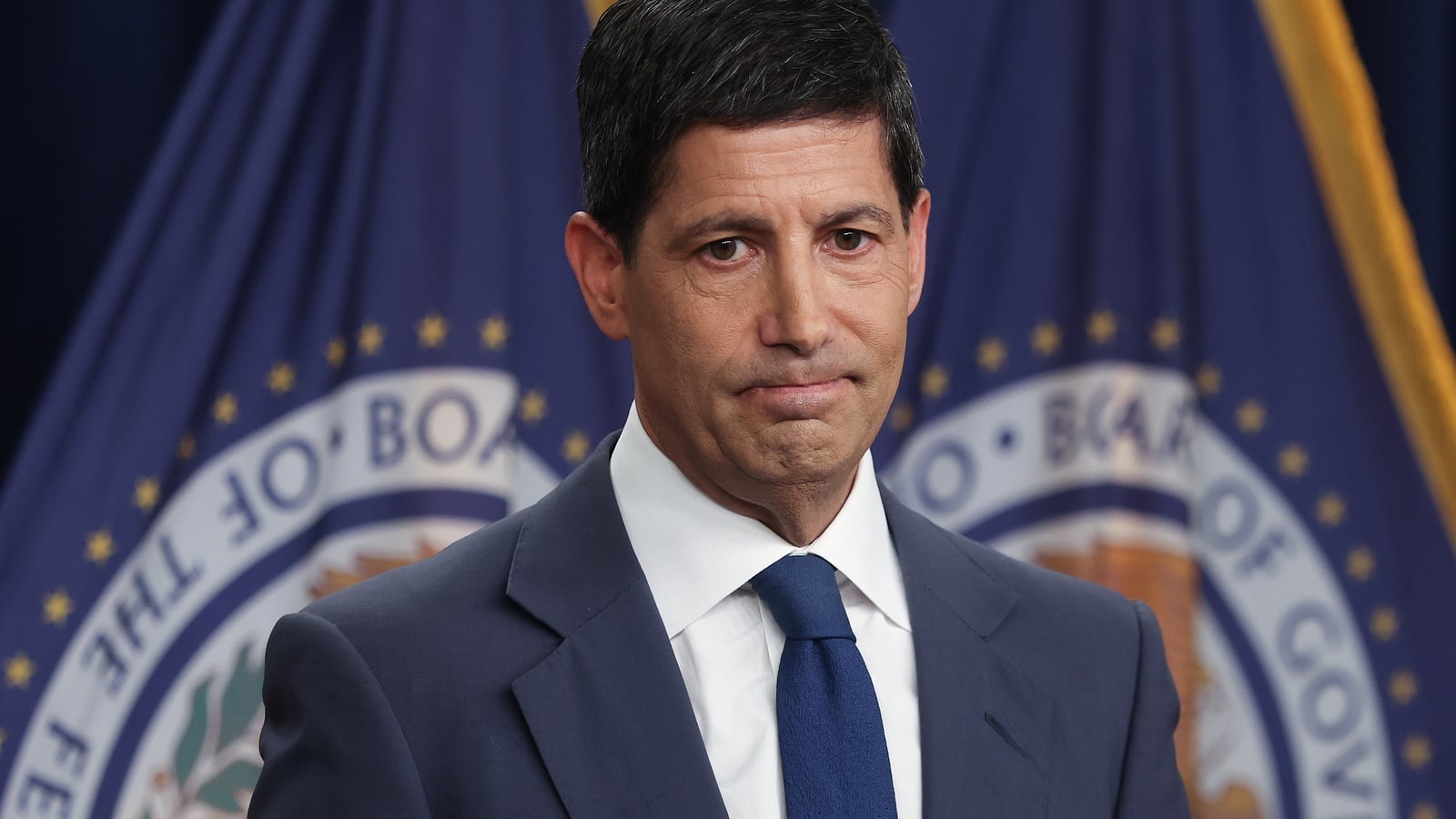
New US central bank chief Kevin Warsh joined a unanimous decision that effectively acknowledges the Trump administration’s inability so far to control inflation.
While President Donald Trump had promised to lower prices on his watch, the combined impact of his global import tariffs, an energy shock following the start of the US-Israeli war with Iran, and capital spending from the artificial intelligence boom has kept price pressures intense enough that the Fed felt it needed to raise its benchmark overnight interest rate, by a quarter of a percentage point to the 3.75%-4.00% range.
New policy projections showed 16 of 18 policymakers anticipate at least one more quarter-percentage-point hike by the end of this year, with only two of them seeing rates remaining stable from here. Mr Warsh apparently again did not submit a rate projection.
Mr Warsh said that the US central bank’s main focus now is on inflation.
“Our predominant focus is on the price stability side of our mandate,” he said. “The plain fact is that inflation is too high, and has been for too long.
“Part of the independence of the Federal Reserve is we stay in our lane.
“We let people that do trade policy and fiscal policy stay in their lane too. That’s how we can stand up here and call them the way we see them.”
The White House criticised the Fed’s “unfortunate” decision to raise interest rates despite demands by President Donald Trump to lower them.
“Today’s rather unfortunate decision by the Federal Reserve to hike interest rates was not, from the administration’s point of view, backed by a particularly compelling economic case,” spokesman Kush Desai told Fox News.
It’s the first policy shift under the new Fed chief, who took office in late May after being selected by Mr Trump with an expectation that he would cut rates.
The Fed’s new policy statement and economic projections, to the contrary, show a central bank opening the door on tighter monetary policy through next year, with the policy rate rising to the 4.00%-4.25% range by the end of this year and ending 2027 at the same level.
“Today’s policy action will support a timelier return to the Committee’s 2% goal,” the central bank said in its policy statement after the end of a two-day meeting.
While the statement withheld any forward guidance about coming policy decisions, as is Warsh’s preference, the decision is likely to ease doubts that the Fed chief would hold off on tighter policy out of deference to Mr Trump, a lingering question during his first months in office.
The statement dropped a previous reference attributing current elevated inflation to “supply shocks” particularly in the energy sector, a nod to concerns among policymakers, including Mr Warsh, that price pressures were too broad for comfort.
The rate increase was announced less than two months ahead of midterm elections that will determine whether Mr Trump’s Republicans maintain control of Congress for the final two years of his presidency.
The Republicans are facing an uphill battle with voters angry about gasoline prices, which are about a third higher than a year ago and interest rates on home mortgages that have been rising steadily this year. The average rate on a 30-year fixed-rate mortgage is approaching 7%.
Policymakers’ new quarterly economic projections marked up estimates of inflation, as measured by the Personal Consumption Expenditures Price Index, to 3.7% versus the 3.6% projected at the Fed’s June meeting.
Inflation is not projected to return to the 2% target until 2029, a year later than previously expected.
Economic growth was marked up slightly from 2.2% to 2.3%, while the unemployment rate is seen ending the year at 4.1%, versus the 4.3% projected in June.
Warsh has pledged to lower inflation back to 2% “clearly and at sufficient speed” by raising rates as needed.