
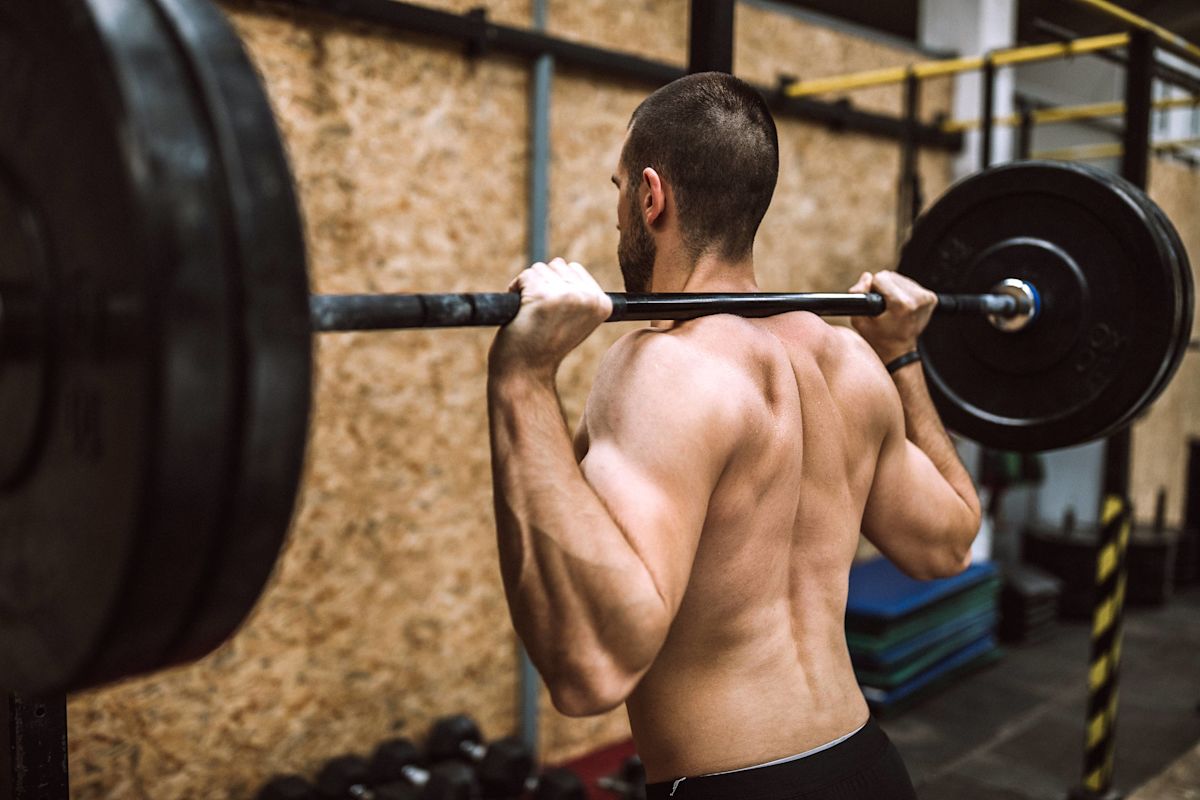
No need to feel guilty if you’ve started skipping certain exercises as you’ve gotten older. After decades of lifting, playing sports, acquiring injuries, and general daily wear and tear, joint pain, limited mobility, and chronic aches alter what your body can handle. The barbell back squat, in particular, is a classic exercise that bodybuilders and powerlifters swear by. But it might not be the best choice for someone working with limited hip, ankle, shoulder, or thoracic mobility, or who doesn’t have the core strength and form to control the movement under a heavy load.
“Beginners in their 40s and older may try to lift more weight than their current mobility, technique, and conditioning can safely support,” says Kristi Dobreff, ClassPass Wellness Council Member & Strength and Conditioning Coach at the YMCA Downtown Nashville. “With age, the cartilage in the knees and discs in the lower back can lose some resilience and hydration. Men who haven’t trained consistently may also lack the hip and ankle mobility needed to squat deeply with proper form.”
Problems can quickly arise when you load the bar beyond what your current technique and mobility can support. As fatigue sets in, the knees might cave inward or the lower back rounds, increasing the risk of issues like disc irritation, knee strain, or meniscus injury. Over time, repeatedly squatting with such compensations contributes to nagging pain and irritation.
But that doesn’t mean we suggest skipping the movement altogether. Getting the bar into the proper position in the first place is another often overlooked issue. Many middle-aged men lack the shoulder or thoracic mobility needed to comfortably hold a traditional barbell across their upper back. Forcing the position can make the exercise uncomfortable before you even begin the squat, as Luka Hocevar, trainer and founder of Vigor Ground Fitness and Performance, points out.
“One of the modifications that can help a lot is replacing a regular bar with a safety squat bar, where you don’t need great thoracic and shoulder mobility, and you can hold the handles of the bar in front of your body. This helps you keep a better position of your pelvis, engaging the core, and protecting your low back,” Hocevar suggests.
You might also consider using a wedge or weight plates to elevate your heels, which makes it easier to reach a deeper squat with proper form if you have limited ankle mobility. As always, start your leg day workouts with a proper dynamic warmup to prepare your joints and muscles for the work ahead.
Luckily, strength training is never a one-size-fits-all situation. The following variations still build lower-body strength without being as hard on the body.
Double Kettlebell Rack Position Squat
Experts
This story was originally published by Men’s Journal on Sep 15, 2026, where it first appeared in the Fitness section. Add Men’s Journal as a Preferred Source by clicking here.