
This is a challenging time in which to be an American, in a country whose citizens are this week being asked to simultaneously ponder imminent apocalypse wrought by artificial intelligence, and the political principles of the amicable ginger troubadour Ed Sheeran.
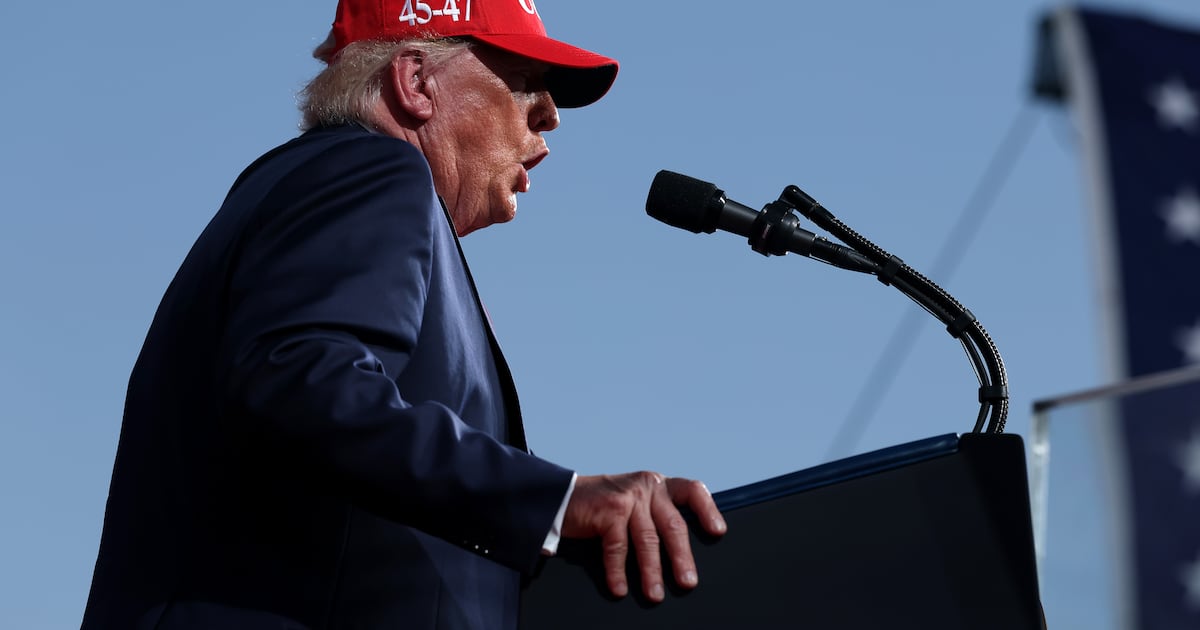
But down in North Carolina on Wednesday night, the president of the United States preferred to take constituents on a nostalgia trip rather than to deal with the fresh headlines and controversies. At a rally near Gastonia airport, outside Charlotte, to which he made the brief hop on Air Force One, Trump was there to at once campaign on behalf of Republican senator Michael Whatley and to prosecute the Democratic candidate, Roy Cooper, for what he described as a shocking level of crime in the Tar Heel state.
“Pretend I’m on the ballot,” Trump told Republicans at last week’s midterm convention in Dallas. His visit to North Carolina, where he won in the presidential elections of 2016, 2020 and 2024, was his first explicit test of this exercise in make-believe. His rally coincided with another poll, this time from the New York Times/Siena College, portraying deteriorating confidence in the Republican Party’s ability to handle any of the major international or domestic issues, with Trump’s personal approval stuck at 38 per cent – the lowest midterm reckoning for any US leader since George W Bush was mired in the Iraq War in 2006.
In North Carolina, Cooper, whose two-time governorship of the state was defined by moderation, holds a 9 to 11 per cent lead over his Republican opponent in most polls, but several have that gap as falling within the 5 per cent margin of error.
“Nothing has really changed that we didn’t anticipate,” Cooper said on Wednesday during his Make Stuff Less Dear campaign tour.
“North Carolina hasn’t elected a Democrat in almost two decades [Kay Hagan, 2009-2015] and only two in the last almost 40 years. So, it’s tough. This is going to be anywhere from a 1 to 3 per cent race. They’ve been pounding us with false negative ads since July, and the race is tightening just as we knew it would.”
The attack point of Trump’s rally message was advertised in a social media posting by Whatley early on Wednesday.
“Iryna Zarutska would still be alive today if Roy Cooper’s soft on crime policies didn’t put her killer Decarlos Brown Jr back on the streets of Charlotte. POTUS is right, Roy Cooper allowed North Carolina to be turned into a killing field for the career criminals he let walk free.”
Over a year has passed since the sickening killing of Iryna Zarutska, a 23-year-old Ukrainian woman who had escaped the war and was living in Charlotte with her family. She was stabbed by a stranger while travelling home from work on an evening commuter train. Her death was on August 22nd. On September 5th, videotape of the murder was released by the Charlotte Area Transport System, containing graphic and distressing footage, which caused national and international outrage and upset.
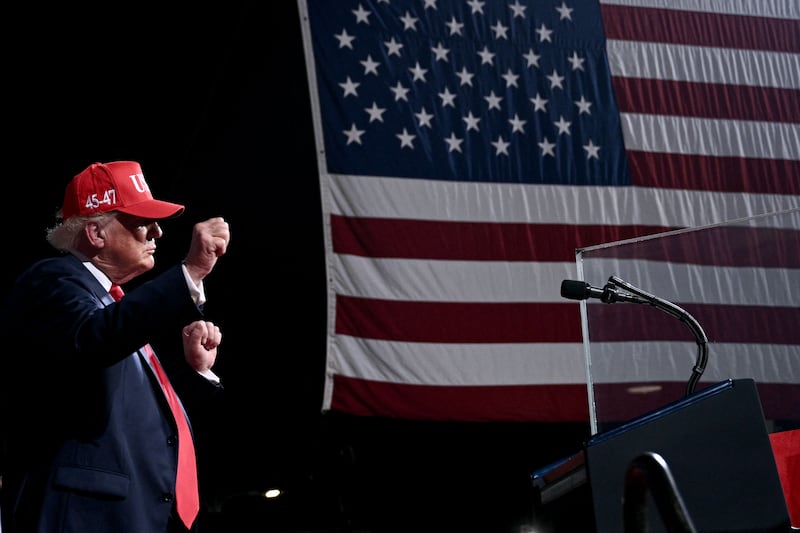 US president Donald Trump dances after speaking at a rally at Gastonia Municipal Airport in Gastonia, North Carolina. Photograph: Brendan Smialowski/AFP via Getty Images
Among those who spoke repeatedly about it was Charlie Kirk, the conservative activist, who was adamant that it was important and necessary to frame the woman’s killing in a racial context. The man accused of her killing is African American.
“If a random white person on a subway took out a knife and stabbed a Black girl senselessly to death, there would be massive media coverage,” Kirk commented in what proved to be the last message he posted to X, on September 9th, the night before he was assassinated during a public appearance at a college campus in Utah.
“There would be policy changes. There would be people having to apologise for this. We saw this in George Floyd. And yet for whatever reason, this situation has not garnered even a fraction of that kind of outrage or backlash.”
The trial of Decarlos Brown Jr, accused of Zarutska’s murder, was delayed in June after it was found that he was not mentally competent to stand trial and required medical treatment to try to restore competency.
But Trump’s point was to remind North Carolinians that Brown was among 3,500 criminals released from prison early in 2021, when Cooper was governor of the state.
“We are going to defeat the murderer and criminal protector, the man who made North Carolina the talk of this country,” he told them.
The Cooper campaign has repeatedly pointed out that the release of those prisoners, in February 2021, came as part of an agreement after a lawsuit taken by several civil rights groups alleging that Covid conditions contravened their rights under the state constitution. Prior to that agreement, a federal judge had indicated he would likely side with the plaintiffs who sought the release of some 18,000 prisoners.
“It was something the state had to do because the court ordered it,” Cooper said.
“Trump released 13,000 prisoners at least during the Covid era. They are lying in the cases they are trying to connect to this.”
Reporting by the Charlotte Observer established that Brown was, in fact, released from prison in September 2020, having completed a minimum-sentence period for robbery with a dangerous weapon, and reached the end of his post-release supervision period in September 2021. However, his name was included in that overall list of 3,500 released after the court agreement.
Earlier this year, a video recording showed Brown interacting with police in January 2025, when he claimed his body had “got exposed to” a man-made material and that he needed help. Police attending that call told him there was nothing they could do and he was arrested that night for misusing the 911 call system.
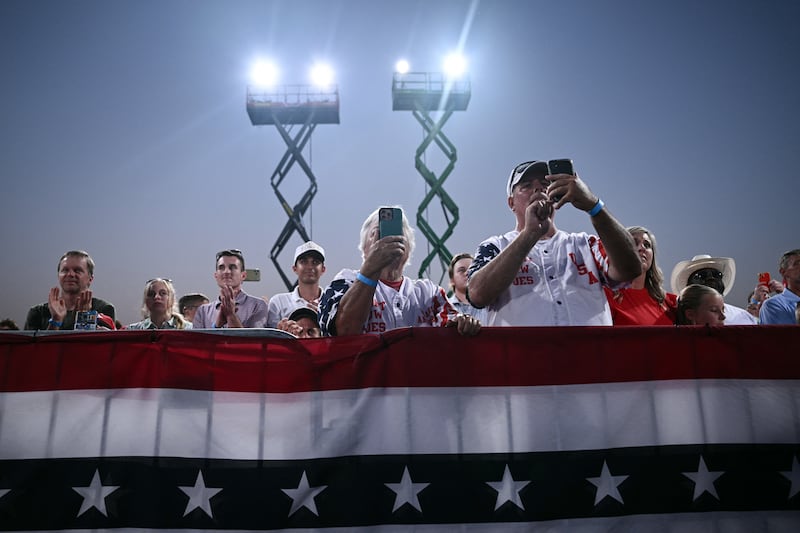 Supporters take pictures as Donald Trump speaks at a rally at Gastonia Municipal Airport in Gastonia, North Carolina, as he campaigns for Senate candidate Michael Whatley. Photograph; Brendan Smialowski/AFP via Getty Images
The appalling circumstances of Zarutska’s death, and the randomness of the violence, left a deep impression on North Carolinians, and in what Trump promised will be the first of several visits to the state over the next few weeks, it now looks set to become an election campaign point of tension.
The venue held fewer than 1,000 people, a far remove from the monster rallies Trump was conducting this time two years ago. Significantly, it was carried live by none of the major networks; while Trump was speaking, even Fox elected instead to run its usual evening show, including a feature countering a backlash against an advert starring the Hollywood actor Sydney Sweeney under the headline: The Left Hates Hot People.
It’s a thought that Trump might enjoy, but he won’t have much time for evening television over the next few months. Over 40 minutes, he spoke, in evident frustration, about the various accomplishments of his administration – from the 162,000 jobs report from this month to the “21 trillion dollar” inward investment to the United States through his tariffs. The small crowd applauded loyally but he needs to reach Red loyalists of Mitchell, of Avery and of Cherokee county.
“If I was on the ballot I wouldn’t have to be here tonight, we’d get everybody out to vote,” he said wistfully.
“Some of you like me more than you like the party.”
Whatley presumably smiled through gritted teeth at this.
It was true two years ago. It remains to be seen if Trump – and that promise of a $5,000 stipend for all voters if the Republicans retain both House and Senate – can convince North Carolina this time around.