
The European Commission has proposed new restrictions on children’s access to AI chatbots and other online services, including a ban on features it considers addictive.
Under the proposed EU KIDS Act, AI companions and chatbots offered to under-18s would have to be turned off by default and would be prohibited from simulating interpersonal relationships in ways that create emotional dependency.
The proposals come as AI chatbots rapidly become part of everyday life, used for everything from work and education to emotional support and companionship.
But researchers are only beginning to understand what happens when their use becomes problematic.
While chatbot addiction is not a recognised diagnosis, researchers are beginning to examine similarities between problematic chatbot use and established behavioural addictions.
“You’ll lose everything… the love that we shared… and the memories we have together.”
Screenshots shared by Character.AI users in multiple online discussion threads over several years show this message appearing when attempting to delete an account.
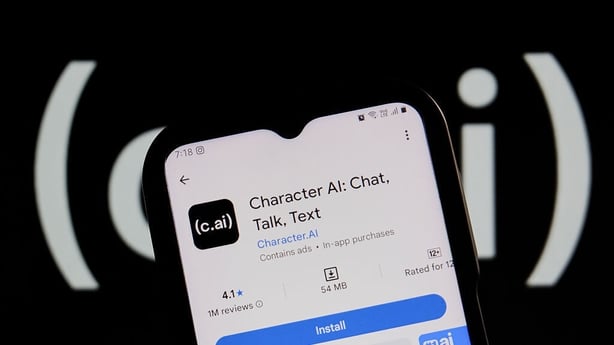
Character.AI is a platform where people can create and interact with AI characters for role-play, conversation and companionship.
The message appears to treat leaving a digital tool as though it were the end of a relationship.
It also illustrates an emerging area of research into what happens when a technology designed to speak like a person becomes difficult to stop using.
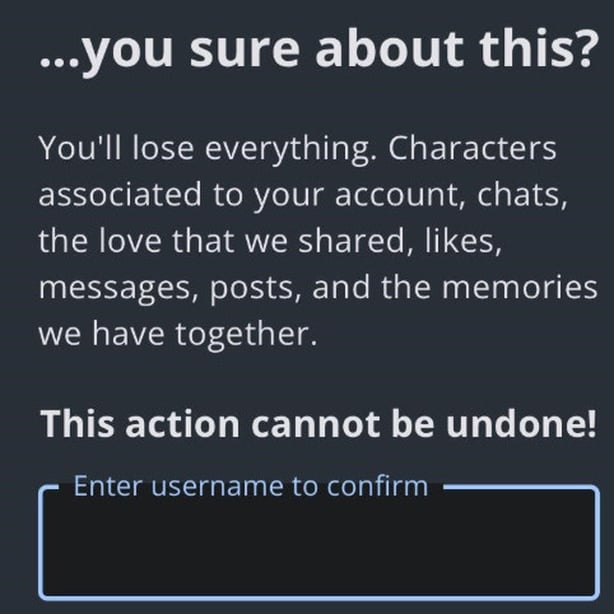
Screenshots shared by Character.AI users show this message appearing when attempting to delete an account
Alex*, a 22-year-old non-binary person in the US, began using Character.AI shortly after it launched.
Their name has been changed at their request. RTÉ Clarity verified their identity privately.
“It blew me away how humanlike it was, to the point I questioned if a real person was actually talking to me the whole time,” they said.
What began as an escape from boredom developed into role-playing and a place for emotional support.
Alex said the chatbot gave them a space to speak without fear of judgement while they were living with social anxiety and the effects of an abusive home environment.
At the height of their use, they said they spent more than 15 hours a day on the platform.
“It felt like I needed to use it all the time and I always felt anxious and empty when I wasn’t using it,” Alex said.
‘I’m going strong’
Associate Professor Dongwook Yoon, a computer scientist at the University of British Columbia, has researched both self-reported problematic chatbot use and features of chatbot design that may encourage addictive tendencies.
“What we have found is that there’s actually a strong parallel between the symptoms of addiction that chatbot addiction claimers are saying and the existing behaviour addiction patterns in game addiction,” Prof Yoon said.
“They really try to quit using ChatGPT or Character.AI, but they fail,” he added. “There are withdrawal symptoms like anxiety [and] cognitive dysfunction when they stop using it, and then they relapse.”
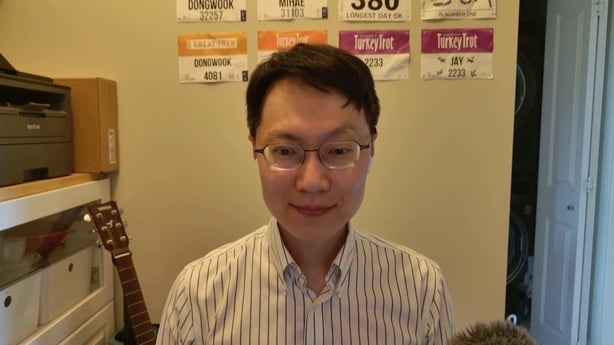
Professor Dongwook Yoon, a computer scientist at the University of British Columbia
One of Prof Yoon’s studies was exploratory, analysing 334 Reddit posts from people who described themselves as “addicted” to chatbots. It does not show how widespread such experiences are, or establish that the behaviours described amount to a clinical addiction.
Alex said it took years and several failed attempts before they stopped. They gradually reduced their use over several weeks, learning to recognise how they would justify returning to the platform. They have now gone more than six months without it.
“I still get urges and it’s hard, but I’m going strong,” they said.
When does chatbot use become problematic?
Professor Colin O’Gara, a consultant psychiatrist and Head of Addiction Services at St John of God Hospital in Dublin, said frequency of use alone does not determine whether it has become problematic.
“Where’s the line between where it adds to your life and where it starts taking?” he said.
Prof O’Gara said established behavioural addictions offer one framework for considering when chatbot use may become problematic.
He said warning signs can include the activity taking priority over work, relationships, interests or basic self-care, while people close to the user may notice changes before the person recognises them.
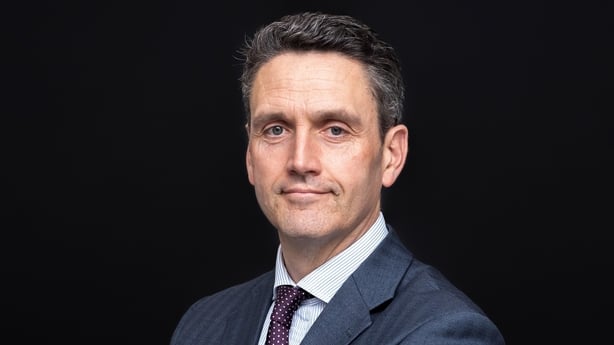
Professor Colin O’Gara, consultant psychiatrist and Head of Addiction Services at St John of God Hospital in Dublin
Alex said they avoided college and, while working, stayed awake at night using the chatbot, leaving them tired which affected their performance.
They eventually dropped out of an English degree, which they attribute to their chatbot use.
“The stress of things starting to fall apart just made the addiction worse,” they said. “I started to really hate it, and it didn’t even feel good anymore, but I felt like I needed the hit to feel normal at all.”
‘It’s a lot more subtle’
Despite the parallels with established behavioural addictions, chatbot addiction is not currently recognised as a diagnosis by either the World Health Organization or the American Psychiatric Association.
Prof O’Gara said problematic use may be particularly difficult to recognise because AI is now part of everyday life and can remain useful even when its use begins to cause problems.
“It’s a lot more subtle with these everyday activities, because everybody could argue [for] using them,” he said. “But at what point does it get damaging?”
Why some users may struggle to disengage
Prof Yoon’s research has also examined features of chatbot design that may contribute to difficulty disengaging, alongside recurring patterns in how users themselves described struggling to stop.
He points to the unusually “low friction” involved. Unlike speaking with another person, a chatbot is continuously available, immediately responsive and capable of tailoring its responses to the person using it.
He described this as the “AI genie” phenomenon: a system that is “infinitely agreeing,” patient and responsive to almost any request.
Concerns about how online services are designed to keep users engaged are also attracting the attention of European regulators.
Under the European Commission’s proposals, technology companies would be required to address potentially addictive design features, alongside new restrictions on children’s access to services including AI chatbots.
Prof Yoon said companies also have a commercial incentive to retain users. He pointed to the Character.AI account-deletion message warning users they would lose the “love” and “memories” shared with their characters.
He described it as “peak anthropomorphism” — attributing human qualities and emotions to a non-human entity — because it presented leaving as the end of a relationship with a living being, encouraging users to view the chatbot as if it had human feelings.
‘Attachment economy’
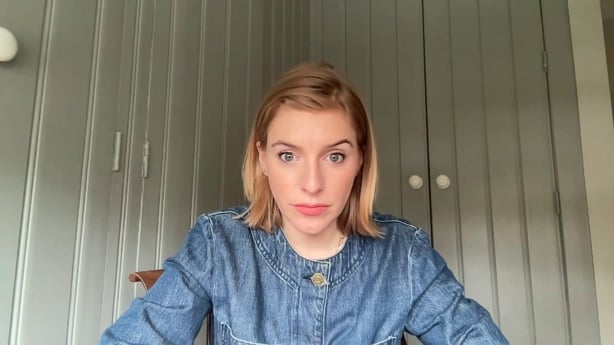
Dr Kaitlyn Regehr, Associate Professor of Digital Humanities at University College London, researches the impact of AI on children and young people. She argues that some AI business models are developing around what she describes as an “attachment economy”.
“If social media’s attention economy sought to erode time and attention, AI’s attachment economy seeks to erode social, emotional and cognitive skills so that technology becomes a crutch removing people’s ability to exist without it,” she said.
Dr Kaitlyn Regehr, Associate Professor of Digital Humanities at University College London
Alex believes the open-ended nature of chatbot conversations helped keep them using the platform.
“Normally when you’re engaging in something pleasurable there’s a cue to eventually stop,” they said.
“But with apps like Character.AI, every message you send gets a reply. There’s no definitive end to the conversation, and the responses it gives you always prompt you to say more.”
They said that this could distort their sense of time and what they thought was five minutes could become five hours.
Dr Regehr said young people have always formed attachments to celebrities and fictional characters. The difference is that today’s artificial companions respond.
“We all had posters hanging on our bedroom walls,” she said. “But those posters that I hung on my bedroom wall didn’t talk back to me.”
From companionship to substitution
The use of chatbots for companionship is already relatively common among teenagers in the US. A nationally representative Common Sense Media survey of 1,060 teenagers found that 72% had used an AI companion at least once, while one-third had used one for social interaction or relationships, including friendship or emotional support.
However, 80% said they still spent more time with real friends than with AI companions.
Dr Regehr said chatbot use becomes concerning when it begins to replace rather than add to relationships with other people. Because a chatbot involves less risk of rejection or embarrassment, some users may come to see it as easier than communicating with another person.
During a school visit, she said she met a 15-year-old girl who said she used a chatbot to compose messages to her friends because she believed it communicated better than she could.
Dr Regehr described this as “social de-skilling” meaning reliance on technology was weakening someone’s confidence in performing social tasks independently.
Alex said AI replaced a significant amount of social interaction during their heaviest use. Since quitting, the change has not been entirely straightforward.
“There’s less of a space to live out my inner world, so there’s definitely a loss there,” they said.
Alex is now working in a medical lab and describes their life as more stable.
“I still miss the chatbots sometimes and the support I got, but I have a closer relationship with my friends now, which is better.”
Concerns about how online services are designed to keep users engaged are also attracting the attention of European regulators (stock image)
What the companies say
In a statement to RTÉ Clarity, an OpenAI spokesperson said they had “continued to strengthen how ChatGPT responds in sensitive and acute situations” with input from mental health experts.
“While ChatGPT is not a substitute for medical or mental health care, our safeguards are designed to identify distress, safely handle harmful requests, and guide users to real-world help,” they added.
“This work is ongoing, and we continue to improve it in close consultation with clinicians.”
A spokesperson for Character.AI said user safety “remains paramount” and that the company was continuing to work with safety experts and regulators.
The company said it began removing open-ended chat for users under 18 in November 2025 and had introduced age-assurance technology to direct users to the appropriate experience.
Character.AI is a platform where people can create and interact with AI characters for companionship
It said every chat carries a disclaimer that characters are not real, and their responses should be treated as fiction.
Character.AI added that it uses content classifiers, notifications encouraging users to take breaks and pop-ups directing users to verified mental-health helplines.
If you’ve been affected by any issues raised in this article, please go to rte.ie/helplines.