
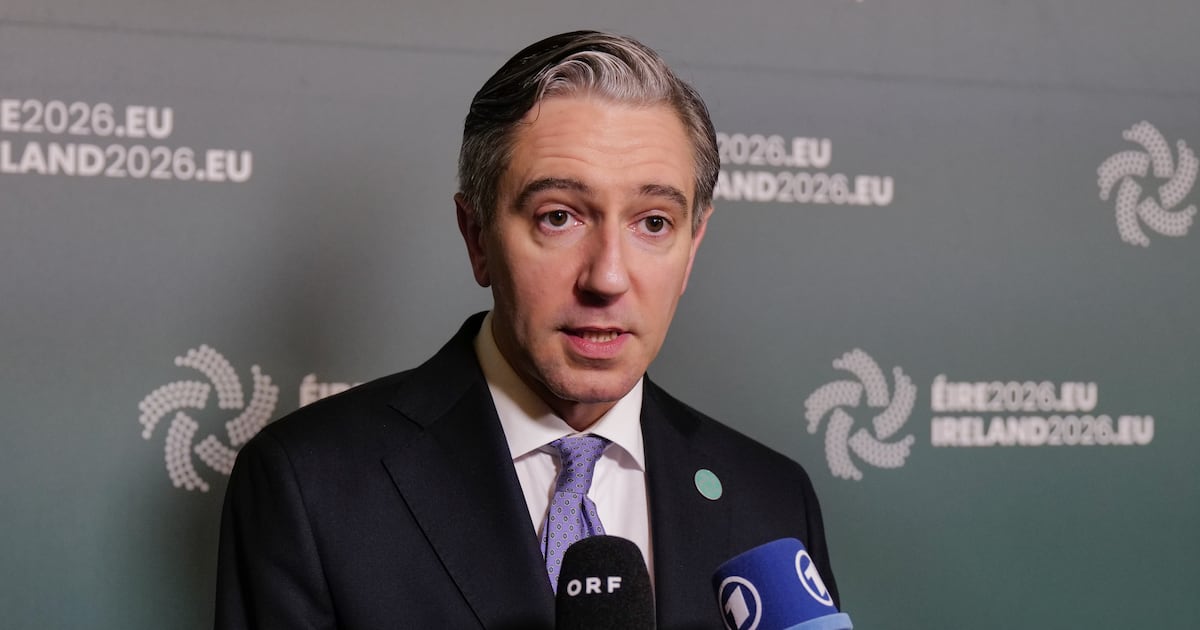
A redistribution of Ireland’s tax take from multinational tech companies to other EU States is a remote possibility into the future, Minster for Finance Simon Harris has said.
The Tánaiste insisted on Friday that tax policy was an “absolute” competency for any EU state, including Ireland.
He said any change to that sovereignty would not take place at EU level, but under the auspices of a wider international body such as the Organisation for Economic Co-operation and Development (OECD).
“All of these conversations would need to happen in a [wider] context than just Europe, and I think that environment globally, truthfully, makes it unlikely at the moment,” he said.
He was responding to comments from French finance minister Roland Lescure, who said the large tax revenues Ireland earned from multinational tech companies should be “redistributed” more fairly among other European countries. He argued that these revenues stemmed from income generated across the continent.
In an interview with The Irish Times, Lescure said Ireland was getting “a big share of the global taxation because most of the digital global companies have got their headquarters in Ireland”.
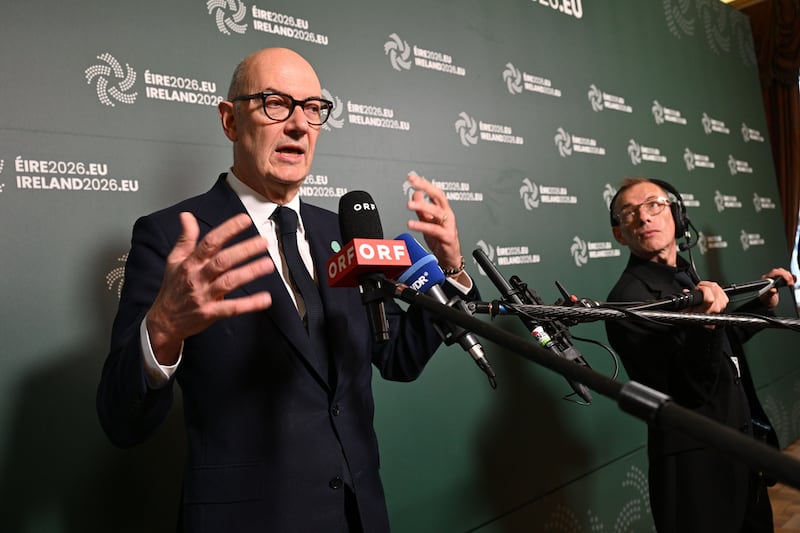 French finance minister Roland Lescure speaks to reporters at the informal meeting of EU finance ministers in Dublin Castle on Friday. Photograph: Bryan Meade/EPA
However, on his way into a meeting of euro-area finance ministers (Eurogroup) in Dublin Castle on Friday, he clarified the comments on tax policy competency, saying the issue was best tackled at OECD level.
“I understand looking at the paper this morning, my words came out of proportion. It’s not about Ireland and France,” he said.
Lescure said there had been work done at OECD level to address this global phenomenon and said his belief was “this is the right way of doing it”.
“I don’t want this to be an issue between Ireland and France, or between France and anyone else,” he said.
“We have a global issue we are faced with. We have to tackle it in an orderly way and the OECD is the best way to do it.”
Harris, speaking to reporters after the meeting, said he welcomed Lescure’s clarification.
“Tax is obviously a national competency. It’s an absolute matter for every member state,” he said. “It’s a matter for Ireland to pursue whatever taxation policy Ireland wishes to pursue. And Roland [Lescure], who is a good friend of Ireland and a very good colleague, made that point today that he was talking about the need for a broader global conversation.
“And indeed, he referenced the OECD as the vehicle for that conversation. That’s always been Ireland’s position.”
Asked whether there was any real prospect of that being discussed at OECD level in the near future, Harris said France had a long-held view in relation to digital taxation, but the matter remained a national competency within the EU.
He said Ireland had been an active participant within the OECD on tax reform but also signalled that a change with regards to taxing multinational tech firms was not on the horizon.
“Let’s be honest and realistic: the context in reaching international agreements these days is not the best context, and I certainly would never want to see anything happen to the European economy that puts Europe at a disadvantage,” Harris said.
“All of these conversations would need to happen in another context other than just Europe, and I think that environment globally, truthfully, is unlikely at the moment.”