
For those who grew up in and around Cork city, the history that surrounds us became part of everyday life, easy to tune out after years of strolling through the streets of Leeside. It’s this same history that’s attracted visitors and kept communities proud across many of Europe’s biggest cities, and now a city trader is calling for Cork to fully embrace its heritage.
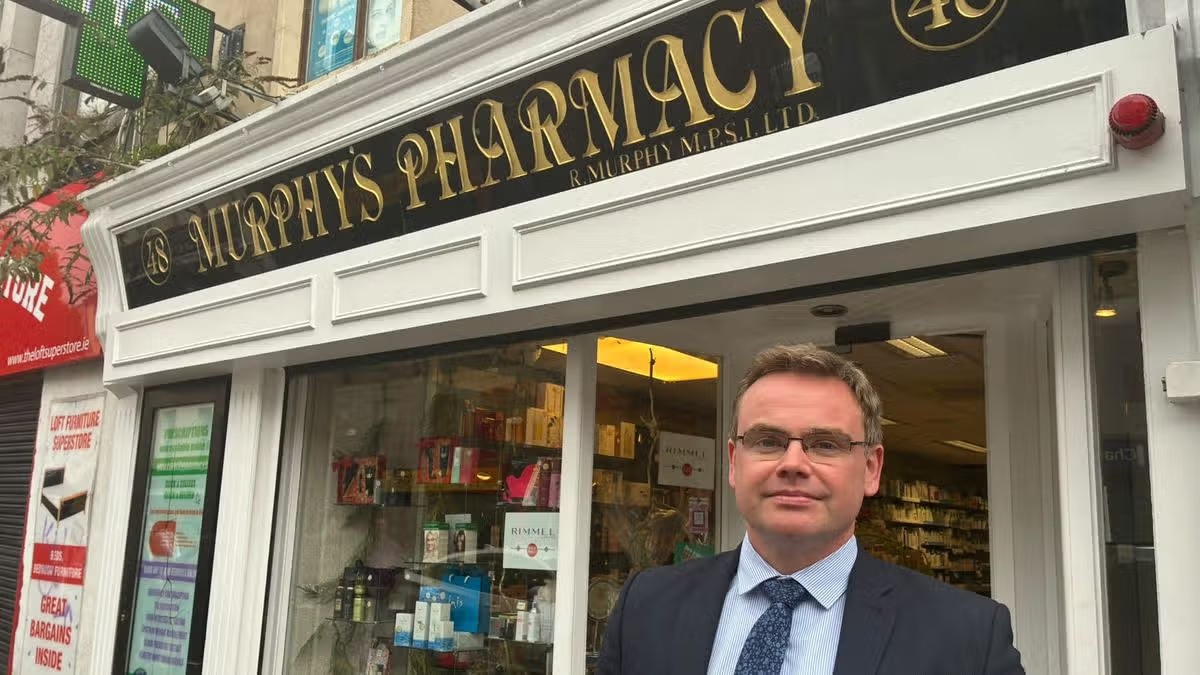
Andrew O’Connell owns Murphy’s Pharmacy on North Main Street, which has served communities across Leeside for decades.
Andrew took ownership in 2023 after deciding to change paths following a successful career as a chartered engineer, and in the years since, it’s become a passion project for him. It’s certainly working out, as staff recently celebrated their win at the Prestige Awards, taking home the title of Pharmacy of the Year 2026/2027 for the Republic of Ireland.
Leeside has its fair share of issues, including antisocial behaviour, dereliction, and poor public transport, all of which make doing business in the city centre tough. However, Andrew believes that Cork can overcome these challenges and that initiatives that spruce up the city and provide greater support for local businesses are the way forward.
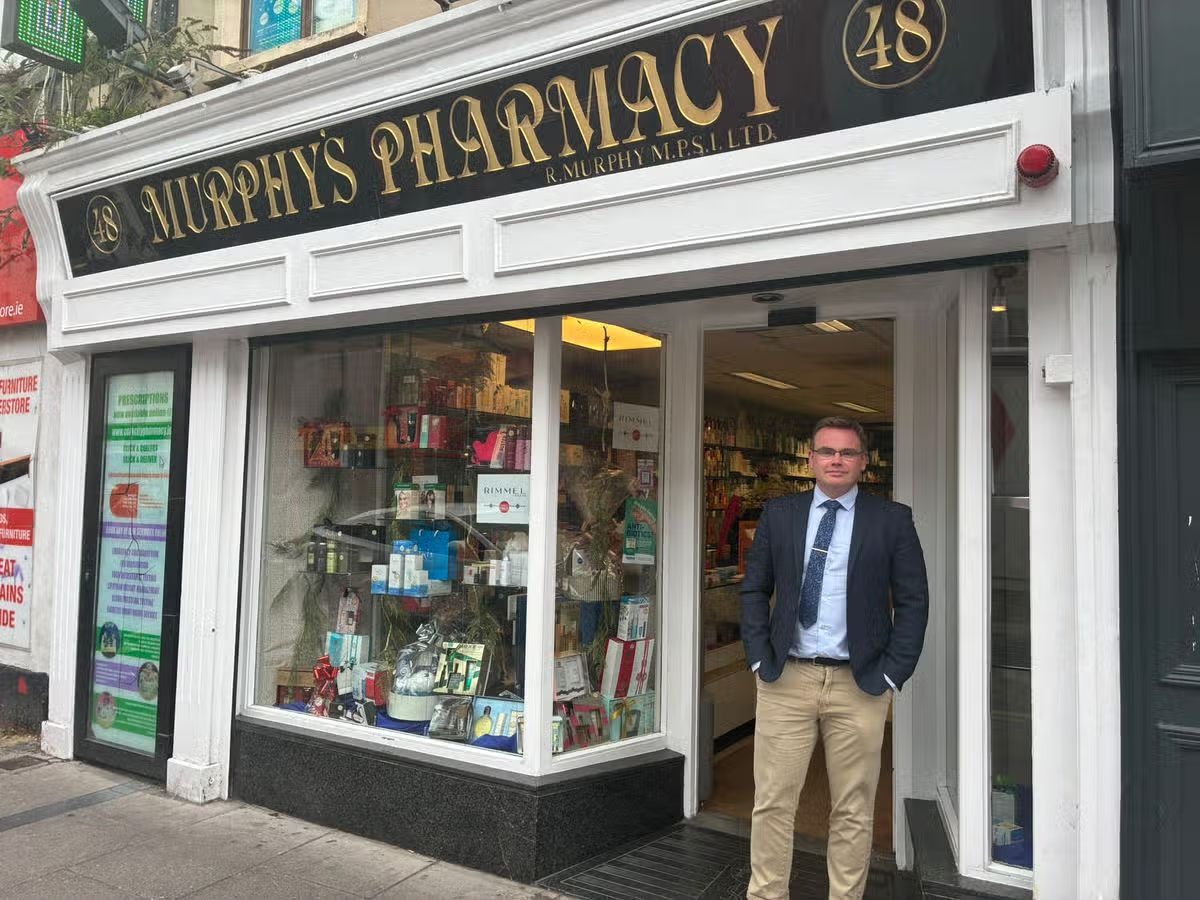
Andrew outside his pharmacy on North Main Street(Image: DF)
As part of that, he’s called for the establishment of an ‘old town’ in the heart of Cork city – as seen in many major cities across Europe – and for local councils to be empowered to take initiative without having to rely as heavily on central government.
He told CorkBeo: “There are obvious issues with dereliction; there’s quite a bit of it on North Main Street, and it’s obviously quite prominent throughout the city, but I think the biggest frustration for us here is the radio silence. It’s like the traders are trying their best to do as much as they can, and we’re trying to engage with the powers that be to get together and move it forward.
“It almost sounds counter to what I’ve said, but I think councils need to be empowered, they need to be more independent from central government, and they need to be empowered to take action. When we engage with the council, the funding always seems to have to come from central government, so while they might be particularly ambitious themselves, it’s almost like they’re hamstrung.”
One of the topics broached in the interview was the success seen in New York under the mayorship of Zohran Mamdani, which Andrew highlighted as an example of what can be done when local government is given real power and the budget to back it up. While New York obviously operates on a totally different financial scale, Andrew believes there are lessons that can be learned.
Andrew has expressed support for the ‘broken windows’ theory, which suggests that visible signs of disorder and antisocial behaviour – such as graffiti and poorly maintained buildings – can encourage further crime and disorder, including serious crimes. Walking around Cork city, both graffiti and dereliction aren’t exactly hard to find and addressing these could go a long way towards making the city feel safer.
Increased Garda patrols have also had a positive effect on the city centre. However, Andrew hopes that by encouraging more people to come to the city, larger crowds will act as a passive security measure to deter day-to-day antisocial behaviour, with Gardaí called in only to deal with serious offenders.
Unfortunately, this does rely on making it easier to access the city centre and major projects like the Cork Luas and BusConnects are still years away from completion. As a result, Cork lags behind its European contemporaries in terms of footfall, and Andrew has seen the difference that can make first-hand.
He continued: “Cork city has so much history attached to it, and it really should be embraced, like this is the original part of the city, and there’s over 1,000 years of history here.
“If you go to any other city in Europe, I speak personally from Krakow, my wife is from there, and I’ve lived there, North Main Street and Castle Street would be the centre of attention. They have bad winters over there, but they’re able to have cafés everywhere, bars everywhere, and there’s a huge amount of footfall in their city centres, but we can’t seem to crack that egg.
“I think our city centres need an awful lot of help to encourage people to come into them, there needs to be a draw for the city centre. There’s this idea that shopping centres in the suburbs drag people out, there’s free parking, a roof over their head, and if there’s any issue with security, you can have someone removed, whereas you can’t really remove someone from the city streets.”
Andrew worries that we’re now raising a generation of people who will prefer to head out to suburban shopping centres like Mahon and Wilton rather than patronising businesses in the city centre.
A decrease in footfall will hit local businesses first, and Andrew fears that if Cork loses too many local legacy businesses, the city could lose the unique charm that the Rebels have grown fond of over the years.
For Andrew, it comes down to this: it’s not the large foreign-owned businesses that volunteer for community initiatives or attend public consultations, but rather the traders who have called the streets of Leeside home for decades and take pride in the place.
He said: “When it comes to family-owned and community-run businesses, our connection to the city goes way back. I think for ourselves, from a pharmaceutical perspective, it’s the fact that we have generations of customers and we try to hold on to as many legacy staff as we can. Mary has been here for 24 years, and Deirdre has been here a similar length of time, if not slightly more, and now her daughter is here training as a technician – so we all speak Cork
“Beyond that, when it came to volunteering for things like the greening schemes, it was places like us that volunteered. At the public consultations, it was the traders who attended. I think it shows a love of the city, we’ve been here for so long, and what I think you don’t want to have is a situation where you just have multinationals everywhere, the soul of the city gets taken.
“You can go to any city in Europe and certainly find an area of town where there’s a Costa Coffee or a Pret a Manger, and there’s nothing local anymore – and they do lose their lustre over it, it becomes a bit generic. Thankfully, Cork hasn’t yet lost touch with local legacy shops, but what I’d be very concerned about is if we stay on the same trajectory, where the city centre isn’t being looked after, the city could lose that. “
Andrew wants Cork to keep the charm and soul it’s always been known for, and has suggested that the central island in Cork city be designated the city’s ‘old town’, as commonly seen in many other European cities.
““I’d like to see an incentive scheme brought in because when you look at Cork city, it’s quite unique with how the river splits in two. I’d like to see what locals affectionately call ‘the island’ being embraced as the city’s old town, and to incentivise local businesses by offering them reduced rates to set up there, because god knows there’s enough challenges to operating a business.
“If you’re a big multinational coming in, cash isn’t a problem, but if you’re a local business, you’re scrapping for everything you can get, so we should try to incentivise those as best we can. “
Along with many other traders on North Main Street, Andrew submitted a series of concerns and suggestions to the Taoiseach’s office, all of which were inspired by his vision for a better Cork city.
This letter includes suggestions on how to make it easier to access the city, proposed rate reductions for new local businesses to encourage people to take the leap, remediation and fee reductions for city centre car parks and suggestions on how to tackle dereliction in the short term while more permanent measures are in the works.
The letter was signed by many prominent traders on one of Cork’s oldest streets, all of whom have one thing in common – they want to make Leeside a better place not only for business owners but those anyone who is proud to call Cork home.