
Deep in the flooded forests of the western Amazon, scientists have identified a frog species that had remained invisible to science until now. Named Adenomera varcena, the newly described amphibian shows how much biodiversity may still be hidden in one of the world’s most studied ecosystems.
The discovery adds to growing evidence that many Amazonian animals cannot be identified by appearance alone. Through DNA analysis, acoustic recordings and detailed biological comparisons, researchers were able to distinguish the frog from closely related species that look almost identical.
The new species was found in the Upper Juruá River region of western Acre, Brazil, during field expeditions carried out in forest fragments near the Moa and Crôa rivers, close to Cruzeiro do Sul. The area is characterized by seasonally flooded forests, where water levels change throughout the year and create a unique environment for wildlife.
A Frog Species Hidden In A Unique Environment
The identification of Adenomera varcena required a combination of several scientific methods. Researchers did not rely only on visible differences but compared genetic information, body characteristics, recorded calls, habitat preferences and preserved specimens from scientific collections.
The frog belongs to the genus Adenomera, a group of amphibians usually associated with dryland forests. Its presence in seasonally flooded forests was therefore an important discovery, revealing a habitat association that had not previously been documented for this group.
Researchers found that Adenomera varcena shares similarities with other members of its genus, which initially made identification difficult. However, closer examination revealed specific characteristics separating it from related frogs, including the absence of a dark mark on the underside of its forearm.
This discovery illustrates the importance of studying environments where biodiversity remains difficult to document. In tropical forests, many species can remain unnoticed for years because their differences are subtle and require detailed analysis.
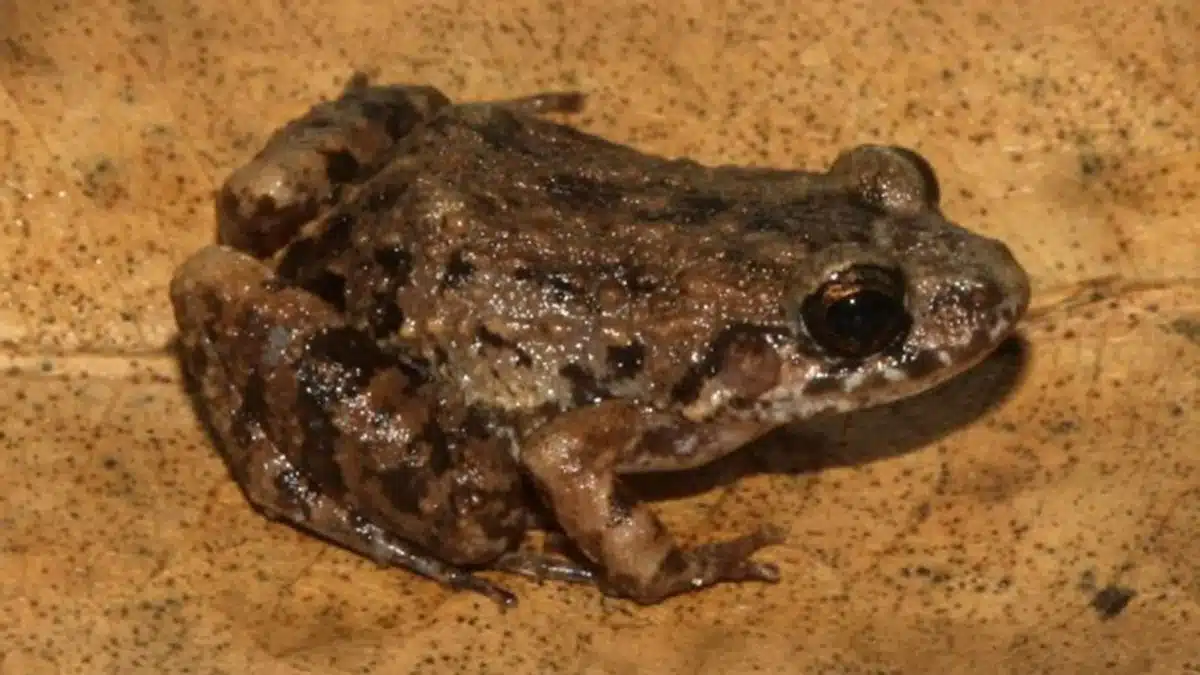 A close-up of Adenomera varcena, a frog species uncovered through DNA and acoustic analysis. Credit: Ichthyology & Herpetology
The Frog’s DNA Reveals Its Secret
Many amphibians have similar physical features, making traditional identification methods alone insufficient. The researchers found that the frog’s call contained a unique acoustic signature. Its short call, produced at a slow rhythm, showed differences that helped separate it from other closely related species. For amphibians, sounds are often an important part of species recognition because mating calls can vary significantly between populations.
As reported by Ichthyology, the researchers also found evidence that several Adenomera lineages may still remain undescribed. This suggests that the diversity of these frogs is likely greater than current scientific records indicate.
The discovery contributes to a broader understanding of cryptic diversity, a phenomenon in which organisms appear almost identical externally but represent distinct species. Such hidden diversity can influence how scientists study evolution, ecosystems and conservation priorities.
The Amazon rainforest contains countless habitats, and flooded forests represent one of the environments where researchers continue to uncover new species. The discovery of Adenomera varcena provides another example of how much remains to be documented.
Scientists Warn That Biodiversity Studies Are Falling Behind
Although Adenomera varcena has now been formally described, researchers say many questions remain about its biology. Scientists still do not have detailed information about the species’ ecological requirements, reproductive period or natural history.
“Since we don’t yet know in detail the species’ ecological requirements and its natural history [reproductive period and mode], it’s difficult to predict the impacts of climate change, which may alter the seasonal flooding patterns of the floodplain forest ecosystem in this region of the Amazon,” said Thiago R. Carvalho, co-author of the study.
The researcher explained that because the frog appears to depend on this particular flooded forest environment, changes in seasonal flooding patterns could influence its reproductive behavior, although the extent of these effects remains unknown.
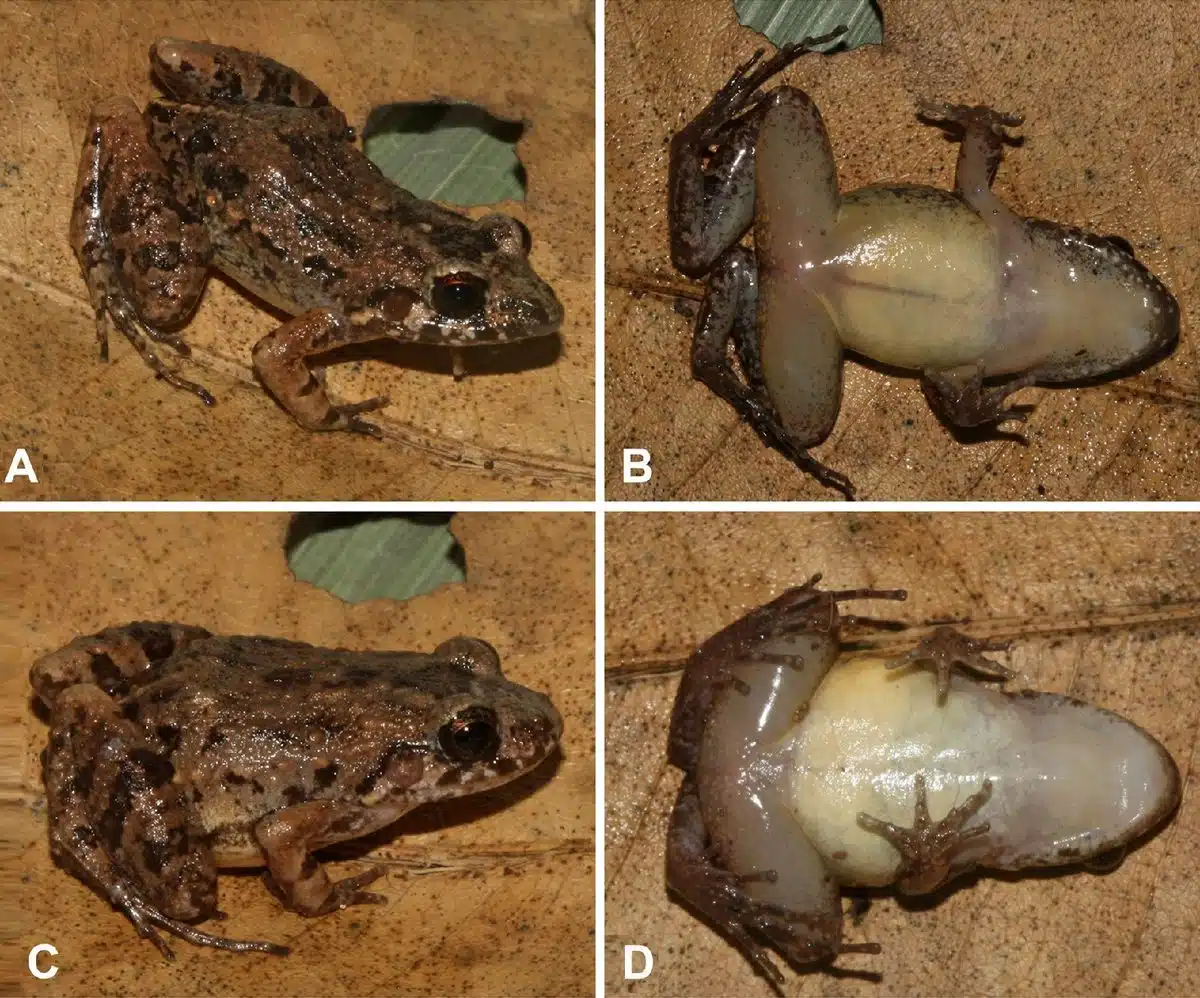 The images show dorsal and ventral views of Adenomera varcena. Credit: Ichthyology & Herpetology
The discovery also fuels concern that species are being lost before researchers have had the chance to document them. Célio F. B. Haddad, a professor of Vertebrate Zoology, said that many species risk remaining unknown because scientific descriptions cannot always keep pace with ecosystem destruction.
“Currently, the pace of ecosystem destruction outpaces the capacity of taxonomic studies to keep up,” Haddad said. He added that “describing new species serves as a tool that aids in their protection. Furthermore, deepening our knowledge of actual biodiversity expands our understanding of the evolution of organisms.”