
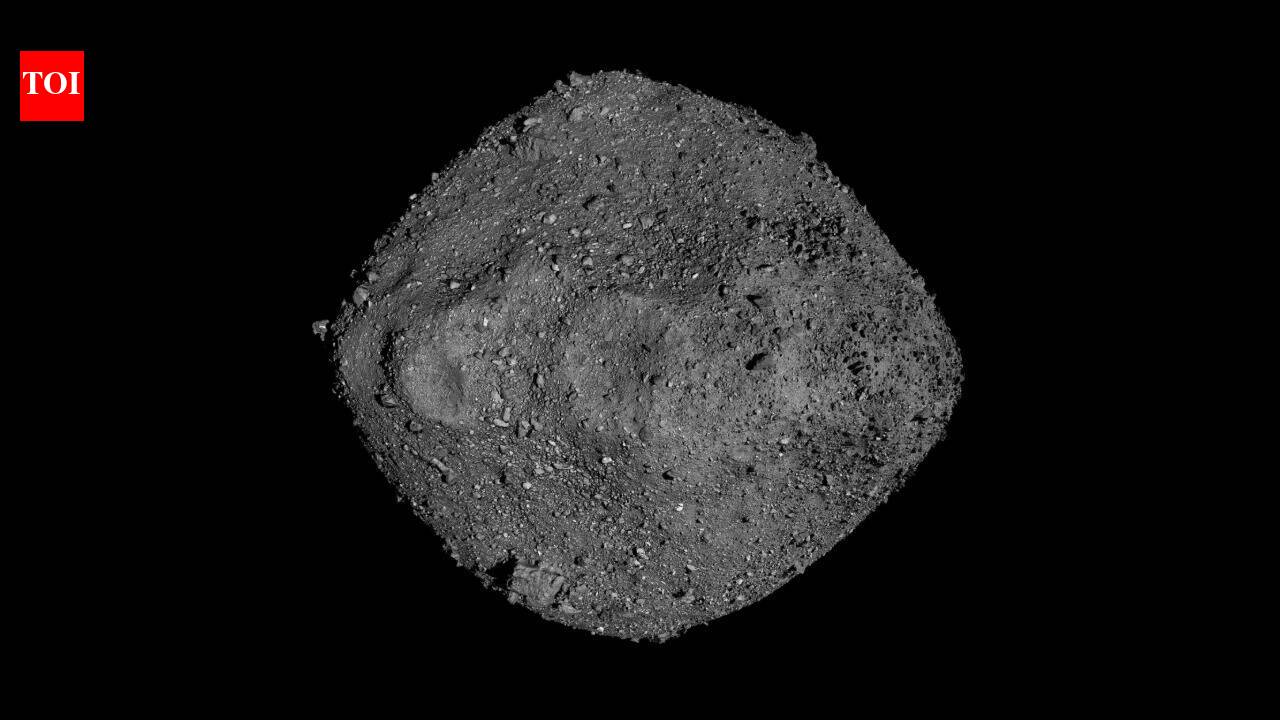
 This mosaic of Bennu was assembled from observations gathered by NASA’s OSIRIS-REx spacecraft that orbited the asteroid for more than two years. Credits – Wikimedia Commons In the public imagination, asteroids have long been thought of as dependable solid ground, pieces of old rock floating through space like they have for billions of years. Mission scientists anticipated something solid enough to sample cleanly and then depart mostly undisturbed when NASA launched a spacecraft to actually touch one and bring a piece home. Instead, what they received disproved preconceived notions about the structure of these creatures.The mission was OSIRIS-REx, and the target was Bennu, a carbon-rich near-Earth asteroid about the height of the Empire State Building. The spacecraft had already been in orbit since December 2018, mapping Bennu in extraordinary detail before committing to the tag attempt, and its sampler was designed to fire nitrogen gas and capture regolith from the top layer rather than drill. The mission tried its long-planned Touch and Go operation on 20 October 2020, extending an eleven-foot robotic arm to briefly push a sampling head against Bennu’s surface, after over two years of surveying the asteroid from orbit. The spacecraft fell almost half a mile towards the surface before making contact at a place the scientists had named Nightingale, marking the first time it had touched the asteroid at all, NASA said.A surface that behaved like a fluidEngineers developed the sample head, called TAGSAM, to briefly kiss Bennu for a few seconds, blow a puff of nitrogen gas to stir up dust and rocks, and then pull away quickly before plunging in too deep. That plan had expected the surface would have offered some resistance, at least. Instead, the head kept going as it hit bottom, falling into loose gravel and rubble with absolutely nothing to stop it, more like the surface of a ball pit than a solid planetary body.By the time the onboard timers finally triggered the backaway thrusters, nine seconds or so after impact, the arm had already sunk about 20 inches into the asteroid, far deeper than the mission planners had expected. NASA’s Goddard Space Flight Centre provided detailed film of the event, showing the firing thrusters sending up a massive wall of debris that temporarily obscured the spacecraft’s cameras. It was later estimated to be about six tonnes of displaced rock and dust thrown outward from the collision site.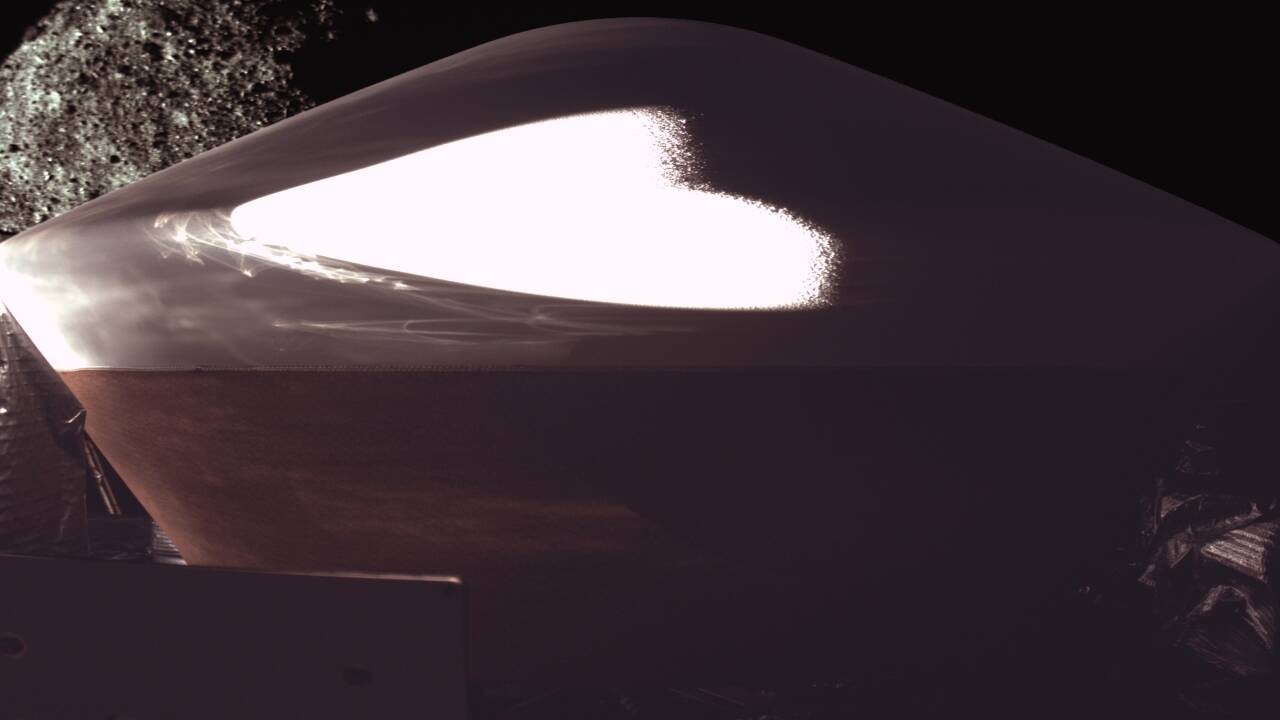
Image of OSIRIS-REX’s sample return capsule (SRC) with asteroid Bennu in the background. Credits – Wikimedia Commons
What the Rubble Reveals About Ancient WorldsThe magnitude of that response offered scientists a significant clue about how Bennu, and perhaps many other minor asteroids like it, are actually held together. These bodies aren’t solid rock but what scientists call rubble piles – loosely bound collections of boulders and gravel that reaccumulated after some ancient collision smashed apart a larger parent body. The gravity on Bennu is so low that the upper strata are scarcely crushed; therefore, individual rock fragments have virtually little cohesion between them, more like a granular material than a solid rock face.This information is important for far more than just scientific curiosity. Bennu is classified as a potentially hazardous asteroid, and knowledge of how its surface might actually respond to contact has immediate ramifications for any future endeavour to research, redirect or even land on such things. Later, the mission team at the University of Arizona, which ran science operations for OSIRIS-REx, confirmed the sampling head had landed within about three feet of the planned target, a precision that made how deep it sank all the more surprising, given how carefully the approach had been planned.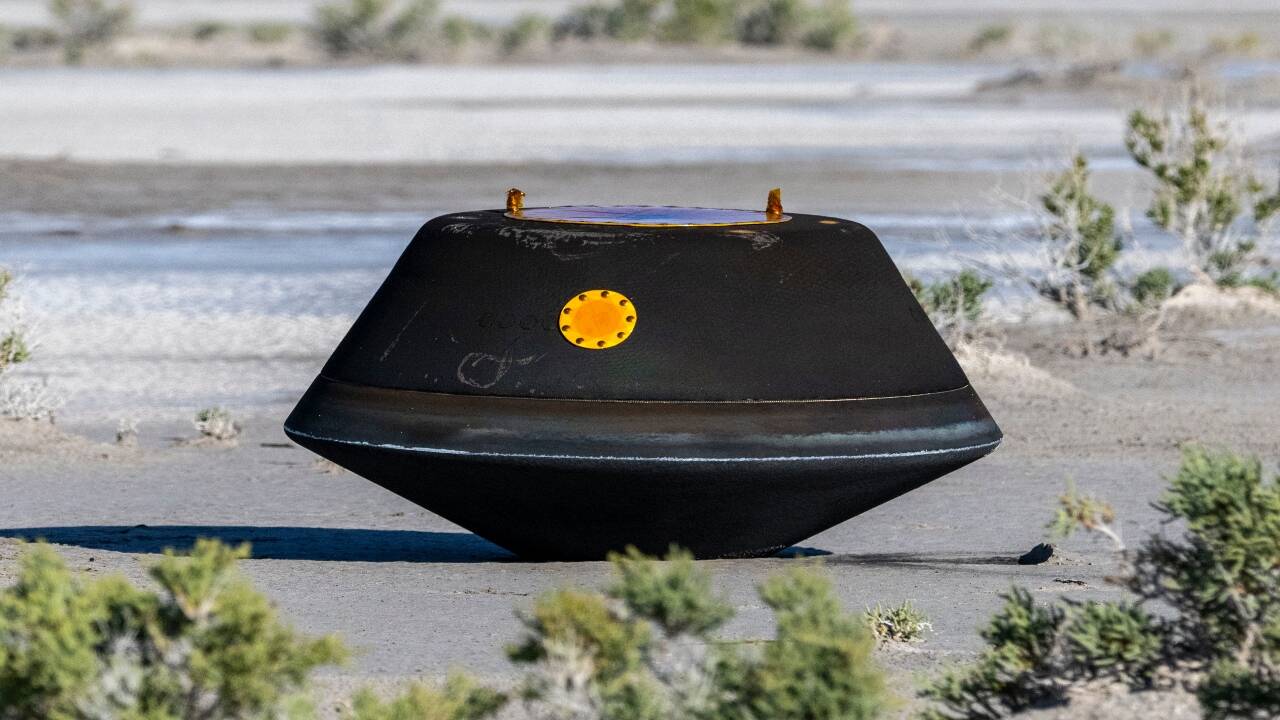
The sample return capsule from NASA’s OSIRIS-REx mission is seen shortly after touching down in the desert. Credits – Wikimedia Commons
Taking home a bit of that mysteryThat touchdown was more successful than mission planners expected. OSIRIS-REx recovered significantly more material than its minimum aim of 60 grammes, so much so that loose rock fragments blocked the sample container’s lid partway open, requiring the ground team to stow the valuable cargo more swiftly than initially planned to avoid losing any of it to space. The spaceship lugged its cargo for more than two years before parachuting the sample capsule onto the Utah desert in September 2023, giving scientists their first direct look at material mostly untouched since the early days of the solar system. The deep plunge prompted scientists to rethink ideas about how asteroids form.