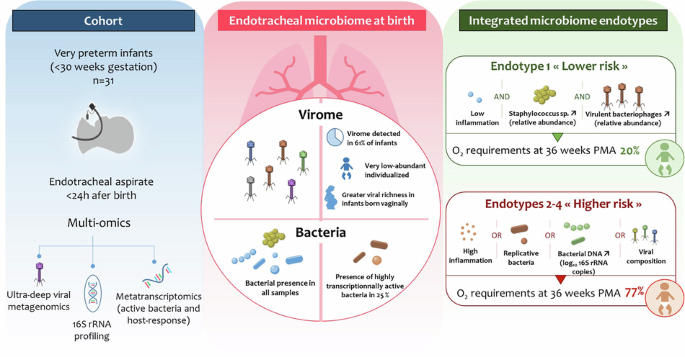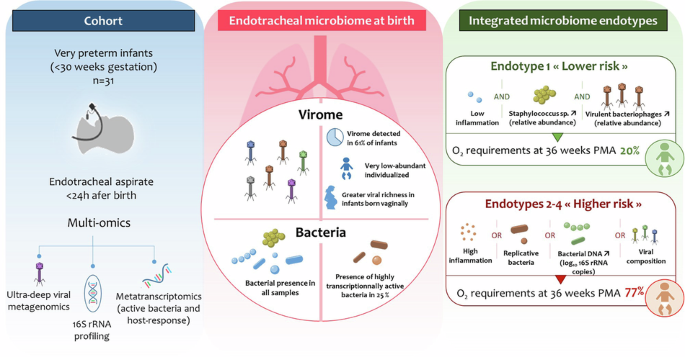
Bronchopulmonary dysplasia (BPD) is a major complication of prematurity with unclear pathogenesis. While bacterial dysbiosis has been implicated, the role of the virome remains largely unexplored. We analyzed endotracheal aspirates from 31 very preterm neonates (<30 weeks gestation) collected within 24 hours of birth using ultra-deep viral metagenomics, 16S rRNA profiling, and metatranscriptomics to assess transcriptionally active bacteria and host responses. A very low-abundance individualized virome, including mainly unclassified Caudoviricetes bacteriophages, was detected in 61% of neonates, with greater viral richness in those born vaginally. Multi-Omics Factor Analysis identified four microbial neonatal endotypes, including one with low inflammation, higher absolute abundance of Staphylococcus sp., higher relative abundance of virulent bacteriophages, and associated with reduced risk of oxygen requirement at 36 post-menstrual age (20% vs. 77%, p = 0.03). Other patients clustered into higher risk-associated endotypes exhibiting distinct viral and bacterial compositions, suggesting that different pathophysiological pathways leading to subsequent oxygen requirement, in line with the multifactorial nature of the disease, might be linked to microbiome acquisition. Longitudinal studies are needed to determine how early viral acquisition shapes microbial endotypes and BPD progression, potentially enabling personalized, microbiome-targeted interventions in preterm neonates.