
There’s nothing like whiling away a few hours in a gallery or museum. These public spaces provide welcome distraction from daily worries and obligations pinging from nuisance phones – once you remember to put them on silent and lodge them deep into your pocket. You can immerse yourself in art or history, in beauty and stories, and forget yourself, just for a while.
They are unique places, not just because they are home to important objects of interest, but because so many people are privately and simultaneously experiencing emotions and ideas evoked by what they see.
The sheer volume of exhibits can be overwhelming; it’s easy to feel you could never spend enough time in a museum to truly take in all that is on offer.
But what about the people who spend their working days among the exhibits? What is it like to have unrestricted access to some of Ireland’s most celebrated artworks and artefacts?
From security guards to volunteers, we asked the people who work behind the scenes in museums and galleries around the State to tell us about their jobs, and their favourite exhibits.
‘Kids bring a fascination to the place. Especially if they have seen the Night at the Museum movies’Derek Flynn, deputy front of house manager at the National Museum at Collins Barracks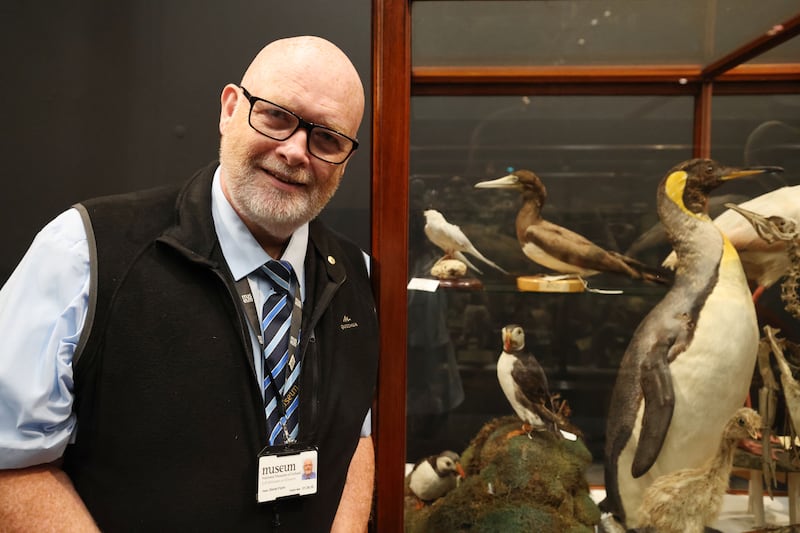 Derek Flynn, visitor services and security officer at the National Museum of Ireland Collins Barracks, with ‘Dead Zoo’ exhibits. Photograph: Alan Betson/The Irish Times
Derek Flynn from Dublin has worked at the National Museum for 7½ years, first at the National History Museum on Merrion Street and now at Collins Barracks where the Dead Zoo Lab is located while the Merion Street premises is being refurbished. He is also a keen wildlife photographer.
“I’m one of the duty managers in the building, so I monitor the whole place. If I’m working at the Dead Zoo Lab, we generally clean down the [display] cases first thing – kids love to paw at them – and we have to make sure everything is ready.
“Kids just love it. They bring a fascination to the place, especially if they’ve seen the Night at the Museum movies. Sometimes they’ll walk in and, all of a sudden, they’re hesitant. And just for a laugh, I’d say, ‘It’s okay, they were fed last night’,” in reference to the stuffed-animal exhibits. “And it kind of breaks the mood. And when they’re leaving, they can’t wait to come back.
“We have fun with the adult visitors coming in, especially tourists. They’d walk in in awe when they see the giant Irish deer, and they’d say, ‘Oh, look at the elk!’ And I joke with them: ‘If you insult that deer again, you’ll be thrown out’.
“You can get up close to animals you’re never going to see up close anywhere else.”
Favourite exhibit: Puffins feeding their puffling in a burrow
“When puffin season comes around, myself and a group of friends would be off down to the Saltee Islands in Wexford to spend the day among the puffins.
“They arrive from late March, early April until early August, having spent the majority of their year on the Atlantic.
“Puffins mate for life and they only come to land to breed. They lay just one egg and everything they do while on land goes into raising that puffling.
“They love the likes of rabbit burrows, on the top of the cliffs, and you’d see them going into the soil where they’ll actually excavate their own burrow.
“They’re a fantastic little creature. People don’t realise that the beak only gets its bright colour during breeding season, so the rest of the year, the beak would be dark and dull coloured.
“And they’re a friendly little bird. We would generally just sit on the island and watch them flying in, flying out. And when they land, they come up beside you..
“I was lucky enough last year to photograph the first puffling on the island.”
‘I always tell people there is no pressure, you can like or dislike the art’Anastasia Malynovska, front of house at Limerick City Gallery of Art (LCGA) 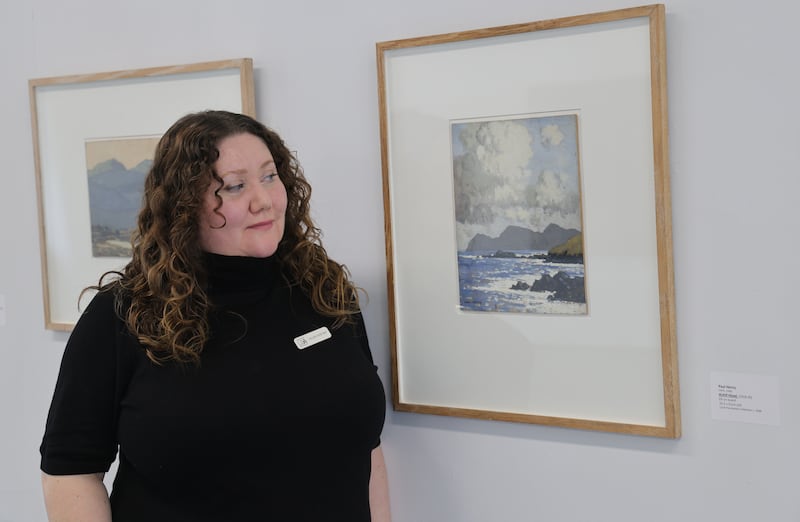 Anastasia M, who works at the Limerick City Gallery of Art, with the Paul Henry painting Achill Head (1918-20) from the LCGA permanent collection. Photograph: Bryan O’Brien/The Irish Times
Anastasia Malynovska moved from eastern Europe to Limerick three years ago and has been working at LCGA for 2½ years. Trained as an architect, she is particularly interested in how the Carnegie Building, originally a library, works as a home for contemporary art exhibitions.
“During your daily working life, you don’t ordinarily have time to be part of the art world, but now I’m happy almost every day as I get to be in the gallery. This is the best job I have ever had.
“It’s interesting for me to investigate the building and how it works. The spaces change for each exhibition – by painting the walls or adding partitions – and it’s wonderful to see how it’s done.
“As a front-of-house assistant, I greet people, give them some information about our exhibitions and direct them where to go. Sometimes people step into the gallery, and they stop in shock because they didn’t realise it was here [beside Limerick’s People’s Park]. I always tell people there is no pressure, you can like or dislike the art. I believe contemporary art makes you think, and makes you feel. Sometimes you can just be impressed with an idea, other times you just like how it looks, and you can’t understand exactly why.
“We usually meet the artists of new exhibitions, and I love talking to them and getting the inside information about what inspired them and how they created their work.
“People ask me a lot if I get bored in the gallery or tired of looking at the paintings and I really never do. I can always spot something new in the artwork that I hadn’t noticed before.”
Favourite exhibit: Achill Head by Paul Henry (1920)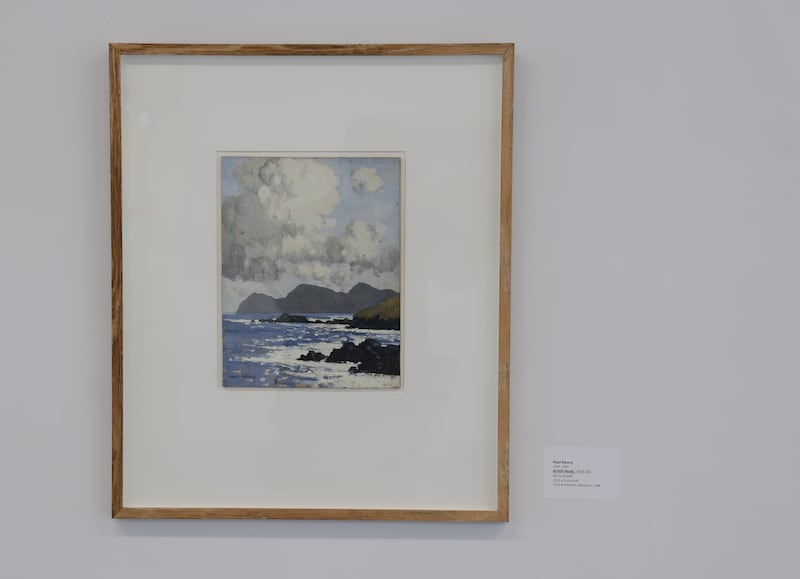 Achill Head by Paul Henry. ‘It’s pure nature, it’s pure Ireland.’ Photograph: Bryan O’Brien/The Irish Times
“I would like to choose something that’s not obvious. People can just walk by this and maybe not pay attention. I like to point it out, and invite them to stand in front of it and look at it.
“It’s a beautiful, small painting by a famous Irish artist. At one time he was so popular, so people made copies of his paintings. But when I’m looking at this painting, it’s pure nature, it’s pure Ireland, and I feel something I can really understand without words.
“It’s important to find this connection. For me, it has been a way to find a sense of belonging here. People of all nationalities and people throughout time can find a connection to this same painting.
“When you look at it, you almost feel the air. You almost feel these drops from the waves on your face. You feel this and it’s beautiful. And the light, and how it glints and catches your eye when you move.”
‘You have a connection to people you mightn’t have anywhere else’Orla Magee, volunteer at the National Gallery of Ireland (NGI)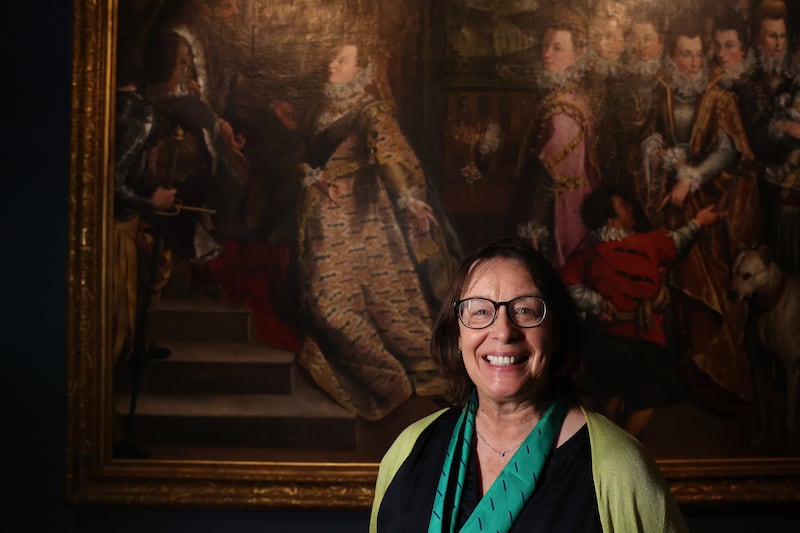 National Gallery pf Ireland volunteer Orla Magee. Photograph: Clodagh Kilcoyne for The Irish Times
Orla Magee from Dublin has always been fascinated by colour, even as a child. Her passion for art really began when she saw a Walter Osborne exhibition at the NGI in the 1980s. She has volunteered at the gallery for more than three years.
“I was attracted to volunteering by the art. If you like people and you like art and you love museums, I can’t say enough good things about it. It really is a magic mix.
“When you’re here, you really are a part of the gallery. There’s a great buzz. It’s busy, and I love the camaraderie with colleagues. That’s a big part of volunteering, being with like-minded people. You might go somewhere, visit other museums, and you come back and you share what you saw. We have a bit of fun as well.
“The best thing is people coming back to the desk to tell you about their experience. This woman came back twice recently – people get very emotional sometimes about the art – but she said, ‘I haven’t been in the gallery for such a long time, and I just want to tell you, it was the most amazing experience.’ This is another really nice thing about volunteering: you have this kind of connection to people that you mightn’t have anywhere else.”
Favourite exhibit: The Visit of the Queen of Sheba to King Solomon by Lavinia Fontana (1552-1614)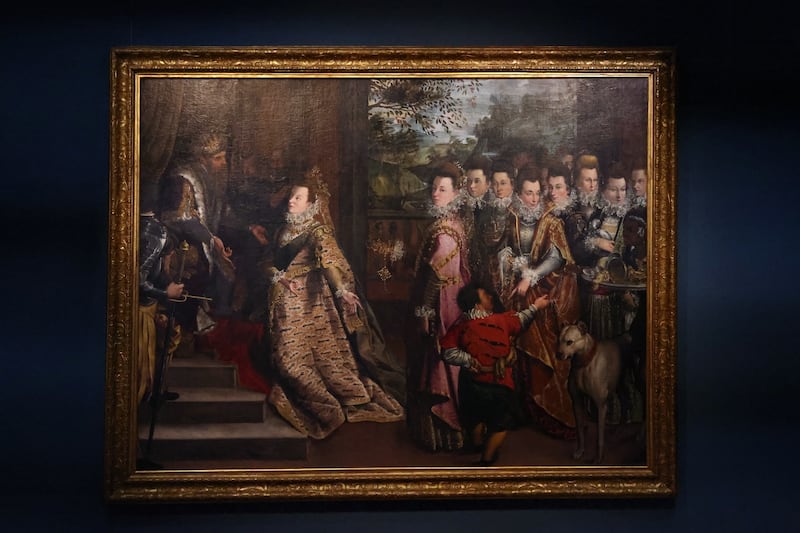 The Visit of the Queen of Sheba to King Solomon by Lavinia Fontana, at the National Gallery of Ireland. Photograph: Clodagh Kilcoyne for The Irish Times
“It’s a feast for the eyes. This painting was bought for the gallery in 1872, and it’s enormous. The gallery was only open eight years then, and they probably were saying, ‘that’ll fill up a wall’, because it is huge.
“Lavinia Fontana was some woman; [the gallery] described her as a trailblazer, so she owns that word.
“There was an exhibition when I first arrived, in 2023, dedicated to Fontana. There was a lot of buzz because this painting had just been restored and it had revealed lots of things, like a little clock in the middle, dated 1599.
“The queen was promised to King Solomon and the scene was all about him looking for an heir. There’s all these little nods to fertility, like the nest in the tree, and then there’s a little Cupid in one of the crowns. All these hidden messages.
“Look at the details, and the movement and the richness in the clothes they wore. [Bologna] was a centre of excellence for silk production, so that’s why [Fontana’s] really showing off the clothes. And the detail of the lace is incredible; every person is wearing a different, intricately detailed lace ruff.”
‘A fantastic day for me is when someone comes in and tells me something I don’t know’Tom Murphy, visitor security officer at the National Museum at Collins Barracks 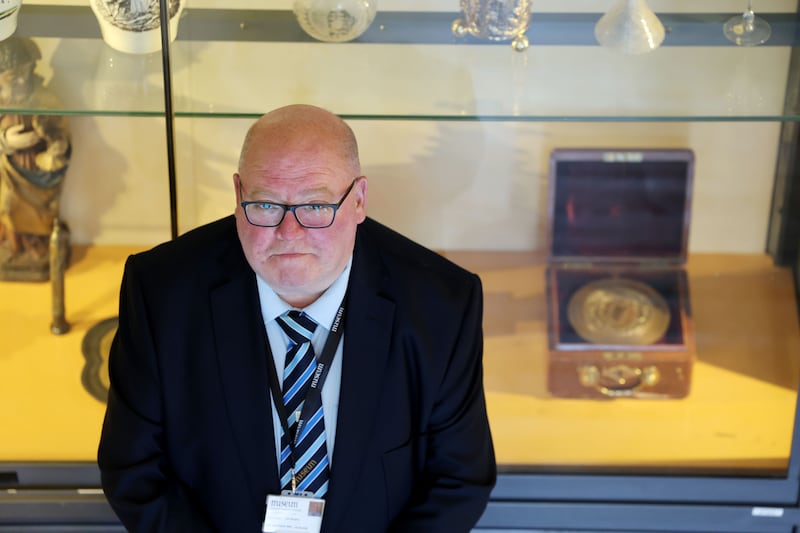 Tom Murphy, visitor services and security officer at the National Museum of Ireland Collins Barracks, in front of the Great Seal of the Irish Free State. Photograph: Alan Betson/The Irish Times
Tom Murphy has worked at different National Museum locations for 25 years. He has had a passion for Irish history from an early age and used to mitch off school to visit the National Museum in Dublin.
“If someone comes in the door and I’m at the reception and they ask about what’s here, I ask, what are you interested in?
“We have a few museums in one here at the moment: we have decorative arts and history, military history, natural history and we also have maritime, so you have to narrow it down to what you’re interested in.
“It’s the only time I can tell people to ‘get lost’ and not get into trouble, because you will stumble across something you love.
“When you see people coming in, after 25 years, you have a feeling as to what they will be interested in. If they come with small children, you know it’s going to be natural history. If you come with teenagers, it’s military history.
[ Irish museums hold artefacts from around the world. Should they give them back?Opens in new window ]
“A fantastic day for me is when someone comes in and tells me something I don’t know. I love it when soldiers come in that served here [when it was an active army barracks] and the stories they have, because they’re telling me their own history.
“And what I love about the people [who work at the museum] is they won’t call themselves experts. They’ll say, I know this, but I want to know more. If you ask them a question, whatever they’re doing, they’ll stop and talk.”
Favourite exhibit: The Great Seal of the Irish Free State, circa 1925
“This would have been the official seal used on all official government documents. That’s a brass-coloured counterpoint that we can see in the exhibit, and the other half, which is steel, is underneath. You clamp the two together and it would make an embossed seal. It’s also the seal that is on the Irish coinage.
“It was designed by Archibald McGoogan – he was the first photographer of the National Museum of Ireland; he worked here, and then he became a curator.
“Even the filigree around the edges, that is the base of the Ardagh chalice, and in the centre is Brian Boru’s harp [or the Trinity College harp]. It’s the same seal still used on Government documents today, only now it’s printed.
“The museum got this in 1939, and then 2007, we even got McGoogan’s original plans for it. It’s just an extremely interesting artefact that is very integral to Ireland, but it also has a museum connection.”
‘As my father used to say, every day is a school day’Martin Tyndall, security guard at Galway City Museum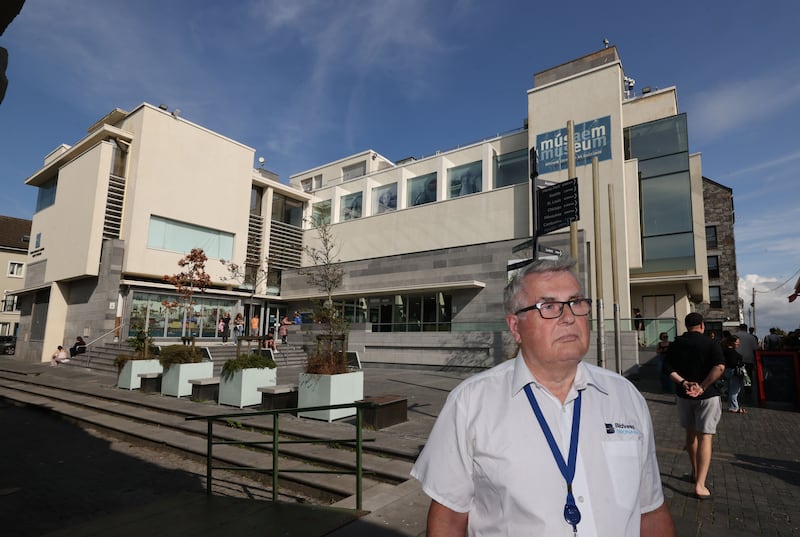 Martin Tyndall at Galway City Museum. Photograph: Joe O’Shaughnessy for The Irish Times
Martin Tyndall, from Galway, worked in security for 10 years before starting his part-time job at the museum last year.
“I retired two years ago. There was a part-time job coming up here, so I said I’d take it, and I love it. The staff are very nice and the crowd coming in, the public, 99.9 per cent of them are lovely.
“We get a lot of kids visiting, they do the Lego treasure trail. On each floor they have a little Lego monster in a plastic display case, they’re hidden around the building, and the kids go and find them and tick them off, and at the end they come back to the reception and they get a certificate. It’s a bit of fun, and they learn things even though they don’t realise they’re learning.
“Here, you learn something new every day. As my father used to say, every day is a school day.
“Even myself, born and raised locally, when I came here first, there were things I never knew. Like a couple of the road names around, Seamus Quirke was one of them, and Thomas Hynes – they’re in an exhibit here – they were IRA volunteers that were shot; you find out small things like that.”
Favourite exhibit: Survivor Stories: Tuam and Ireland’s Institutional Past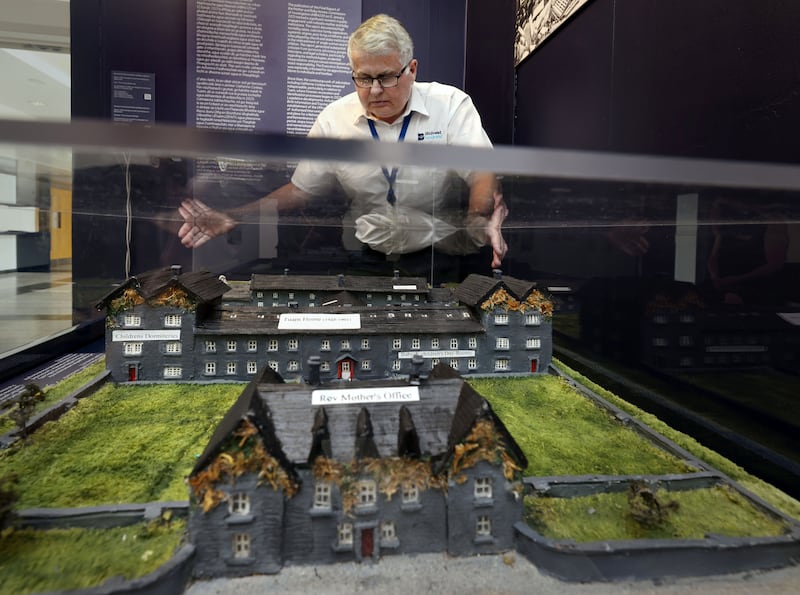 Security guard Martin Tyndall at the Survivor Stories exhibit at Galway City Museum. Photograph: Joe O’Shaughnessy for The Irish Times
“Survivor Stories is about the Tuam mother and baby home. It opened during the summer. It’s very popular with tourists and locals alike.
“They have a portrait of each survivor on the wall and their written testimony below it, detailing their circumstances. It’s not something that happened 100 years ago, 200 years ago. It’s only recent history.
“The opening night of the exhibition, for a sombre affair, it was lovely. It was nice to have a singsong and everybody was in good form. The survivors were there, the people from the display.”
‘I can really enjoy a couple of well-placed fire extinguishers, just as much as I can enjoy a piece of fine art’James Doyle, building operations manager at the Irish Museum of Modern Art (Imma)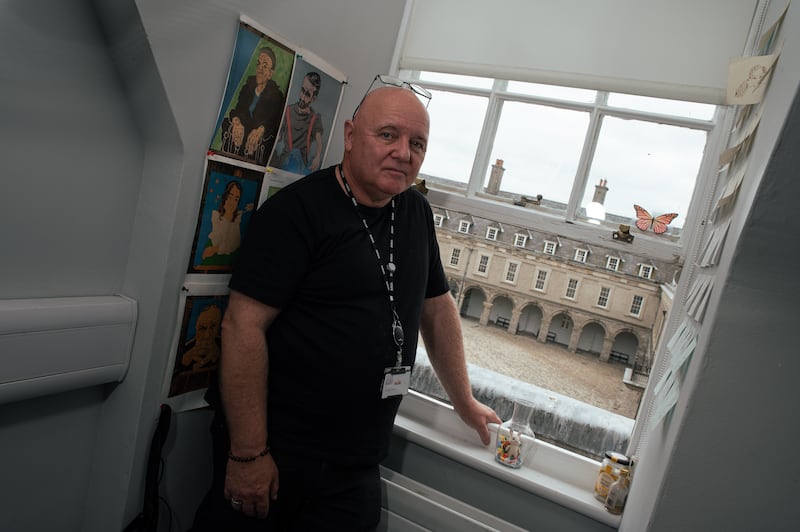 James Doyle in his office at the Irish Museum of Modern Art with some of his own paintings behind him. ‘I couldn’t work anywhere else. I really couldn’t.’
James Doyle’s love of art began in childhood when illness precluded him from playing sport. Originally from Co Carlow, he has a degree in fine art from the Chelsea College of Arts in London and has had a varied career in arts and cultural policy. He has lived in Manchester, Brussels, Guinea Bissau and Dublin, and joined Imma in 2022.
“My job is physical – sorting things out, problem solving and making sure that everything’s right so that all the complex art programming can go on. That means toilets and the car park and the paintwork and the brickwork and the windows.
“It’s very regimented, and we’ve got task lists and checklists for nearly everything. I spend a lot of my time wandering around looking at things.
“I’m embarrassed to say I can really enjoy a couple of well-placed fire extinguishers, just as much as I can enjoy a piece of fine art.
“There’s a huge satisfaction knowing you’re underpinning the [museum’s] activity. You’re doing the groundwork that makes it all run smoothly. Are the gates open? Are the doors open on time? Are all the doors working? Are all the hinges working? I couldn’t work anywhere else. I’d have no interest whatsoever.
“There’s a couple of public sessions where artists who are resident here talk about the art and I’ll join those if I can find the time.
“When you hear what somebody else has got to say, you start to question yourself and say, ‘oh, I hadn’t thought of that’.”
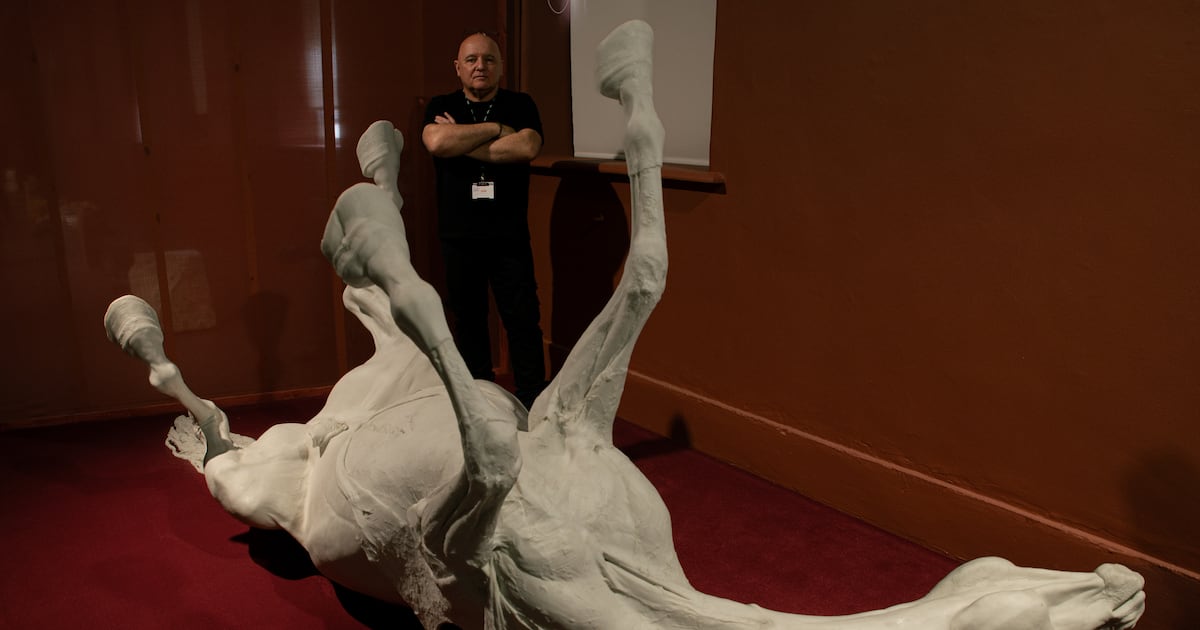
Favourite exhibit: Stallion (2009) by Daphne Wright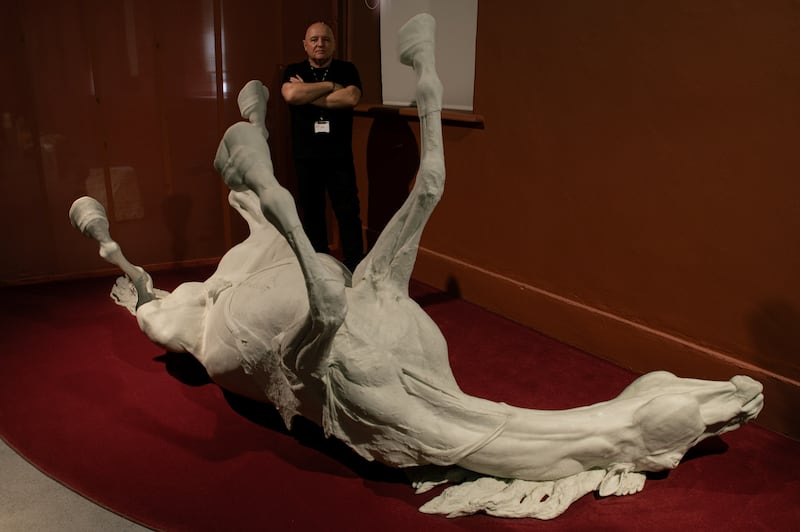 James Doyle, operations manager at Imma, with Daphne Wright’s Stallion
“It’s very much a sculptural piece, like you might see in Rome or associate with the famous sculptors we all know. I’ve chosen it because it’s very different, very unusual.
“From a distance it looks like a horse writhing on the ground and enjoying itself. When you get up to it, you actually see that it’s a horse that’s been killed and had its skin peeled back. That makes for a very challenging topic, about the nature of animals and slaughter and all kinds of things.
“It’s very contemporary in its interpretation, and it kind of speaks to Dublin’s sense of self. Dublin, for me anyway, has always been associated with horses. And we had, until recently, one of the last horse fairs in a capital city in Europe, in Smithfield.
“It also speaks to Misneach [by John Byrne], a sculpture of a horse mounted by a young lady wearing a tracksuit, which is in Ballymun, in that it subverts those military horse bronzes.”