
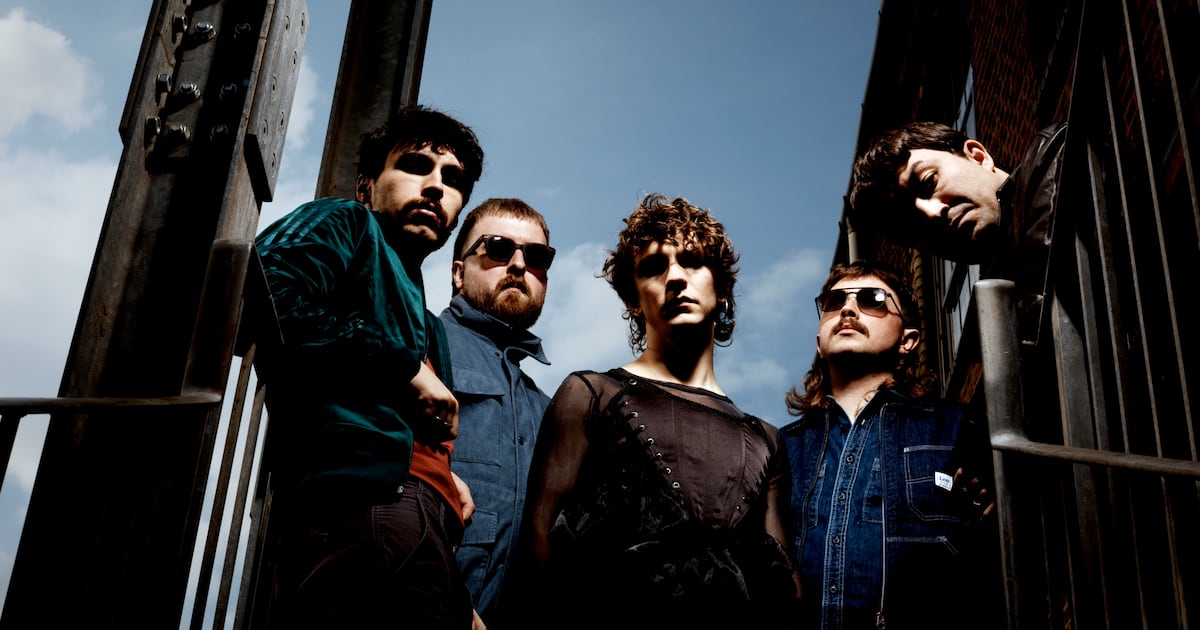
The most agonising nine hours in Pierce Callaghan’s life was a drive in a tour bus from Prague to Vienna that he experienced through the business end of a biblically crippling hangover.
“I remember coming home from a tour that we did. It might only have been, like, a week, week and a half. And I genuinely think I had alcohol withdrawal,” the drummer with Gurriers recalls in the shellshocked tones of someone recalling their time in the trenches.
With a shudder, he describes staying up all night drinking in Prague hours before Gurriers were due to drive across central Europe for their next gig. When the group assembled in their tour bus the following morning, his bandmates immediately clocked that he was in the horrors – and found his predicament hilarious.
“There is a distinct lack of sympathy in all directions. I’m a complete wind-up, like; then, when I’m in the position where I’m a little bit tender, I’m getting it from every direction. I deserved it,” he says, laughing.
The incident was born of youthful exuberance shortly after the release of Come and See, the debut 2024 album from the acclaimed Dublin postpunk band, when they were heralded as heirs to Fontaines DC’s crown.
“When we went on the first big tour after we released the first record – at one stage we did eight, nine shows in a row. The last one before a day off, we played in Prague,” Callaghan says.
“A load of my mates came out for the weekend. I remember going out afterwards and getting pissed; got into the hotel at probably, like, 7am, had my bag in the van at 9am. We were driving to Vienna – driving for nine hours. And I was hanging.”
The anecdote gets a laugh from his bandmates, who are dialling in from various locations. As they join the Zoom call, it’s immediately obvious that the group, so raw and furious on record, are in an upbeat, even jolly frame of mind before the release of their second album, Nobody’s Coming to Save You.
But they’re also upfront about having accumulated a lot of hard-won wisdom since they formed, in 2020, when they held their first rehearsal weeks before lockdown. They’ve learned to curb their partying, appreciating that excess is a fast track to burnout.
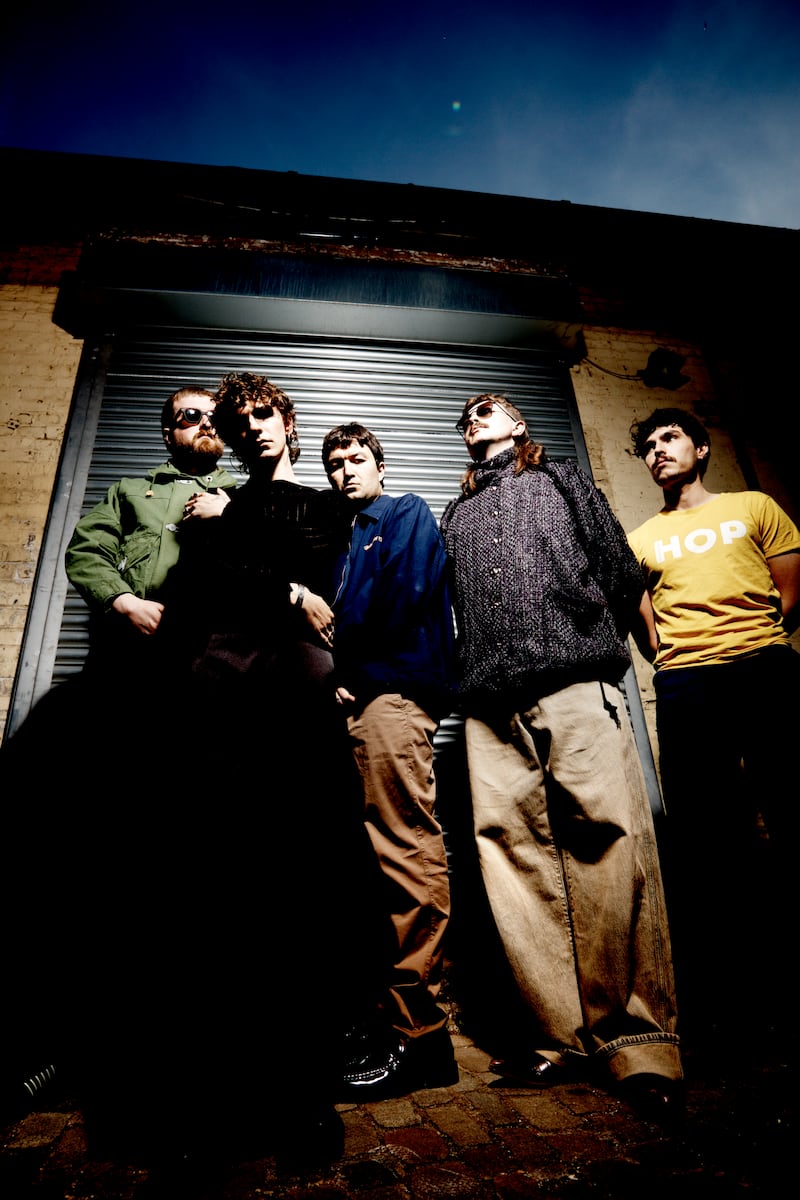 Gurriers were determined to go out on a limb, and so, while their second album replicates the storm and fury of its predecessor, it also takes a risk by introducing a punk-funk element.
They’ve become increasingly mindful, too, of their emotional health – something they need to look after in an industry that is notoriously tough on mental wellbeing.
That process includes showing kindness towards one another and, self-inflicted hangovers aside, being aware of their bandmates’ frailties, Dan Hoff, the band’s singer, says. He has taken mental-health breaks from Gurriers when he has felt the need to decompress from touring. Self-care is something he’s mindful of, having left his previous band because of the anxiety he experienced at the time.
“It’s about complete honesty,” he says from his flat in Dublin. “I’m on medication. I’m going to go to therapy. I try to talk about my mental-health issues the same as if I have a common cold.”
Attitudes towards mental health have come a long way, but there is still a stigma to it, Hoff says. “If the people around you are more educated about what is wrong – well, not wrong with you, but what you have – the easier it is to navigate things.”
Come and See was a big hit with critics, and Gurriers could have easily cranked out a facsimile.
But they were determined to go out on a limb, and so, while their second album replicates the storm and fury of its predecessor, it also takes a risk by introducing a punk-funk element, resulting in new songs that have the feel of a riot at a discotheque. They may no longer drink their way through tours, but creatively they’re still living on the edge, pushing things to the limit.
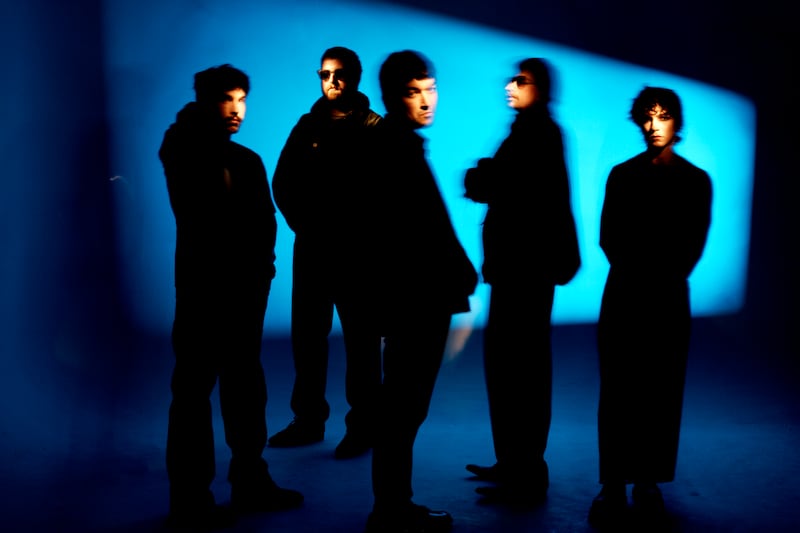 Gurriers. Photograph: Steve Gullick
“We could have very easily pigeonholed ourselves and made a Come and See II,” Hoff says. “But if you want to be in a band and you want to prove to yourselves and to your audiences that you can evolve and push the envelope further, why not take risks and go for it?”
What hasn’t changed is the political element in Gurriers’ writing. Just as Come and See addressed the rise of the far right in Ireland (Approachable was a viciously humorous takedown of the National Party), so Nobody’s Coming explores subjects such as the war in Sudan and the slaughter of innocents. (“We wash this blood off of our hands,” Hoff howls on the band’s single Party Lines.)
They feel strongly that musicians should stand up for what they believe, and were proud to withdraw from the South by Southwest (SXSW) in Austin, Texas, in 2024 after Kneecap’s manager, Daniel Lambert, told them the event was sponsored by the US military and defence contractors connected to the war in Gaza.
The drama started the day before Gurriers were due to play at the influential festival, by which point they were already in Texas and ready to go.
“I remember getting a phone call off Dan Lambert the night before. We were playing on the Monday, and he rang me on the Sunday night, saying, ‘We’re not [participating in SXSW].’ They’d been in America and they were coming home,” Callaghan says.
“We spoke to the other bands and took the decision to all pull out. We had the governor of Texas tell us we should all leave Texas.”
‘We’ve had our share of free margaritas. I’m not going to tell a younger musician not to go out and enjoy themselves’
— Pierce Callaghan, Gurriers
But if they remain fervently political, Hoff insists they aren’t trying to preach to anyone – and they don’t pretend to know how to solve the world’s problems. He recalls a review of Gurriers that criticised them for “saying so many political things but having no answers”.
“How the fuck am I going to have the answers?” he says. “We don’t have the answers. Nobody does.”
He believes the last thing a band should be is dogmatic. He recalls a youthful infatuation with the firebrand atheism of the scientist Richard Dawkins and the late journalist Christopher Hitchens. It ended after he decided they were as doctrinaire in their convictions as any Bible-thumper.
“I would always find them to be very preachy. Very dogmatic – which is what they’re fighting against. They’re creating their own religions, almost – Hitchensism, Dawkinsism. It made me feel betrayed by these men. I never want to be preachy. I want to tell you how it is: here are the facts, that’s how I feel about it.”
Gurriers also don’t pretend to have any answers to the thorny issue of whether the Irish music industry is doing enough to support home-grown artists. With Fontaines DC, they’re part of a generation of Irish bands that are acclaimed in Britain, where they receive much of their airplay on BBC 6 Music.
There’s an argument that British radio is far more supportive of Irish artists than RTÉ or Today FM is; look at how 6 Music championed CMAT at a time when she hardly got a look-in on daytime playlists back home.
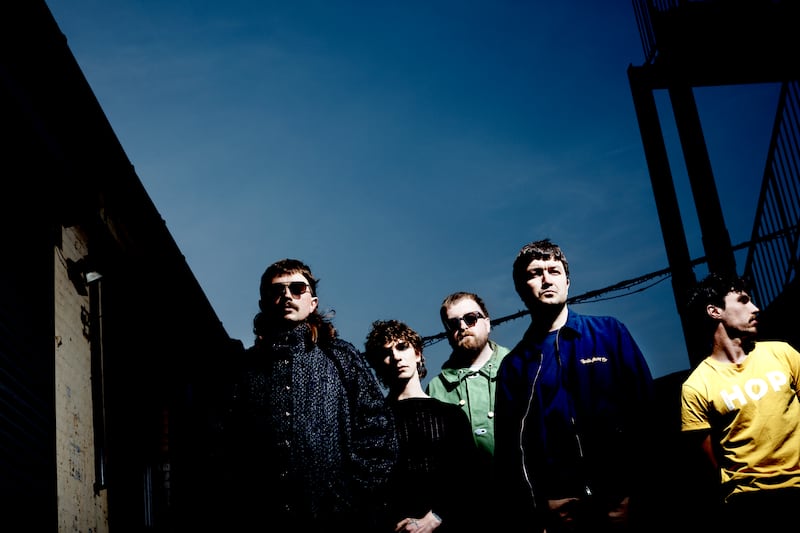 Gurriers’ frustration with the challenges of operating a band from Ireland has resulted in the band’s decision to relocate to Manchester.
There’s an obvious temptation to write off Irish radio as hopelessly behind the times and still trapped in a mindset where, if you don’t sound like Hozier or Dermot Kennedy, then you’re not getting on the radio. Gurriers say that the truth is more nuanced – and that comparing RTÉ or Today FM to a behemoth such as the BBC isn’t necessarily illuminating.
“This is not me creating excuses for RTÉ, but you’re talking about two countries of massively different sizes and massively different budgets,” Callaghan says.
“The BBC doesn’t do everything perfectly. But 6 Music have carved out a little space for alternative music, and the infrastructure is there and the support network is there from the wider BBC. When 6 Music was created you had people like John Peel.”
He believes that left-leaning voices in Irish radio were siloed off and never given any real power or influence.
“The pioneers of alternative music on Irish radio, they never got their own little thing. You think of, like, Dave Fanning – the idea that 35 or 40 years ago Dave Fanning could have been given his own radio station and that it could have developed into its own thing. It could have been an amazing thing, but it didn’t happen.”
Gurriers’ frustration with the challenges of operating a band from Ireland has resulted in the biggest change since Come and See: the band’s decision to relocate to Manchester. Hoff remains in Dublin, but his bandmates have all crossed the Irish Sea to the home town of Oasis, The Smiths and The Stone Roses – a city where the rent is comparatively affordable. There was no burning desire to up sticks, they say; the motives were largely practical.
“There’s this classic case of Irish artists, particularly Irish bands, making the move to London,” Mark McCormack, the band’s guitarist, says from his parents’ home in Castleblayney, in Co Monaghan, to which he has returned for a flying visit. (He and Callaghan grew up in the town and met at school.)
“We’re making a little bit of money – and the emphasis is on ‘a little’. Let’s not blow the whole thing on a house in London that we’re not actually going to be in.”
Manchester seemed like the best compromise. “There’s great community. It’s not too big, and serves the purpose of having a base in the UK now. The whole purpose of living in the UK is that we drive everywhere, as opposed to flying and then getting a van there. We have a van in the UK. We all pile in, we go to Calais and then we go where we need to go.”
They’ll be back on the road shortly as they gear up for a tour that will include not only a return to Texas but also a number of dates in different venues in Dublin soon, and in Belfast in October.
“We’ve had our share of free margaritas,” says Callaghan. “I’m not going to tell a younger musician not to go out and enjoy themselves. But I think you ultimately have to look after yourself and the people around you if you want to keep the show on the road.”
Nobody’s Coming to Save You is out through Pias Recordings on Friday, September 25th. Gurriers play the Grand Social, Dublin, on Thursday, September 24th. They are then at Ulster Hall, Belfast, on Wednesday, October 28th; Vicar Street, Dublin, on Thursday, October 29th; and 3Olympia Theatre, Dublin, on Sunday, November 1st