
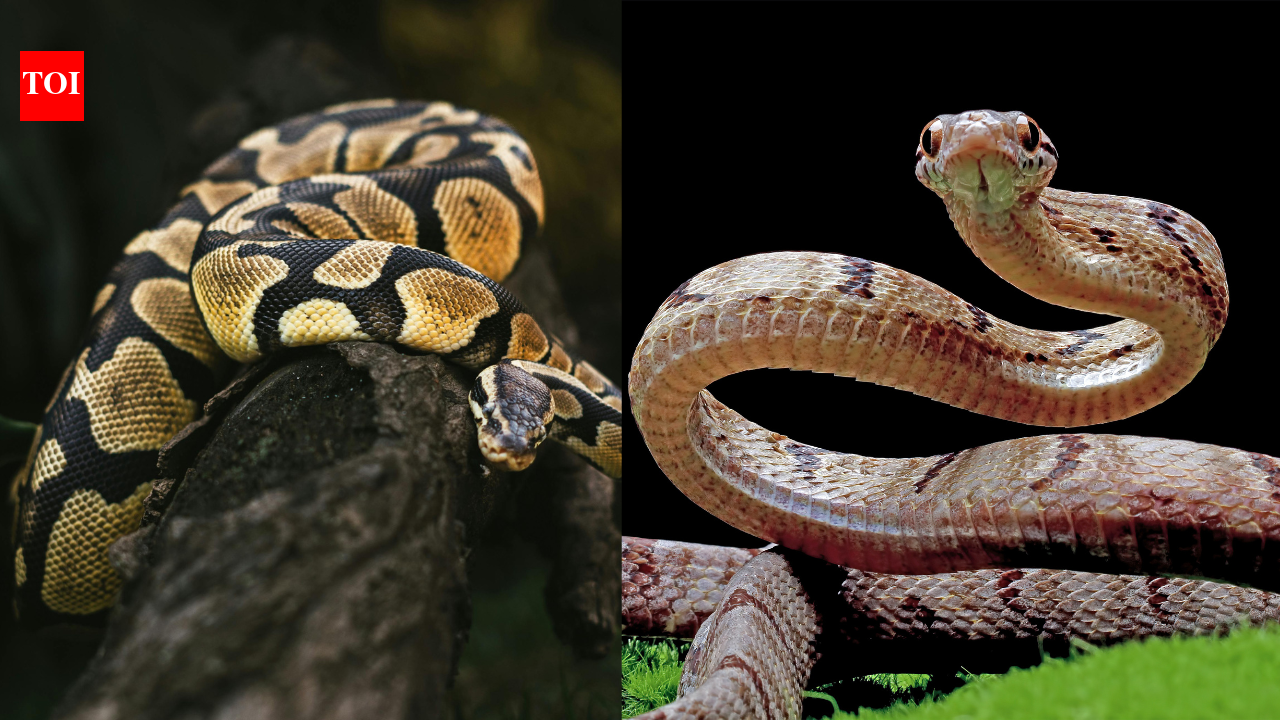
 Image: Left/Python/Right/Viper/Canva They might both command a great deal of attention (and fear), but pythons and vipers have entirely different bodies, hunting methods and ways of raising their young. While both are elite predators at the top of their game, they have evolved completely opposing evolutionary toolkits to survive, hunt and reproduce within their respective habitats across the globe. Here’s how these two heavyweight snake families actually compare.
Python vs viper: From constriction to venom, how the two snakes kill their prey
Pythons are non-venomous and rely on constriction to kill their prey, coiling their powerful bodies around an animal to induce cardiac arrest before swallowing it whole. According to BBC Wildlife, Vipers take an entirely different approach, attacking prey using long, hollow fangs that inject venom from glands located at the back of the upper jaw. There are currently around 39 recognised species of python, including the reticulated python and the green tree python, while vipers are a far larger and more diverse family, with between 300 and 400 recognised species worldwide, of which pit vipers make up the largest group, comprising over 150 species.
How python and viper bodies compare
Pythons are significantly bigger than vipers in both length and weight, with long, powerful bodies that place several species among the largest snakes on Earth. Vipers, by contrast, are comparatively stout in stature, typically featuring a more distinct narrow neck leading to a wide, triangular head, a shape closely associated with their venom-delivery system. While a python’s build reflects its reliance on sheer physical strength to overpower prey through constriction, a viper’s stockier form and specialised head shape are built around housing the venom glands and hinged fangs it depends on to strike and subdue prey.FeaturePythonsVipersVenomNon-venomousVenomousHunting methodConstrictionInjects venom via long, hollow fangsRecognised speciesAround 39300–400 (pit vipers: 150+)Body shapeLong, powerful; among the largest snakes on EarthStout, with a narrow neck and wide, triangular headNative rangeAfrica, Asia, AustraliaAmericas, Africa, Eurasia, South Asia (absent from Australia and Antarctica)ReproductionOviparous, lay and incubate eggsMostly give birth to live young; a few primitive species lay eggs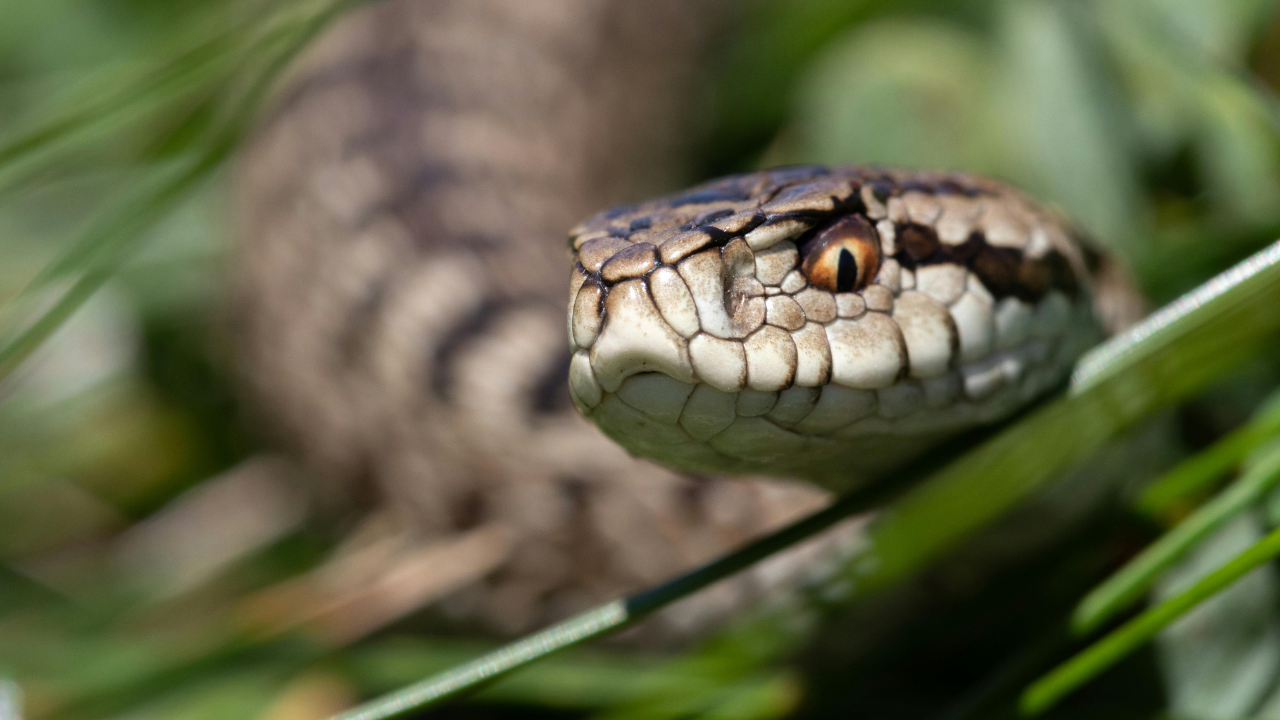
Vipers take an entirely different approach, attacking prey using long, hollow fangs that inject venom from glands located at the back of the upper jaw (Image: Canva)
Where pythons and vipers are found in the world
The two snake families also differ in where they are naturally found around the world. Pythons are native to Africa, Asia and Australia, occupying a comparatively narrower range than vipers. Vipers have a considerably wider footprint, turning up across the Americas, Africa, Eurasia and South Asia. The two exceptions are Australia and Antarctica, where none exist, so despite vipers covering far more ground overall, their range and that of pythons never fully line up. That gap in geography ties back to how differently each family hunts: constriction versus venom has pushed pythons and vipers toward separate parts of the map as much as separate body plans.
How pythons and vipers raise their young
Pythons and vipers also raise their young in markedly different ways. Pythons are oviparous, laying eggs which the females then incubate until they hatch. Most vipers, by contrast, give birth to live young rather than laying eggs, although a small number of more primitive viper species are known to lay eggs instead. This reproductive divide adds to the long list of differences between the two families, further underlining just how differently pythons and vipers have evolved to survive, despite both occupying similarly formidable positions as elite predators within their respective ecosystems.