
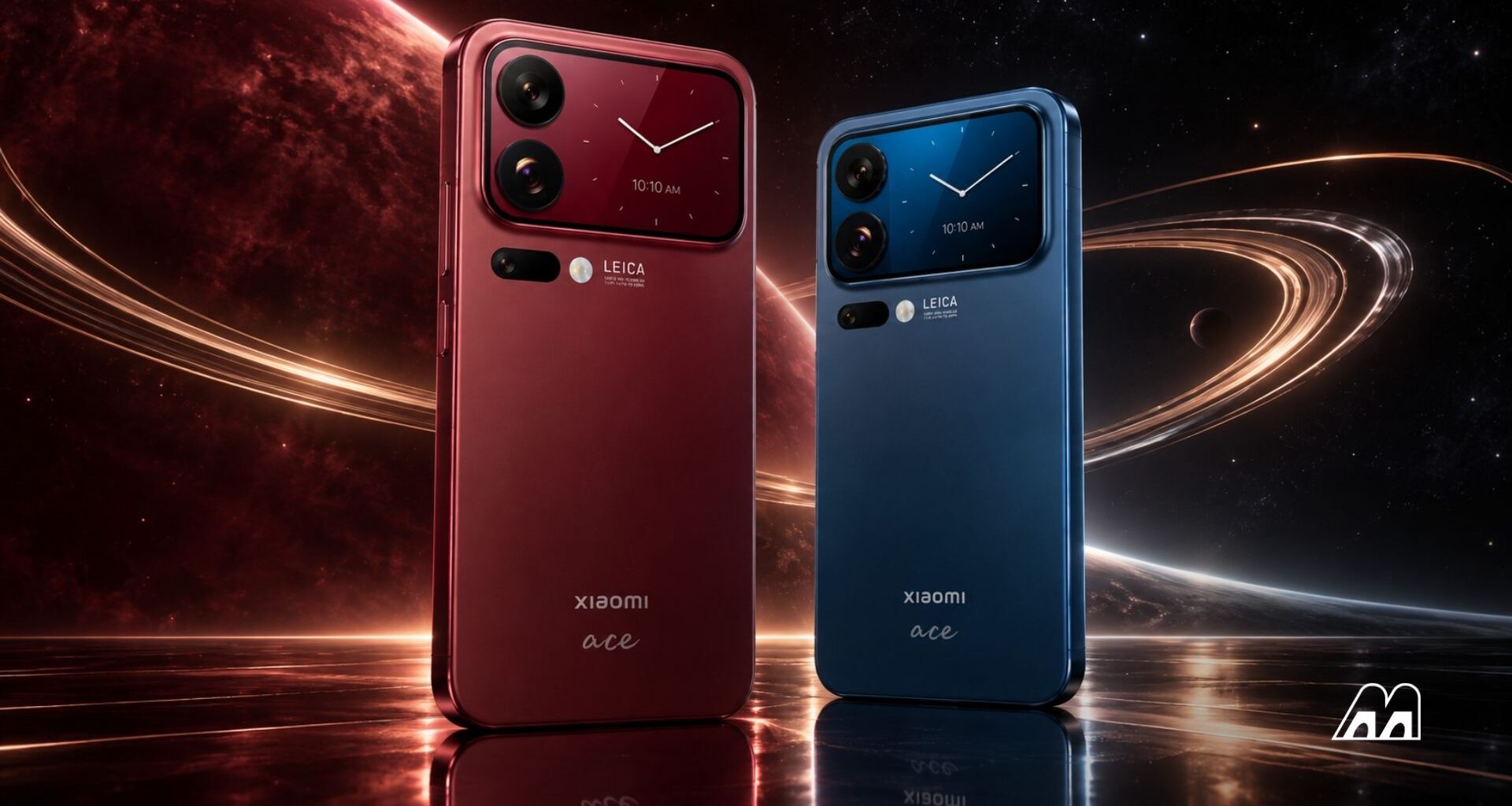
Real-life images of the Xiaomi 18 Pro have surfaced ahead of its September launch, and the most striking detail isn’t what’s been added — it’s what’s been removed. The rear camera module now sits completely flush with the back panel, creating a flat, seamless surface that marks a clear departure from the protruding camera bump on the Xiaomi 17 Pro. Here’s what the images reveal, how it compares to Apple’s approach with the iPhone 18, and why this design decision matters more than it seems.
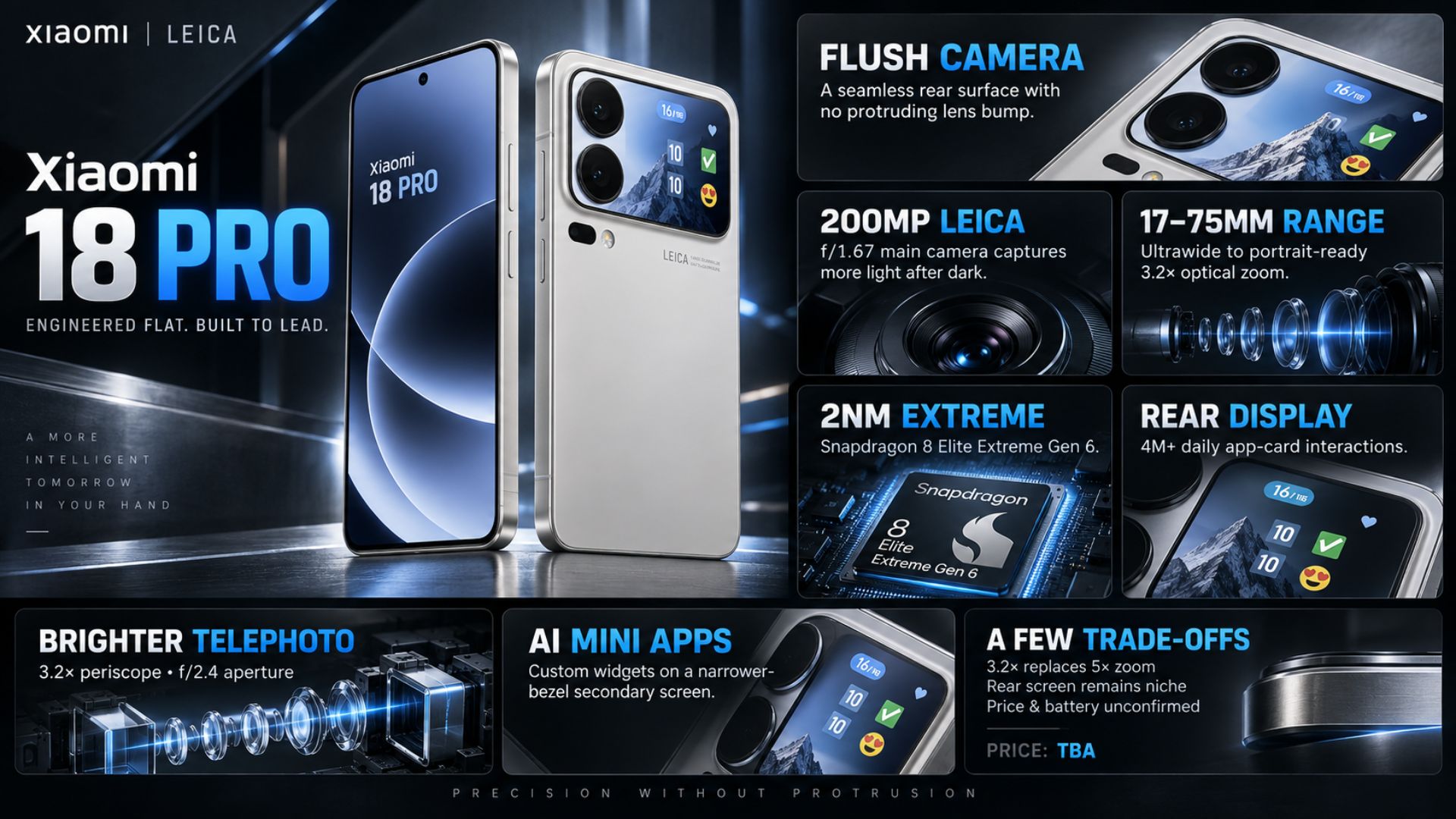
The Flush Camera: More Than Cosmetic
Let’s start with the obvious. Camera bumps have been a universal annoyance for years. They make phones wobble on flat surfaces, collect dust, and force case manufacturers to build protective rings around the lenses. The Xiaomi 18 Pro solves this by integrating the camera lenses level with the rear display panel.
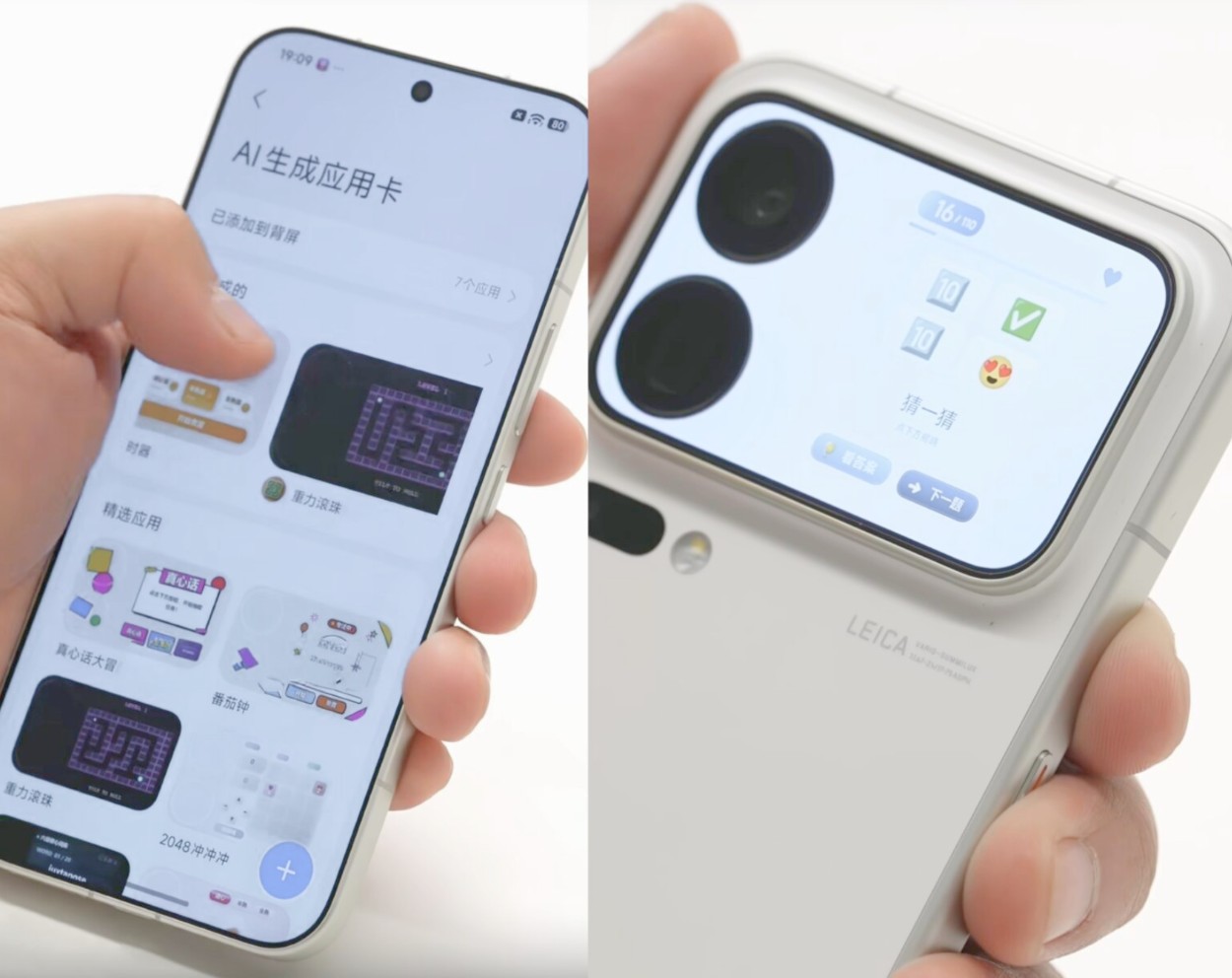
This isn’t just a vanity play. A flush design distributes impact more evenly when the phone is placed face-down or dropped on its back. It also means the rear display — a feature Xiaomi introduced with the 17 Pro — now functions as a truly uninterrupted secondary screen. No lens ring breaking up the display surface. No visual clutter.
The Xiaomi 17 Pro had a noticeable camera protrusion that interrupted the rear display experience. Functionally, the display worked fine, but aesthetically, it always felt like two separate design ideas stitched together. The 18 Pro fixes that, and the result is a phone that actually looks like the concept renders that usually never survive manufacturing.
In our view, this is one of those changes that sounds minor in a spec sheet but transforms how the phone feels in your hand. We’ve seen too many flagships where the camera module is essentially a speed bump on the back of a $1,000 device. Xiaomi actually did the engineering work to eliminate it.
Leica Camera System: 17mm to 75mm Coverage
The Xiaomi 18 Pro keeps its partnership with Leica for the triple-camera system, and the numbers tell an interesting story:
Main sensor: 200MP, f/1.67 apertureUltrawide: 17mm equivalent focal lengthPeriscope telephoto: 3.2x optical zoom, f/2.4 aperture
That f/1.67 aperture on the main camera is wider than what most competitors offer (the iPhone 18 Pro uses f/1.78 on its main lens), which means more light hits the sensor in low-light conditions. In practical terms, your nighttime photos should look cleaner with less noise.
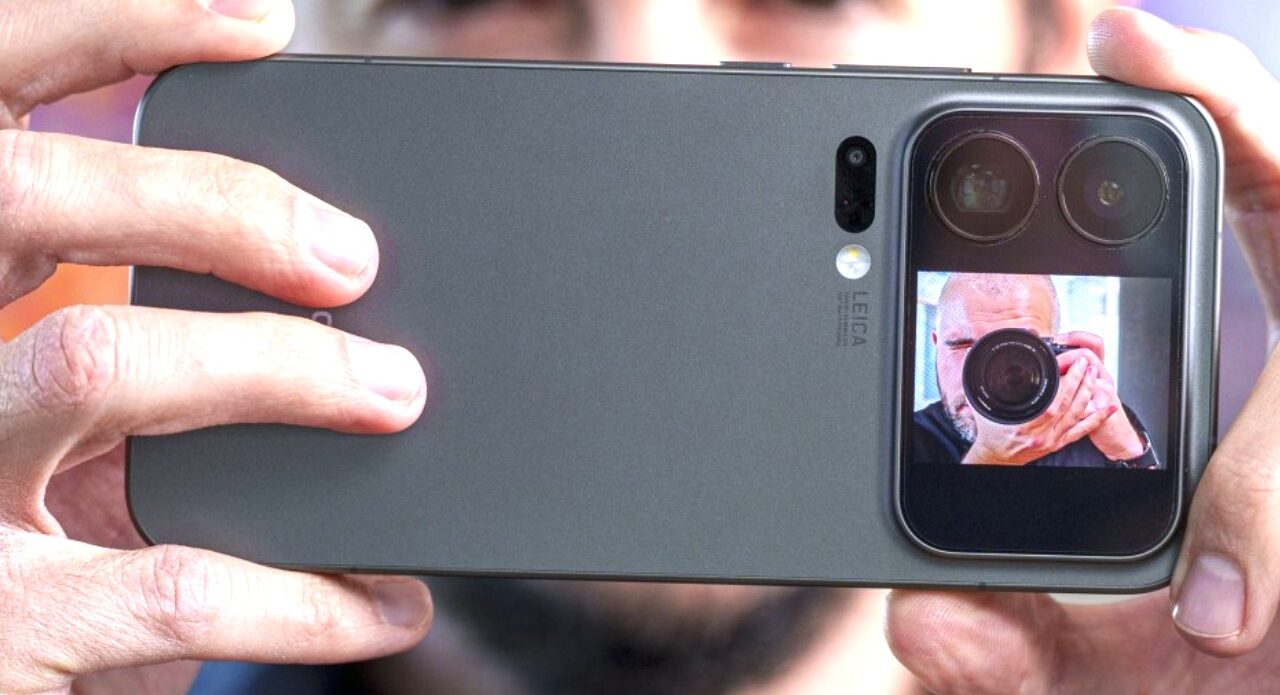
The telephoto is where Xiaomi made a deliberate trade-off. The 17 Pro had a 5x periscope lens, and the 18 Pro drops to 3.2x. On the surface, that looks like a downgrade. But the f/2.4 aperture on the new telephoto is faster than the f/2.6 on the previous generation, meaning it captures more light per shot at that zoom level.
This is a classic engineering compromise: less zoom, but better image quality at the zoom range you actually use most often. Xiaomi’s data apparently supports this — the vast majority of telephoto shots from 17 Pro users fell within the 2x-4x range, not at the 5x extreme.
The overall focal range of 17mm to 75mm is practical and versatile. You get a genuinely wide ultrawide for architecture and landscapes, a capable main shooter for everyday photos, and a telephoto that covers portraits and mid-distance subjects without pushing into the “digital crop disguised as zoom” territory that plagues cheaper phones.
The Rear Display: Actually Being Used
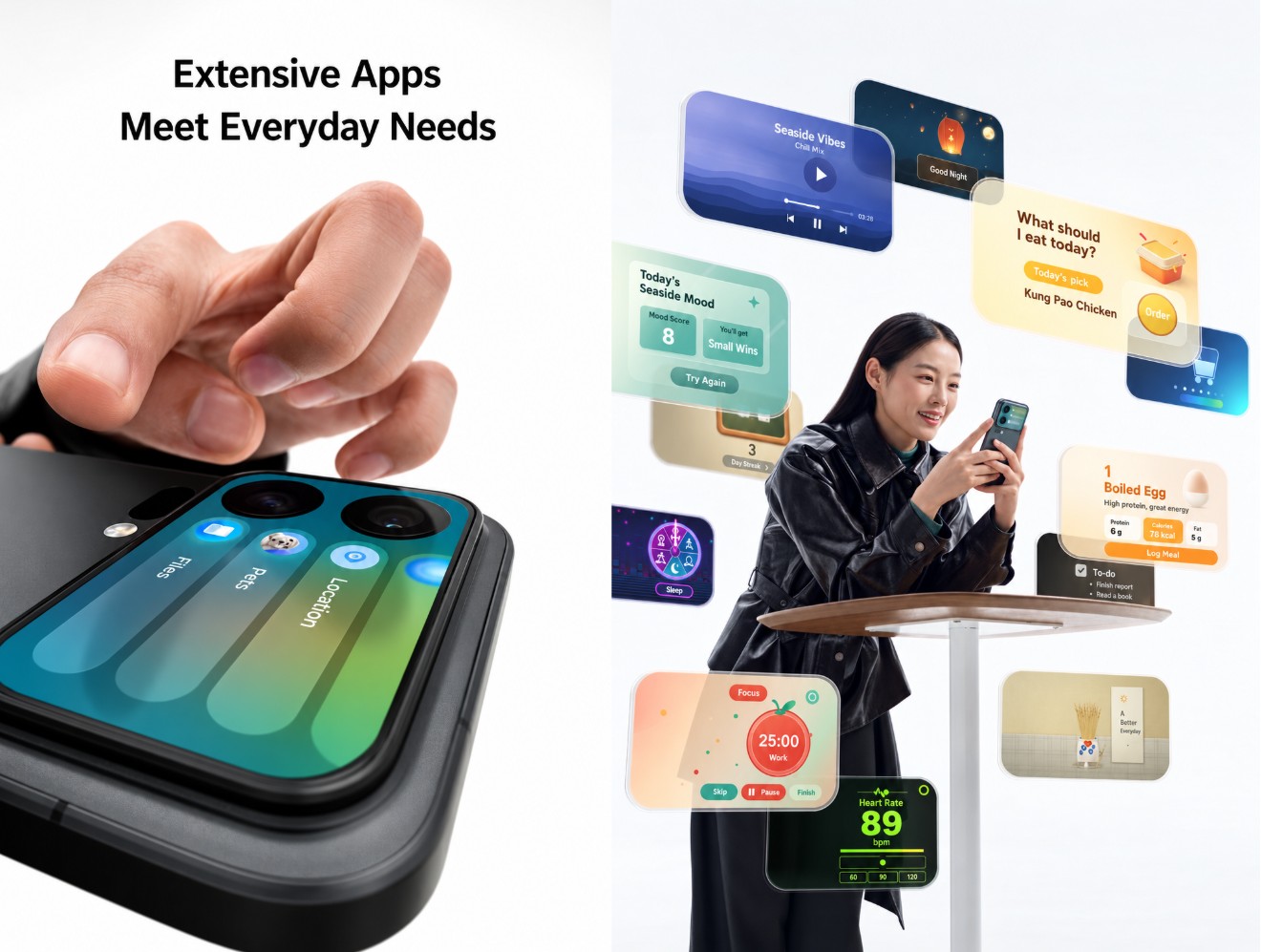
Skeptics wrote off the rear display as a gimmick when it debuted on the 17 Pro. The numbers tell a different story. Xiaomi reports over 4 million daily interactions with application cards on the secondary screen, plus more than 3.5 million wallpapers added daily.

That kind of engagement suggests the rear display has found genuine use cases — checking notifications without flipping the phone, using it as a viewfinder for the rear cameras during selfies, or running mini apps that don’t need a full-screen experience.
With the 18 Pro, Xiaomi has expanded the mini app ecosystem and added AI-powered app creation, letting users build custom widgets for the rear screen. The bezels around this display are narrower than the 17 Pro’s, which should make the secondary screen feel more integrated with the overall design.
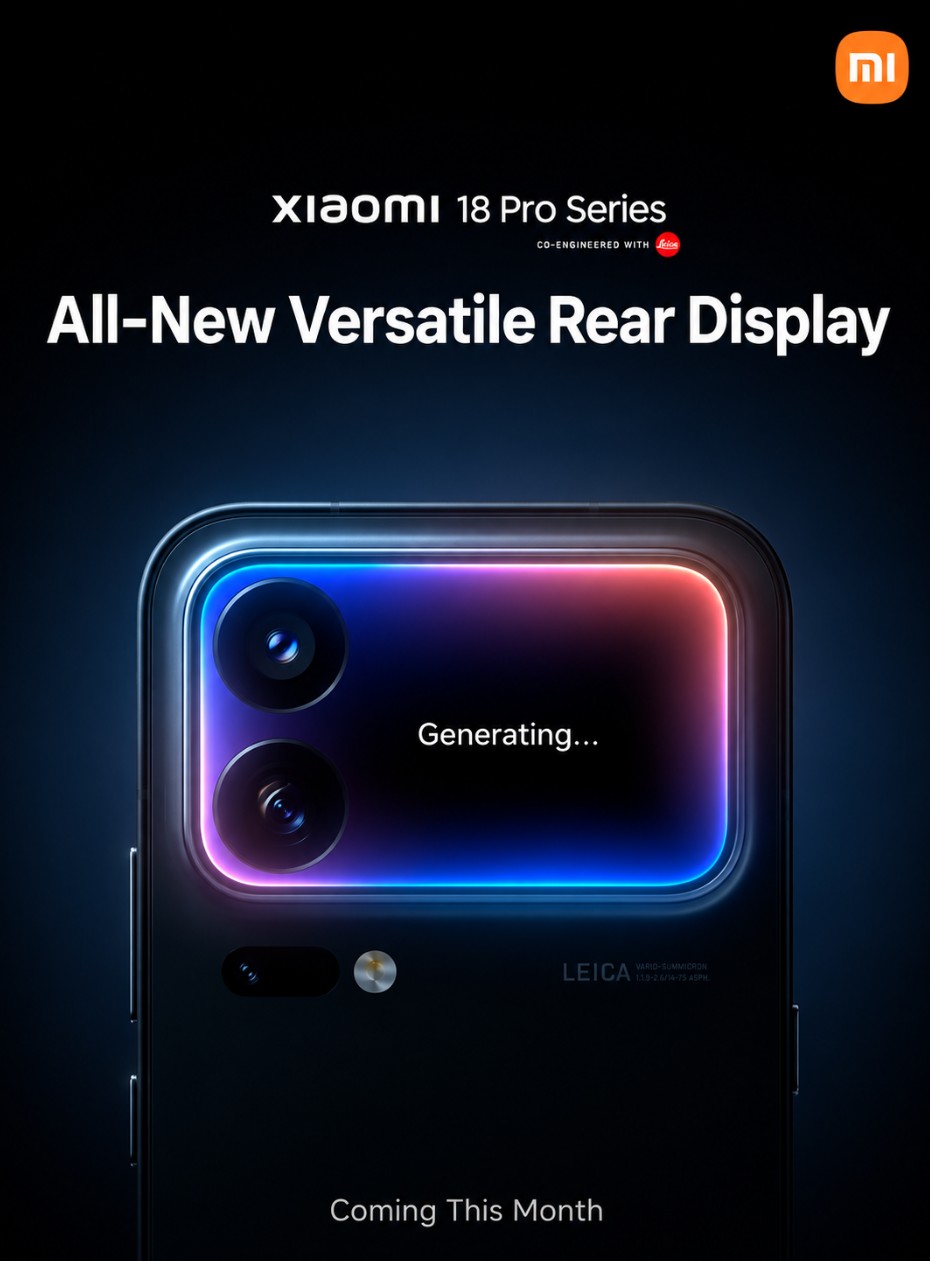
We still think rear displays are a niche feature — most people will use the front screen 95% of the time. But the usage data is hard to argue with. At least some users are finding genuine value here, and for them, the flush camera design makes the rear display significantly better as an uninterrupted canvas.
Snapdragon 8 Elite Extreme Gen 6: Top-Tier Silicon
The Xiaomi 18 Pro has appeared in Geekbench listings running the Snapdragon 8 Elite Extreme Gen 6 — the highest-binned version of Qualcomm’s latest chip, built on TSMC’s 2nm process. This is the same chip category powering other late-2026 flagships, but the Extreme designation suggests a factory-selected die with the best performance characteristics.
What does this mean for everyday use? Faster app loading, better sustained performance during gaming, and more headroom for on-device AI features. The practical gap between this and the standard Gen 6 will likely be small for most tasks, but for users who push their phones with intensive workloads — video editing, heavy multitasking, demanding games — the Extreme variant should maintain higher clock speeds for longer.
How Does the Xiaomi 18 Pro Compare to the iPhone 18?
Apple’s iPhone 18 Pro launched in September 2026 and takes a different design philosophy. While both phones target the premium segment, there are some notable differences:
Camera bump: The iPhone 18 Pro still has a raised camera module. Apple has made it thinner over the years, but it’s still there. The Xiaomi 18 Pro’s flush design is a genuine differentiator.
Camera zoom: Apple sticks with a 5x telephoto on the Pro Max, while the standard Pro offers a 3x lens. Xiaomi’s 3.2x at f/2.4 splits the difference and arguably handles low light better than Apple’s f/2.8 telephoto.
Rear display: The iPhone 18 has no equivalent feature. Apple has shown no interest in secondary displays, preferring to invest in Dynamic Island and Always-On Display improvements on the front screen.
Software ecosystem: iOS remains more polished for casual users, but Xiaomi’s HyperOS — especially with the AI-powered features and mini apps — offers more customization and experimentation.
This comparison isn’t about declaring a winner. They’re phones built for different audiences. But if you care about camera hardware innovation and design ambition, the Xiaomi 18 Pro is making moves that Apple hasn’t matched yet.
“The Biggest Upgrade in Its History”
Xiaomi isn’t being subtle about its ambitions. The company has called the 18 Pro “the biggest upgrade in the history of its numbered digital series.” That’s marketing language, sure, but the combination of a flush camera redesign, upgraded Leica optics, a new chipset generation, and expanded rear display functionality does back it up more than most marketing claims.
The September 2026 flagship season is one of the most competitive in memory, with Vivo, Oppo, and Apple all releasing major devices in the same window. Xiaomi needs the 18 Pro to stand out, and on design alone, it’s making a strong case.
What’s Still Unknown
We’re still waiting on official pricing, exact dimensions, battery capacity, and charging speed details. Leaks from earlier this year pointed to a 7,000mAh+ battery for the Pro Max variant, but the standard Pro’s battery specs haven’t been confirmed. Charging is expected to be 100W wired based on 3C certification leaks.
Color options and storage configurations also remain unannounced. Xiaomi typically offers multiple finishes at launch, and the aluminum-and-glass construction of the 18 Pro should make for some attractive colorways.
The Xiaomi 18 Pro’s real-life images confirm a phone that’s been designed with unusual attention to how it looks and feels as a complete object — not just as a container for impressive specs. The flush camera, the expanded rear display, and the Leica optic refinements point to a flagship that’s trying to move the design conversation forward, not just iterate.
Whether it delivers on that promise will depend on the final pricing and real-world camera performance. But based on what we’ve seen so far, Xiaomi has built something that deserves serious attention from anyone shopping for a premium phone this fall.
FAQsWhen does the Xiaomi 18 Pro launch?
Xiaomi has confirmed a September 2026 launch in China. International availability typically follows weeks to months later, depending on the market.
Does the Xiaomi 18 Pro have wireless charging?
Official charging specs haven’t been fully confirmed yet. Previous Xiaomi Pro models supported 50W wireless charging, and the 18 Pro is expected to match or exceed that, based on leaked 3C certification data.
Why did Xiaomi drop from 5x to 3.2x telephoto zoom?
Xiaomi traded zoom range for light-gathering ability, moving from an f/2.6 to an f/2.4 aperture. This means sharper, brighter photos at 3.2x zoom — the range most users actually use — rather than dimmer shots at a longer 5x reach.
What phone is the closest competitor to the Xiaomi 18 Pro?
The Vivo X500 Pro and iPhone 18 Pro are the most direct competitors in the September 2026 flagship window. The Samsung Galaxy S27 Ultra is also relevant, though it launched earlier in the year.
Can the rear display on the Xiaomi 18 Pro run full apps?
It runs mini apps and widgets, not full Android applications. Xiaomi expanded the mini app ecosystem for the 18 Pro and added an AI tool that lets users create custom mini apps for the rear screen.